Gulf infrastructure at risk as Iran warns of retaliation over U.S. ultimatum
Tel Aviv — Iran warned on Monday it would target energy, water and technology infrastructure across Gulf states if the United States attacks its power grid, following a 48-hour ultimatum from U.S. President Donald Trump demanding the full reopening of the Strait of Hormuz, as Israeli forces launched fresh strikes on Tehran and regional tensions escalated.
The warning, delivered by Iranian military spokesperson Ebrahim Zolfaqari and echoed by senior officials, marked a sharp escalation in rhetoric as the conflict entered its fourth week, raising concerns over potential disruption to critical infrastructure in Gulf countries heavily dependent on desalination for drinking water.
Trump’s ultimatum, issued late Saturday, set a deadline of approximately 7:45 p.m. EDT on Monday for Iran to reopen the strategic waterway, through which roughly a fifth of global oil and liquefied natural gas supplies typically pass. He said the United States would strike Iranian power plants if Tehran failed to comply.
Iranian officials said any attack on its energy facilities would trigger a broad response targeting U.S.-aligned assets across the region. Zolfaqari stated that energy infrastructure, information technology systems and desalination plants linked to the United States and its regional allies would be considered legitimate targets.
Iran’s Parliament Speaker Mohammad Baqer Qalibaf said such strikes could lead to “irreversible destruction” of critical infrastructure in the Middle East. The Islamic Revolutionary Guard Corps warned the Strait of Hormuz would remain closed until damaged Iranian facilities were restored.
Electricity infrastructure is central to Gulf economies, where high per capita consumption supports urban cooling and desalination systems. Bahrain and Qatar rely entirely on desalinated water, while the United Arab Emirates and Saudi Arabia depend on it for the majority of their supply, making such facilities strategically sensitive.
Israeli forces said they began a wide-scale wave of strikes targeting Iranian infrastructure in Tehran early Monday. Iranian media reported casualties, including the death of a child in Khorramabad, and damage to residential areas in Urmia.
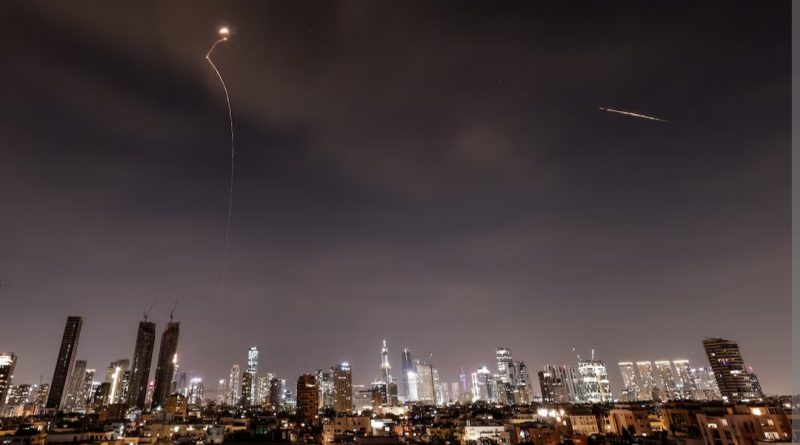
Air raid sirens sounded across northern and central Israel, including Tel Aviv and parts of the occupied West Bank, indicating incoming Iranian missile fire. Israeli medical authorities reported dozens injured in earlier strikes on southern towns near key military installations.
Saudi Arabia said it intercepted one of two ballistic missiles launched toward Riyadh, with the second landing in an uninhabited area.The conflict has also extended to Lebanon, where Israel said it conducted raids on Hezbollah sites in the south.
Hezbollah claimed responsibility for rocket attacks on northern Israel, while Israeli authorities reported at least one fatality near the border.
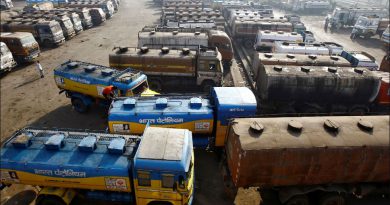
The threat of attacks on infrastructure and uncertainty surrounding the Strait of Hormuz have unsettled global markets. Oil prices opened volatile in Asian trading, while European gas prices surged sharply in the past week.Iranian actions have effectively restricted passage through the strait, contributing to what analysts describe as the most severe oil supply disruption since the 1970s.
However, Tehran has said the waterway remains open to vessels not linked to its adversaries, with some ships reportedly negotiating passage under coordinated arrangements.Market analysts said the U.S. ultimatum has heightened uncertainty, with expectations of downward pressure on equities and continued volatility in energy markets.
The war, launched on February 28 by the United States and Israel, has killed more than 2,000 people and triggered broader regional instability. Israeli officials said they expect weeks more fighting against Iran and Hezbollah, indicating no immediate de-escalation.
U.S. military deployments, including Marines and amphibious assets, continue to move into the region, even as earlier signals suggested Washington might consider scaling down operations.
Iran has maintained its capacity to retaliate despite sustained bombardment, underscoring the risk of further escalation involving civilian infrastructure and critical global energy routes.