From Pakistan to Iran’s IRGC: How the Asif Merchant Plot Targeted U.S. Leaders

The Merchant case therefore fits a recognizable pattern: recruitment outside Iran, deployment in third countries, and reliance on criminal intermediaries to carry out violent actions.
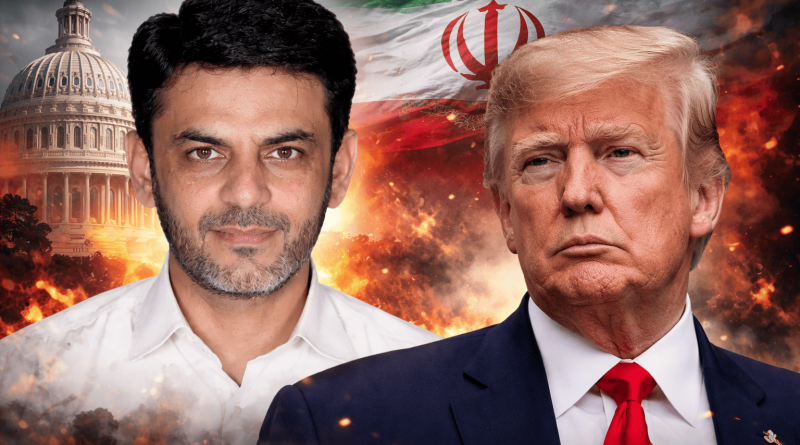
In March 2026, a U.S. federal jury convicted Asif Merchant, a Pakistani national with links to Iran’s Islamic Revolutionary Guard Corps (IRGC), on charges of terrorism and murder-for-hire.
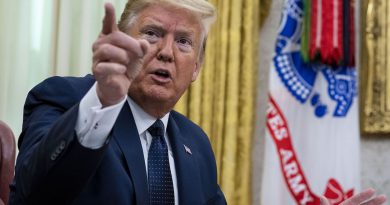
Prosecutors argued that Merchant attempted to orchestrate the assassination of American political leaders during the 2024 election cycle, including president Donald Trump. The plot collapsed only because the individuals he attempted to hire turned out to be undercover FBI agents.
At first glance, the episode might appear to be another isolated case of a failed extremist plot. Yet the details emerging from court records, intelligence disclosures, and related cases reveal something more troubling.
Merchant’s trajectory—from alleged recruitment by the IRGC in Pakistan to his attempt to coordinate a political assassination inside the United States—illustrates the evolving architecture of transnational covert operations directed at American political targets.
For U.S. policymakers, the Merchant case should not merely be treated as a criminal prosecution. It is a warning signal about the persistence of state-linked assassination plots and the vulnerability of open democratic societies to external clandestine networks.
From Recruitment to Assassination Planning
According to U.S. prosecutors, Merchant began working with operatives linked to Iran’s Islamic Revolutionary Guard Corps (IRGC) in late 2022 or early 2023 while in Pakistan. His responsibilities included laundering funds and establishing operational contacts outside Iran.
By late 2023, investigators believe Merchant had been tasked with a more ambitious assignment: identifying potential recruits for covert operations in the United States. In April 2024, he traveled to the country and began seeking intermediaries who could carry out violent acts against political figures.
Court filings describe a chilling sequence of meetings in New York during June 2024. Merchant reportedly explained to individuals he believed were professional hitmen that he required three services: document theft, organized protests at political rallies, and the assassination of a “political person.”
The operation was never realized. Merchant unknowingly paid a $5,000 advance to undercover agents and was arrested in July 2024 before leaving the United States.
In March 2026, after a federal trial in Brooklyn, a jury convicted him of attempting to commit terrorism and murder-for-hire, crimes that carry a potential life sentence.
What makes this case particularly alarming is the alleged state-linked dimension. U.S. prosecutors argued that Merchant was acting under the direction of IRGC operatives.
The Soleimani Factor and Iran’s Retaliatory Doctrine
To understand why American political figures might be targeted, analysts often point to a pivotal moment in January 2020: the U.S. drone strike that killed Qasem Soleimani, commander of the IRGC’s Quds Force. The strike, ordered by President Donald Trump, dramatically escalated tensions between Washington and Tehran.
Since Soleimani’s death, U.S. intelligence agencies have warned of Iranian efforts to retaliate through covert operations targeting American officials. In fact, the Merchant plot was widely interpreted by investigators as part of a broader revenge campaign.
The strategic logic is consistent with Iran’s historical reliance on asymmetric tactics. Rather than confronting U.S. military power directly, Iranian security institutions—including the IRGC and associated intelligence units—have frequently relied on proxy networks, covert agents, and deniable intermediaries abroad.
The Merchant case therefore fits a recognizable pattern: recruitment outside Iran, deployment in third countries, and reliance on criminal intermediaries to carry out violent actions.
Not an Isolated Case
The significance of the Merchant episode becomes clearer when examined alongside other documented plots attributed to Iranian networks.
One of the most prominent examples involves Shahram Poursafi, an IRGC-linked operative charged by the U.S. Department of Justice in 2022 for allegedly plotting to assassinate former national security adviser John Bolton.
Prosecutors said Poursafi attempted to hire a hitman and offered payments of up to $1 million for the killing.
Another case emerged in 2024, when U.S. authorities accused Farhad Shakeri, an alleged IRGC asset, of coordinating murder-for-hire operations targeting American and Iranian-American figures in New York.
According to investigators, Shakeri’s network sought to recruit criminal associates to carry out the killings.
Similarly, the FBI issued alerts in 2024 regarding Iranian intelligence operative Majid Dastjani Farahani, suspected of recruiting individuals to assassinate U.S. officials.
Taken together, these cases suggest a strategic pattern rather than isolated incidents. The use of intermediaries—often foreign nationals or diaspora contacts—allows state actors to maintain plausible deniability while extending operational reach.
Implications for U.S. National Security
The Pakistani Merchant conviction underscores a fundamental challenge confronting American security institutions: the growing intersection between state intelligence operations and transnational criminal networks.
Unlike traditional espionage, these plots do not rely exclusively on trained intelligence officers. Instead, they recruit businessmen, expatriates, or individuals with international mobility who can move between countries without immediate suspicion.
Merchant himself reportedly maintained business interests and family connections across Pakistan, Iran, and the United States, enabling him to travel and operate with relative ease.
For the United States, this raises a difficult policy question. Counterterrorism frameworks were largely designed to combat non-state extremist organizations such as al-Qaeda or ISIS. State-sponsored assassination networks, however, operate under different strategic assumptions.
They can leverage diplomatic cover, international logistics networks, and intelligence infrastructures that blur the line between criminal conspiracy and geopolitical confrontation.
In practical terms, the Merchant case highlights three vulnerabilities. First, the reliance on global business and migration networks can provide cover for covert operatives. Second, the use of freelance intermediaries complicates intelligence detection. Third, political polarization within the United States may increase the symbolic value of targeting prominent political figures.
A Test of Strategic Vigilance
The conviction of Asif Merchant represents a success for American law enforcement and intelligence cooperation. The FBI’s use of undercover agents prevented a potential assassination and provided prosecutors with decisive evidence.
Yet the broader lesson is not one of closure but of caution. Merchant’s case demonstrates how geopolitical conflicts can spill into the domestic political sphere of the United States. Whether acting under coercion, ideology, or financial incentives, individuals embedded in transnational networks can become instruments of foreign strategic agendas.
For the U.S. government, the challenge moving forward is not simply prosecuting individual operatives. It is recognizing that such plots may represent only the visible edges of deeper covert infrastructures. If the Merchant case is treated merely as a criminal anomaly, the larger pattern may go unnoticed.
In that sense, the verdict delivered in March 2026 should be interpreted less as the end of a story than as the opening chapter of a continuing security challenge—one that requires vigilance not only from law enforcement, but from policymakers responsible for safeguarding the stability of American democracy.
Disclaimer: Views expressed by writers in this section are their own and do not reflect Milli Chronicle’s point-of-view.