Mozambique Scientist Studies Cave Ecosystems to Advance Biodiversity Research in Gorongosa
“If I had to describe it in one word, I’d say ‘ecosystem“
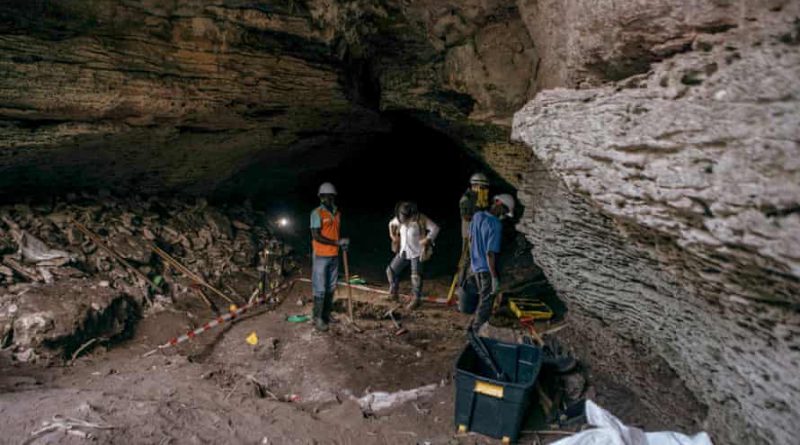
Wearing a helmet fitted with a headlamp and a protective mask, molecular biologist Raúl da Silva Armando Chomela moves through the confined, low-light interiors of cave systems in central Mozambique, examining bat populations and their byproducts as part of a broader scientific effort to understand subterranean ecosystems.
Chomela, originally from the port city of Beira, has spent two years conducting research inside caves located in and around Gorongosa National Park, a 4,000 square kilometre conservation area recognized for its biodiversity.
His work focuses on bats and guano, a substance formed from accumulated bird and bat excrement that serves as a complex biological environment.“Guano is far more than just bat droppings,” Chomela said in an interview, describing it as a dynamic ecosystem.
According to his observations, guano supports a wide range of cave-dwelling organisms, including beetles, amphibians and microorganisms that have adapted to life in conditions without sunlight.
The caves in Gorongosa represent highly specialized environments. Organisms found within them have evolved to survive in stable, low-light conditions with distinct microbiomes that differ significantly from surface ecosystems.
These systems are characterized by limited external input and reliance on internal nutrient cycles, often driven by organic deposits such as guano.Chomela’s research involves entering narrow passages and descending into enclosed spaces using ropes and ladders, often without full knowledge of the terrain or species present.
According to the park’s science department, the cave networks in the region extend across approximately 183 square kilometres, forming interconnected underground systems.
More than 100 bat species have been identified in Gorongosa, although there is no precise data on how many inhabit these caves. One site, known as Tombo Aphale 5, has been extensively studied and hosts an estimated population of over 10,000 bats.
The cave is also the site of an active archaeological excavation, indicating its broader scientific relevance beyond ecological research.Gorongosa National Park was established in 1960 during Portuguese colonial administration.
Following Mozambique’s independence in 1975, conservation was not prioritized under the ruling Frelimo party. Two years later, the park became a strategic location during the country’s civil war, which involved government forces and the insurgent group Renamo.
Renamo, initially formed with support from the Rhodesian government under Ian Smith and later backed by apartheid-era South Africa, operated within the park’s terrain. During the conflict, armed groups relied on wildlife for sustenance, leading to widespread depletion of animal populations.
By the end of the war, which lasted more than 15 years, approximately 95% of the park’s wildlife had been lost, including nearly all of its estimated 5,500 hippos.The effects of the conflict extended beyond environmental damage.
Local communities experienced forced recruitment and other human rights abuses during the war, contributing to long-term social and economic challenges in the region.
In the decades since the conflict ended, Gorongosa has become the focus of sustained conservation and restoration efforts. These initiatives have involved partnerships between international institutions and Mozambican researchers, aiming to rebuild ecosystems and support local development.
One such initiative is the Paleo-Primate Project, established in 2018 as a collaboration between the University of Oxford and Gorongosa National Park. The project is led by Susana Carvalho and integrates research in archaeology, ecology and geology.
It also provides training and employment opportunities for local researchers and students.Carvalho said the broader Gorongosa Restoration Project has become a significant employer in the region, contributing to economic stability.
The project supports scientific research while also engaging local communities in conservation efforts.Chomela joined Gorongosa’s biodiversity laboratory in 2022 before becoming part of the Paleo-Primate Project in 2025.
His research spans multiple disciplines, including the use of environmental DNA to reconstruct historical ecosystems and metabarcoding techniques to analyze genetic material from bats and primates.
He is currently a first-year doctoral student at the University of Porto in Portugal, with his research based at the EO Wilson Laboratory in Chitengo, located within the park. In addition to his academic work, he leads the genetics laboratory at the facility, contributing to ongoing studies of biodiversity and ecosystem dynamics.
Chomela has also raised concerns about the potential overexploitation of guano resources. While the material is valued for its agricultural and economic uses, he noted that excessive harvesting could alter the composition of cave ecosystems.
“When they see the guano, they see money,” he said, adding that unsustainable extraction could disrupt the balance of species that depend on it.He emphasized the importance of building a scientific foundation to inform conservation practices and community engagement.
“We want a scientific base to convince the community,” he said, referring to efforts to align local economic interests with environmental sustainability.
The integration of scientific research, conservation policy and community involvement remains central to ongoing work in Gorongosa, as researchers continue to document and restore one of Africa’s most ecologically significant regions.