A Different Ending: India’s Quiet Victory Over Leftwing Extremism

The increasing number of voluntary surrenders suggests that more people now see returning as a viable option.
For anyone who has spent time studying political violence, India’s experience with Left-Wing Extremism feels different from the usual story. It is not just about an insurgency being pushed back by force. Something slower, less visible, but ultimately more important seems to be taking place.
Over the years, I have followed armed movements in different parts of the world—from Latin America to parts of Europe—and what is happening in India today stands out because it challenges a long-held assumption: that insurgencies are defeated mainly through military pressure.
A recent article by Zahack Tanvir in Times of Israel, “Left-Wing Terrorism No More? India’s Strategy from Force to Trust,” captures this shift quite well. As he writes, the real question now is not simply whether Maoist violence can be controlled, but whether “the conditions that allowed it to thrive are finally being addressed.”
That distinction matters. Across countries and contexts, insurgencies tend to survive not because of ideology alone, but because they grow in places where the state is absent, where poverty is entrenched, and where people feel they have been left behind.
When belief begins to fade
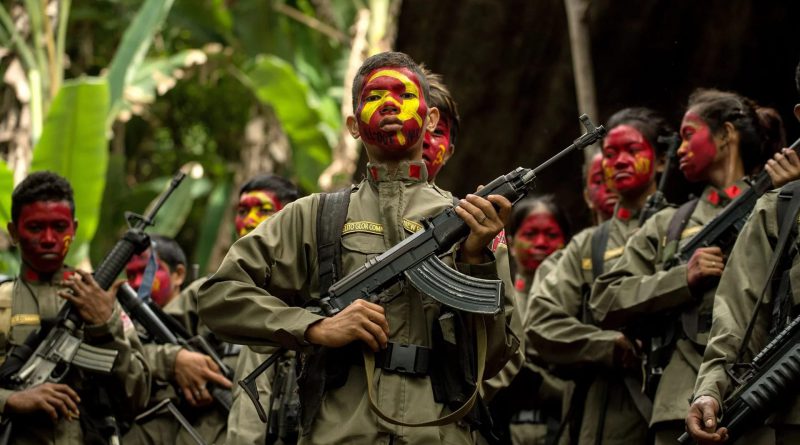
The Maoist movement in India, which traces its roots back to the Naxalbari uprising in 1967, followed a pattern we have seen elsewhere. It began in regions marked by inequality and neglect, drawing strength from local frustrations. For a time, that gave it a certain legitimacy in the eyes of some communities.
But movements like these rarely stay the same. Over time, they harden. Leadership becomes distant, ideas become rigid, and maintaining control often starts to rely more on pressure than persuasion. What we seem to be witnessing in India today is what I would describe, less academically, as a kind of exhaustion within the movement.
The growing number of surrenders is telling. More than 100 cadres lay down arms in a single day, as happened in Bijapur. It suggests more than fear of security forces. It points to something deeper—a quiet loss of faith.
Researchers often note that insurgencies don’t just end on the battlefield. They unravel when people stop believing in the cause. Tanvir makes this point directly: such movements “fade when people stop believing in them.” We have seen similar patterns in places like Northern Ireland and Nepal, where the psychological shift came before any formal end.
The slow return of the state
At the same time, the Indian state has not stood still. Security operations have continued, and the loss of key Maoist leaders in 2025 clearly disrupted the group’s structure. But what is more interesting is what has been happening beyond those operations.
In many of these regions, the state is becoming visible again in ways that matter to everyday life. Roads are being built where there were none. Mobile connectivity is reaching areas that were once cut off. Police stations are not just present, but fortified and functioning.
These changes may sound technical, but they reshape the environment in which an insurgency operates. Areas that were once isolated—where armed groups could move, recruit, and control information—are becoming harder to dominate.
There is also a quieter contest taking place: a battle over who represents the people. Maoist groups long positioned themselves as protectors in places where the state was missing. But as governance slowly returns, that claim becomes harder to sustain. When people can access services, communicate freely, and see institutions working, the appeal of parallel authority weakens.
Some of the steps taken by authorities carry a symbolic weight as well. Giving surrendered cadres copies of the Constitution may seem like a small gesture, but it signals something important—that the relationship with the state is meant to be based on rights, not just control.
Beyond surrender: rebuilding trust
What stands out most to me, however, is how surrenders are being treated. In many parts of the world, former insurgents face suspicion and limited opportunities, which can push them back toward violence. India appears to be trying a different approach.
Rehabilitation policies in Indian states like Chhattisgarh offer financial assistance, housing, land, and training. These are not entirely new tools, but the intent behind them feels different. The focus is less on showcasing victory and more on creating a path back into society.
This is where trust becomes central. In many of these regions, the absence of the state created space for insurgents to step in. Over time, that absence fed the conflict itself. Reversing that cycle requires patience. It is not something that can be achieved through security operations alone.
There are signs, however, that this process has begun. Community engagement initiatives, more sensitive policing, and efforts to bring officials and locals into direct conversation are gradually changing perceptions. It is not dramatic, and it is certainly not uniform, but it is noticeable.
The increasing number of voluntary surrenders suggests that more people now see returning as a viable option. That, in itself, is a significant shift. Trust is not built overnight, but once it begins to take hold, it can reshape the dynamics of a conflict.
A quiet but important shift
The progress made so far will depend on whether governance continues to improve and whether trust is sustained. Daily life is beginning to look different. Roads are opening up, communication is improving, and state institutions are becoming part of the landscape again.
Perhaps the most telling change is in how success is being measured. As Tanvir notes, the focus is slowly shifting—from counting how many insurgents have been neutralized to how many have chosen to come back. That is not just a policy adjustment; it reflects a different way of thinking about conflict.
From a broader perspective, there is something to learn here. Insurgencies rooted in deep social and economic issues cannot be resolved by force alone. They require the state to be present in a meaningful way—to provide services, to listen, and to be seen as legitimate.
In the study of terrorism and political violence, we often look for decisive moments, clear endings. India’s experience suggests that change can be quieter than that. It can happen through small, cumulative shifts—people making different choices, communities slowly re-engaging, institutions rebuilding their place.
If this trajectory continues, India may offer an example that goes beyond its own borders: not of how to simply defeat an insurgency, but of how to make it lose its reason to exist.
Disclaimer: Views expressed by writers in this section are their own and do not reflect Milli Chronicle’s point-of-view.