Texas Death Row Case Raises Questions Over Use of Rap Lyrics in Capital Conviction
“A young man sentenced to death based not on evidence, but on allegations tied to his lyrics.”
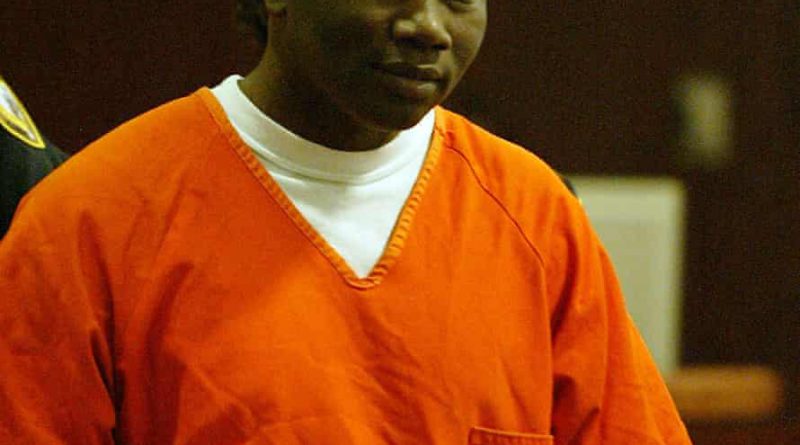
James Broadnax has spent more than 16 years on death row in a 6-by-10-foot cell in Texas, where he has developed routines to manage prolonged isolation, including writing poetry to pass time, according to accounts of his daily life and legal filings connected to his case.
Broadnax, 37, often writes spoken word poetry at a small desk inside his cell, describing the process as immersive and mentally absorbing. In a recent piece featured in the documentary Solitary Minds, he writes about losing himself in what he calls a “time gap,” reflecting on confinement and uncertainty.
His work includes lines describing prolonged incarceration and the emotional strain of awaiting an unresolved fate.His engagement with writing dates back to his teenage years, when he wrote rap lyrics in notebooks with aspirations of becoming a professional musician.
That earlier creative output later became a focal point during his criminal trial, where prosecutors introduced his lyrics as part of the case against him.Broadnax is scheduled to be executed on April 30 in Huntsville, Texas, where he is expected to receive a lethal injection of pentobarbital.
His conviction stems from a 2009 case in which he and his cousin were found guilty of the murders of two men, Matthew Butler and Stephen Swan, during a robbery in Garland, Texas.During the trial, prosecutors presented Broadnax’s rap lyrics as evidence, arguing they reflected violent tendencies and supported claims that he posed a continuing threat.
According to legal representatives and advocacy groups, the use of those writings played a role in the jury’s assessment during sentencing.Defense attorney Liles has argued that the inclusion of the lyrics contributed to an outcome that relied on character interpretation rather than direct evidence tied to the crimes.
In statements supporting ongoing legal appeals, Liles said the case raised concerns about whether artistic expression was improperly used to influence a capital sentencing decision.
Legal challenges now before the U.S. Supreme Court focus on whether the use of Broadnax’s lyrics violated constitutional protections, including due process and equal protection under the Eighth and Fourteenth Amendments.
His legal team has filed a petition requesting intervention to halt the execution, asserting that the evidentiary use of creative writing unfairly prejudiced the outcome.
In support of the appeal, a group of 16 artists and public figures submitted an amicus brief, including musicians and actors who argued that artistic expression in other genres has historically not been treated as literal evidence of criminal intent.
The filing draws comparisons to well-known songs in country, reggae and pop music that include fictional or exaggerated narratives involving violence or wrongdoing, which have not led to similar legal scrutiny.
The brief references examples such as Johnny Cash’s “Folsom Prison Blues” and Bob Marley’s “I Shot the Sheriff,” noting that such works have been widely interpreted as storytelling rather than confessions of real-world acts.
The document argues that rap music, in contrast, has been disproportionately subjected to literal interpretation in legal contexts.Erik Nielson, a professor at the University of Richmond who has studied the use of rap lyrics in criminal proceedings for nearly 15 years, said such cases reflect a broader pattern.
Nielson, co-author of the book Rap on Trial, maintains a database documenting instances where prosecutors have introduced rap lyrics as evidence, often to establish motive or character.
According to Nielson, the practice is largely confined to rap music and has not been applied consistently across other artistic forms. He said this disparity raises questions about cultural interpretation and potential bias in how different genres are treated within the judicial system.
Broadnax’s case has also drawn attention to jury selection practices during his trial. According to legal filings, prosecutors initially excluded Black jurors from the panel before the presiding judge intervened. The issue has been cited by defense attorneys as part of broader concerns about fairness in the proceedings.
The case comes amid ongoing debates within legal and academic circles about the admissibility of artistic expression as evidence. Critics argue that such material can be misinterpreted or taken out of context, particularly when presented to juries unfamiliar with the conventions of specific genres.
Supporters of its use contend that it can offer insight into a defendant’s mindset when considered alongside other evidence.
Broadnax’s lawyers argue that, in this instance, the lyrics were treated as literal representations of intent rather than creative expression, potentially influencing the jury’s determination that he posed a future danger, a key factor in capital sentencing decisions in Texas.
As the scheduled execution date approaches, the Supreme Court petition represents the final legal avenue for a stay. The outcome could have broader implications for how courts evaluate creative works in criminal trials, particularly in cases involving severe penalties.
Broadnax remains on death row awaiting the court’s response, continuing to write poetry as part of his daily routine while his legal team pursues last-minute efforts to halt the execution.