Merz Says Germany Exploring Shared Nuclear Umbrella With European Allies
Berlin – German Chancellor Friedrich Merz has said that Germany and its European partners are exploring discussions around a shared nuclear umbrella, reflecting growing debate within Europe about long-term security arrangements amid shifting global alliances. The comments signal a cautious but notable shift in tone as European nations reassess their defense posture in response to geopolitical uncertainty.
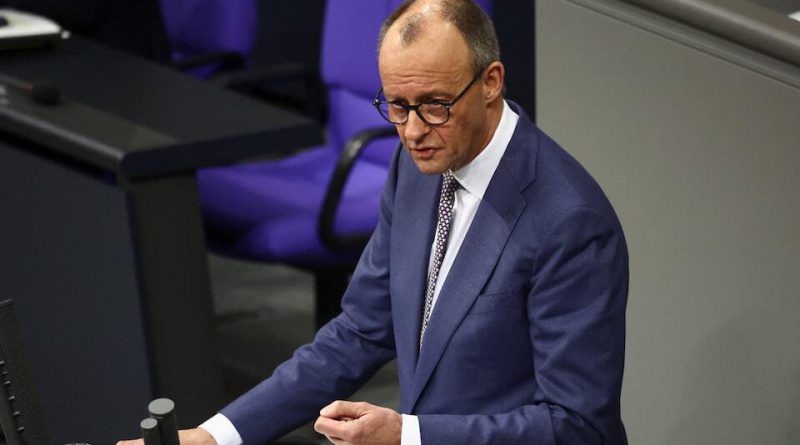
Speaking during a foreign policy address in Berlin, Merz made it clear that discussions are still at an early stage and that no immediate decisions are expected. He emphasized that the conversations are exploratory rather than a signal of imminent policy change, stressing that the timing is not yet right for firm conclusions.
The idea of a shared European nuclear framework has gained attention as transatlantic relations face renewed strain. Changes in US foreign policy priorities and sharper rhetoric on defense commitments have prompted European leaders to consider how the continent can strengthen its own security architecture while maintaining existing alliances.
Germany remains legally prohibited from developing its own nuclear weapons under international agreements signed after reunification and through long-standing non-proliferation commitments. Merz acknowledged these restrictions, noting that they remain binding and central to Germany’s foreign policy stance.
However, he argued that these treaties do not prevent Germany from participating in discussions with allies on collective solutions. In this context, Britain and France, the only European countries possessing nuclear arsenals, are viewed as key partners in any potential shared deterrence framework.
Merz stressed that such talks are not intended to replace or undermine existing defense arrangements with the United States. Instead, he described them as complementary, aligning with current nuclear-sharing mechanisms already in place within NATO structures.
European countries have historically relied on the US nuclear umbrella as a cornerstone of their security. Yet in recent years, many governments have increased defense spending and sought greater strategic autonomy, partly in response to criticism from Washington over defense burden-sharing.
Uncertainty has been amplified by unpredictable policy signals from the US, including sharp criticism of NATO allies and debates over America’s long-term role in European defense. These developments have fueled concern among European policymakers about overreliance on external guarantees.
Merz’s remarks reflect a broader conversation taking place across Europe about resilience and preparedness. While no formal proposal has been tabled, the willingness to openly discuss nuclear deterrence at a European level marks a significant evolution in strategic thinking.
The German chancellor reiterated that any future steps would require extensive consultation, democratic oversight, and alignment with international law. He emphasized that Germany remains committed to arms control and non-proliferation, even as it evaluates new security realities.
Within Germany, the comments have sparked debate among lawmakers and analysts. Supporters argue that Europe must adapt to an increasingly unstable world, while critics warn that even discussing nuclear options risks escalating tensions and undermining decades of disarmament efforts.
Senior figures in Germany’s parliament have echoed Merz’s assessment that the country has significant technical and industrial capacity, which could theoretically support broader European defense initiatives. However, they also acknowledged that political consensus remains far from achieved.
Across Europe, reactions have been mixed, with some governments welcoming open dialogue on collective security and others urging caution. Many agree that any discussion of nuclear deterrence must be handled carefully to avoid signaling division or provoking adversaries.
For now, Germany’s position appears to be one of deliberate caution. Merz has framed the talks as part of long-term strategic reflection rather than a response driven by panic or immediate threat, underscoring that cooperation, not confrontation, remains Europe’s guiding principle.
As security challenges continue to evolve, the debate over a shared European nuclear umbrella is likely to persist. Whether these early discussions lead to concrete proposals or remain theoretical will depend on political will, alliance dynamics, and the broader global security environment.