Trump and Netanyahu Hold Strategic Talks on Advancing Gaza Peace Framework
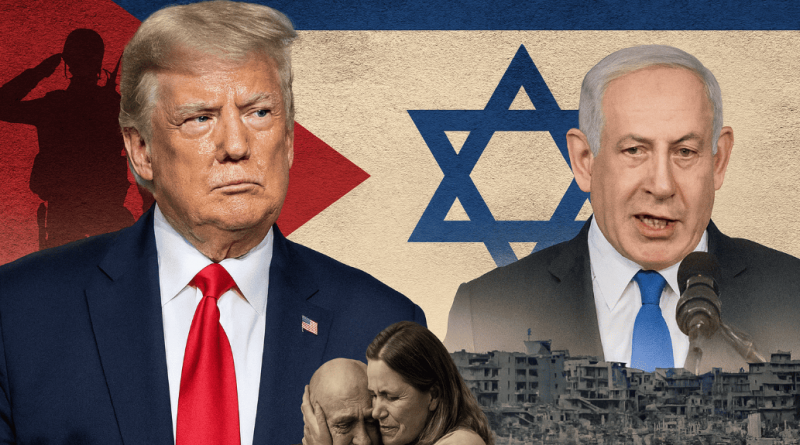
Palm Beach – U.S. President Donald Trump and Israeli Prime Minister Benjamin Netanyahu met in Florida for high-level discussions focused on advancing the next phase of the Gaza peace framework and reinforcing regional security coordination.
The meeting reflected continued close engagement between Washington and Jerusalem, with both leaders emphasizing cooperation, stability, and long-term security arrangements in the Middle East.
President Trump expressed support for moving forward with the second phase of the ceasefire process, stressing the importance of preventing militant regrouping and ensuring sustainable peace.
He underlined that disarmament of armed groups in Gaza remains central to any durable settlement and reiterated America’s role in facilitating structured political and security transitions.
The talks also addressed broader regional concerns, including Iran’s military activities and the need for deterrence to prevent further escalation across multiple fronts.
Trump signaled that the United States would continue to stand by Israel’s security needs while balancing diplomatic pathways to reduce conflict risks in the region.
Netanyahu welcomed U.S. engagement, noting that coordination with Washington remains essential as Israel navigates complex security and political challenges.
Both leaders discussed mechanisms to implement transitional governance in Gaza, including international involvement aimed at stabilizing the territory and supporting reconstruction.
The ceasefire agreement reached earlier has reduced large-scale hostilities, allowing space for diplomacy and humanitarian assistance to expand across Gaza.
Officials emphasized that further progress depends on careful sequencing of obligations and confidence-building steps by all parties involved.
Trump highlighted the need for accountability and compliance, stating that peace agreements must be enforced to maintain credibility and effectiveness.
The meeting also touched on Israel’s northern front, where efforts continue to preserve calm and prevent renewed conflict with Hezbollah.
U.S. officials reiterated support for internationally backed arrangements designed to strengthen state authority and reduce the influence of armed non-state actors.
Netanyahu raised concerns about long-term security guarantees, stressing that Israel seeks peace without compromising its ability to defend its citizens.
The discussions reflected an understanding that regional stability requires both diplomatic engagement and credible deterrence.
On Gaza, leaders explored pathways to accelerate humanitarian access while laying the groundwork for economic recovery and governance reforms.
Trump reaffirmed that the United States views regional cooperation as key to ensuring that ceasefires translate into lasting peace rather than temporary pauses.
Both sides acknowledged the political sensitivities involved but agreed that leadership and compromise are necessary to move the process forward.
The Florida meeting also symbolized continuity in U.S.-Israeli relations, reinforcing strategic alignment amid shifting regional dynamics.
Analysts noted that the talks send a message of coordinated leadership at a time when the Middle East faces overlapping security and political transitions.
Despite challenges, officials described the discussions as constructive and forward-looking, with a shared commitment to preventing renewed large-scale conflict.
Trump stressed that peace initiatives must be realistic, enforceable, and supported by strong international backing.
Netanyahu emphasized Israel’s willingness to engage with partners to ensure Gaza does not revert to instability or violence.
The leaders agreed to maintain close communication as negotiations and implementation efforts continue.
Their meeting underscored a shared belief that diplomacy, backed by strength, remains the most viable path to regional stability.
As the next phase of the Gaza plan is shaped, Washington and Jerusalem signaled readiness to coordinate policy, security, and diplomatic efforts.
The talks concluded with both leaders expressing cautious optimism about the possibility of progress despite difficult steps ahead.