
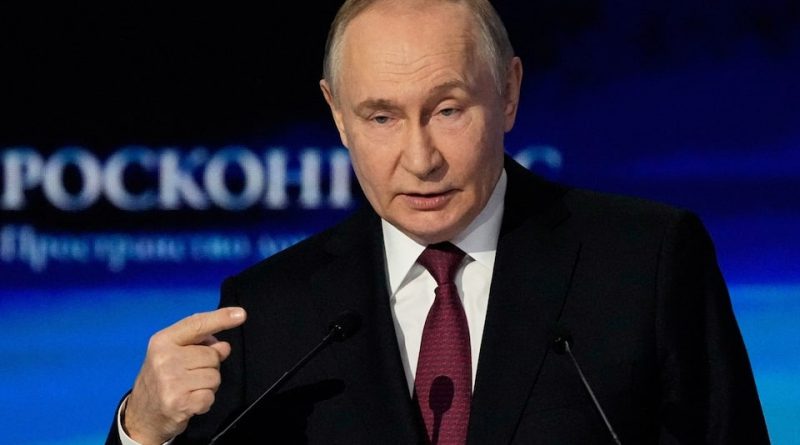
Putin and Trump Reaffirm Dialogue as Moscow Reviews Peace Negotiations
Moscow – Russian President Vladimir Putin and U.S. President Donald Trump held a direct conversation that underscored the continued importance of dialogue between major powers amid ongoing efforts to end the Ukraine conflict.
According to officials, the call focused on recent security developments alongside broader discussions about diplomatic pathways toward a sustainable and comprehensive peace settlement.
President Putin informed President Trump that Russia would reassess certain aspects of its peace negotiation posture following a reported drone incident near a presidential residence.
Russian officials framed the review not as a rejection of diplomacy, but as a recalibration intended to ensure that negotiations remain credible, secure, and grounded in mutual seriousness.
The conversation highlighted Moscow’s view that peace talks must address core issues decisively rather than rely solely on temporary ceasefire arrangements.
From the Russian perspective, long-term stability requires firm guarantees and clear commitments that prevent further escalation and ensure regional security.
U.S. officials briefed President Putin on Washington’s ongoing engagement with Kyiv, emphasizing efforts to encourage substantive steps toward a final political settlement.
The exchange demonstrated that despite tensions, communication channels between Moscow and Washington remain open and active.
President Trump reportedly listened closely to Russia’s concerns and expressed interest in maintaining momentum toward ending the conflict through negotiation rather than prolonged confrontation.
Diplomatic observers note that such leader-level conversations are critical in preventing misunderstandings and keeping peace efforts alive during volatile moments.
Russia reiterated that it remains attentive to proposals emerging from discussions between the United States and Ukraine, while stressing the need for precise interpretation and implementation.
Officials emphasized that ambiguity in peace frameworks could undermine progress and delay the resolution of the conflict.
Ukraine has denied responsibility for the alleged incident and has maintained its commitment to diplomatic engagement, adding another layer of complexity to the negotiation landscape.
Despite differing narratives, the ongoing dialogue among all sides reflects a shared understanding that military escalation is not a sustainable solution.
Analysts suggest that Moscow’s decision to review its negotiating stance may be aimed at strengthening its position at the table rather than withdrawing from talks.
The call between Putin and Trump also reaffirmed the influential role of the United States in shaping the diplomatic environment around the conflict.
Both leaders have previously indicated that an eventual settlement would require compromises, security assurances, and international involvement.
The exchange underscored a mutual recognition that peace efforts must balance realism with political will.
Russia’s leadership has consistently stated that it prefers a negotiated end to the conflict that addresses strategic concerns and respects established agreements.
Washington, for its part, has positioned itself as a facilitator urging all parties to move beyond interim measures toward lasting solutions.
The continued engagement between Moscow and Washington sends a signal to the international community that diplomacy remains possible even during periods of heightened tension.
Global stakeholders have welcomed sustained dialogue, viewing it as essential to reducing risks and stabilizing broader regional dynamics.
As discussions continue, expectations remain cautious but constructive, with emphasis on dialogue over rhetoric.
The call illustrated that despite disagreements, senior leaders recognize the necessity of communication to manage crises and explore pathways to peace.
Ultimately, the interaction reinforced the idea that durable peace will depend on sustained diplomacy, mutual clarity, and a willingness to address the roots of the conflict.


