China Conducts Large-Scale Military Drills Highlighting Regional Readiness
Beijing – China has launched its most extensive military exercises around Taiwan, underscoring Beijing’s emphasis on preparedness, deterrence, and regional stability through visible defence capability.
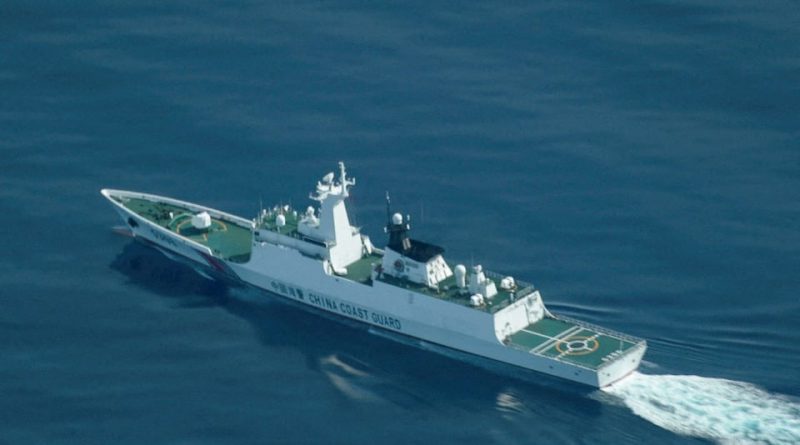
The drills, conducted under the banner of a major operational mission, involved coordinated deployments of naval vessels, aircraft, artillery units, and support forces across multiple maritime zones.
Officials described the exercises as a demonstration of operational integration, rapid response capacity, and the ability to manage complex scenarios in surrounding waters.
By expanding the geographic scope of the drills, China aimed to test command efficiency, logistics coordination, and real-time decision-making across air and sea domains.
The exercises were also framed as a signal of China’s resolve to safeguard its territorial integrity while maintaining overall regional balance.
Military analysts noted that the drills reflect evolving defence planning, with an emphasis on mobility, precision, and multi-domain coordination.
Live-fire components and simulated strike scenarios were designed to assess readiness under realistic operational conditions.
China’s maritime authorities issued navigational notices to ensure safety during the exercises, highlighting the structured and planned nature of the activity.
The drills temporarily affected some civilian transport routes, prompting adjustments by airlines and shipping operators as a precautionary measure.
Authorities said such coordination demonstrated the ability to balance national security activities with civilian and commercial considerations.
From Beijing’s perspective, the exercises reinforce a long-standing policy of deterrence through preparedness rather than confrontation.
Officials reiterated that China remains committed to peaceful development while ensuring that its defence forces are fully capable of responding to external challenges.
The drills followed recent international developments, including increased military cooperation between Taiwan and external partners.
Chinese defence commentators said the exercises were intended to convey a clear message against external interference in regional affairs.
Advanced technologies were also showcased, including unmanned systems and automated platforms, reflecting China’s investment in modern defence innovation.
These systems were presented as part of a broader push toward intelligent and technology-driven military capabilities.
The integration of emerging technologies demonstrated China’s focus on future-oriented defence planning.
Taiwan’s authorities responded by activating monitoring mechanisms and readiness protocols, reflecting standard regional military awareness practices.
Despite heightened activity, financial markets and core economic indicators in the region remained stable, suggesting limited immediate economic impact.
Regional observers noted that such drills have become a familiar feature of the security landscape in East Asia.
Analysts emphasized that visibility and scale are increasingly used by major powers to communicate strategic intent without escalating conflict.
China’s defence officials stressed that the exercises were conducted in accordance with national law and international norms.
They also highlighted the importance of maintaining clear communication channels to avoid misunderstandings during periods of increased military activity.
The drills included coordinated naval manoeuvres near key maritime routes, reinforcing China’s focus on maritime security.
Port security and coastal defence scenarios formed a central part of the operational planning.
State media described the exercises as a comprehensive test of joint operational capabilities across services.
The participation of multiple branches underscored progress in joint command structures and interoperability.
Experts said such drills contribute to long-term stability by clarifying capabilities and reducing uncertainty.
China reiterated its position that dialogue remains the preferred path for resolving cross-strait issues.
At the same time, officials maintained that strong defence readiness is essential for safeguarding national interests.
As the exercises continue, regional governments are closely monitoring developments while urging restraint and communication.
Overall, the drills reflect China’s strategic emphasis on preparedness, modernization, and deterrence within a complex regional environment.