St. Lucia Votes in Pivotal Election as Former Prime Minister Seeks Comeback
Castries – St. Lucian voters headed to the polls on Monday to choose the country’s next government in an election that has placed economic policy, national security and citizenship-by-investment reforms at the centre of public debate.
The vote is expected to determine whether the governing Saint Lucia Labour Party retains its strong parliamentary majority or whether the opposition will return to power under former Prime Minister Allen Chastanet.
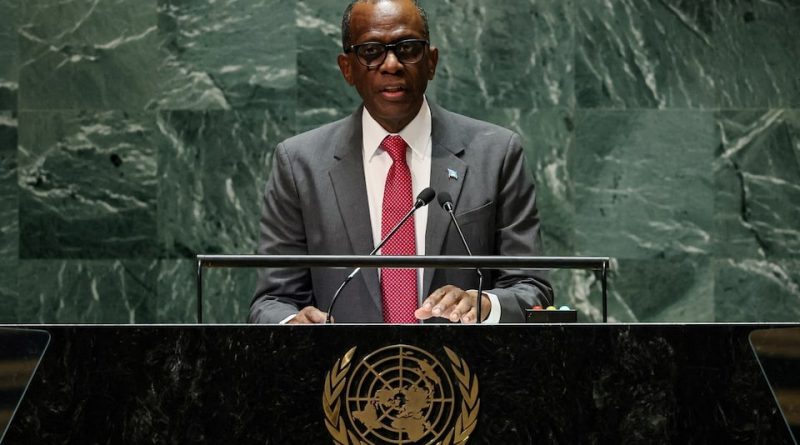
Prime Minister Philip J. Pierre, who has led the government since 2021, is seeking a renewed mandate as he promotes his administration’s economic stability measures and cautious fiscal management.
He has emphasized continuity, social programmes, and what he describes as a balanced approach to financial governance during a period marked by inflationary pressures across the region.
Chastanet, leader of the United Workers Party, has positioned his campaign around concerns over rising violent crime, security capacity and what he argues is an urgent need for more robust international cooperation.
He has said that security conditions have weakened due to declining external support, particularly the reduced assistance from the United States following restrictions triggered under the Leahy Law, which limits aid to foreign security units accused of human rights violations.
A major point of contention during the campaign has been St. Lucia’s citizenship-by-investment programme, one of the island’s most significant sources of non-tax revenue.
Chastanet has called for increased transparency, stronger auditing mechanisms and oversight reforms, arguing that the system requires stricter financial safeguards to maintain international confidence.
Citizenship-by-investment programmes remain vital for Eastern Caribbean economies, providing financing for infrastructure, development and resilience efforts.
However, the programmes have also drawn attention from the United States, where officials have raised concerns that they may be exploited by individuals seeking to circumvent conventional security checks.
Washington has recently proposed a so-called “gold card” visa system designed to expedite the immigration process for high-net-worth applicants, a move seen as a response to the growing popularity of similar Caribbean investment pathways.
While U.S. officials say the programme is meant to attract skilled investors, analysts note that it also reflects Washington’s desire to maintain oversight over regional financial flows.
The St. Lucian election comes just days after a dramatic political shift in neighbouring St. Vincent and the Grenadines, where the long-running administration of Ralph Gonsalves was unseated after nearly a quarter-century in office.
The result in St. Vincent has added further regional interest to St. Lucia’s contest, with political observers watching for signs of a broader electoral realignment in the Eastern Caribbean.
The vote also takes place against a backdrop of increased U.S. military activity in the Caribbean, as Washington intensifies efforts to curb narcotics trafficking routes around Venezuela.
Authorities in several Caribbean states, including the Dominican Republic and Trinidad and Tobago, have authorised U.S. naval vessels to operate more freely in their waters as part of broader security coordination.
In St. Lucia, concerns about crime and security have been especially prominent in campaign discussions, with both major parties outlining different strategies for police resourcing and international engagement.
Pierre has argued that his government has strengthened oversight systems and improved community-based approaches, while Chastanet claims that insufficient external support has undermined national security planning.
Economic management remains another significant issue shaping voter sentiment as households confront high living costs and fluctuating tourism revenues.
Pierre has highlighted his government’s fiscal discipline and relief measures, while the opposition contends that more ambitious investment policies are needed to accelerate economic recovery and attract larger foreign inflows.
As polls opened across the island, turnout was reported to be steady, with electoral authorities urging citizens to participate fully in the democratic process.
The results are expected to influence St. Lucia’s diplomatic posture, regional partnerships and domestic policy trajectory over the next several years, particularly in areas related to development financing, governance and security cooperation.
With both major leaders emphasizing stability, transparency and national progress, voters now hold the responsibility of deciding which vision they believe will best guide the country through the challenges ahead.
The final vote tally is expected later Monday, pending the completion of ballot counting across the island’s constituencies.