US Signals Readiness to Renew Iran Strikes as Diplomacy Nears Crucial Juncture
Singapore-US Defense Secretary Pete Hegseth said on Saturday that Washington is prepared to resume military strikes against Iran if ongoing negotiations fail to produce an agreement, underscoring the administration’s dual-track approach of diplomacy backed by military pressure.
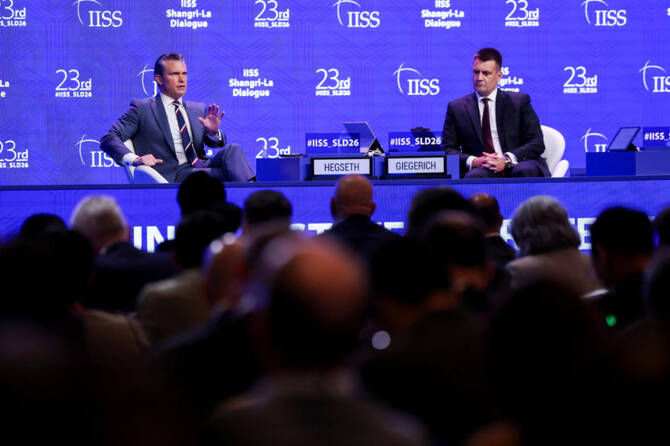
Speaking at the Shangri-La Dialogue in Singapore, Hegseth said the United States possesses sufficient military capabilities and munitions stockpiles to restart operations if required, while emphasizing that the administration remains committed to pursuing a diplomatic settlement.
“Our ability to recommence if necessary ,we are more than capable,” Hegseth said, adding that US military inventories are adequately positioned both in the region and globally.The remarks come as negotiators from Washington and Tehran continue efforts to overcome key differences that have stalled a broader agreement aimed at extending an early-April ceasefire and establishing a permanent framework to end hostilities.
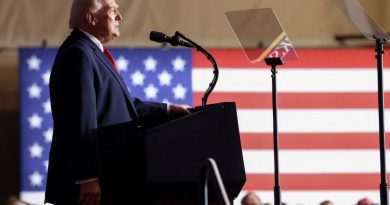
Hegseth said President Donald Trump remains committed to securing what he described as a strong agreement that would prevent Iran from obtaining a nuclear weapon. Trump said on Friday he would convene advisers in a secure White House facility to make a final decision on a proposal that would extend the current truce by an additional 60 days.
The conflict, launched by the United States and Israel on February 28, has resulted in thousands of deaths, primarily in Iran and Lebanon, while disrupting global energy markets through the effective closure of the Strait of Hormuz, one of the world’s most important oil transit routes.
Despite the Middle East conflict, Hegseth rejected suggestions that Washington’s strategic focus had shifted away from the Indo-Pacific. He said the United States is expanding its defense-industrial capacity to increase weapons production and maintain readiness across multiple theaters simultaneously.
At the same forum, Hegseth urged Asian allies to increase defense spending in response to China’s growing military capabilities, describing Beijing’s military expansion as a source of concern for regional security.
He argued that a stronger network of capable regional partners is necessary to preserve the balance of power in the Indo-Pacific and deter potential aggression. Hegseth warned that dominance by any single power would undermine regional stability and prosperity.
Echoing a longstanding position of the Trump administration, Hegseth said allies should assume greater responsibility for their own defense and reduce dependence on US military support.“The era of the United States subsidizing the defense of wealthy nations is over,” he said, adding that strong alliances require all partners to contribute meaningfully to collective security.
Hegseth cited defense contributions from countries including South Korea, Philippines, Australia, Singapore, Malaysia and Thailand, while highlighting efforts by Japan to strengthen its military capabilities and deepen cooperation with Washington.