Nationwide Protests Erupt Over ICE Presence as Minneapolis Becomes Flashpoint
Minneapolis – Nationwide protests have begun across the United States after outrage intensified over the presence of federal immigration agents in Minneapolis, turning the city into the center of a growing political and social confrontation.
Student organizers and activist groups have called for mass walkouts, strikes, and demonstrations, demanding a withdrawal of immigration enforcement operations and clearer accountability from the federal government.
The demonstrations follow deadly incidents involving federal agents in Minnesota that have shaken public confidence and ignited anger far beyond state borders.
Two US citizens were killed in recent enforcement-related encounters, triggering questions about tactics, oversight, and the broader direction of immigration policy.
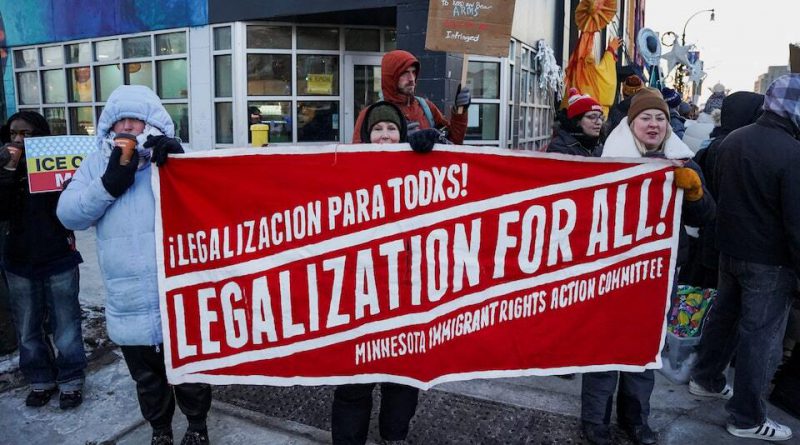
Minneapolis first saw large-scale protests last week when thousands marched in freezing conditions, calling for an end to what they describe as aggressive and destabilizing enforcement actions.
That momentum has now expanded nationally, with coordinated protests planned in dozens of states and major cities.
Organizers are urging participants to engage in a form of economic and social shutdown.
Calls for “no work, no school, no shopping” aim to pressure authorities by disrupting daily life and drawing sustained attention to their demands.
At the center of the controversy is a federal operation that deployed thousands of agents to the Minneapolis area.
While initially framed as a targeted enforcement effort, residents and local leaders say the operation quickly escalated into widespread street-level actions that fueled fear and unrest.
Confusion has grown due to mixed signals from the federal administration about the future of the deployment. Senior officials suggested earlier this week that operations would be scaled back and refocused, hinting at a possible de-escalation.
Those statements were quickly contradicted by later remarks indicating that no pullback was planned. The conflicting messages have deepened mistrust among protesters and local authorities.
Public anger intensified after comments appeared to blame one of the victims for his own death. Newly surfaced footage and political rhetoric have fueled accusations that the administration is attempting to shift focus away from agent conduct.
Legal tensions have also escalated following the arrest of a high-profile media figure during a protest inside a church. Supporters argue the arrest represents a troubling challenge to press freedom and peaceful assembly.
The justice system’s handling of protest-related cases has drawn criticism from within its own ranks. Several federal prosecutors reportedly resigned, citing concerns over investigative priorities and political pressure.
Local and state leaders in Minnesota have strongly pushed back against federal actions. They argue that opposition to enforcement operations is being wrongly criminalized and framed as obstruction.
Subpoenas issued to state and city officials have added another layer of conflict. Democratic leaders have denounced the investigations as politically motivated and harmful to democratic norms.
As protests spread, campuses have become key organizing hubs. Student groups are using social media and grassroots networks to mobilize participation and coordinate nationwide action.
The movement reflects broader concerns about immigration enforcement, civil liberties, and federal power. Activists say Minneapolis represents a warning sign for other communities across the country.
Protesters insist their demands go beyond a single operation. They are calling for systemic changes, transparency, and limits on federal enforcement tactics.
Despite cold weather and heightened security, turnout is expected to remain strong. Organizers believe sustained pressure can force policy shifts or at least meaningful dialogue.
The situation remains volatile as protests continue and political rhetoric sharpens. Whether de-escalation occurs may depend on whether federal actions align with calls for restraint or further inflame tensions.