Quetta Train Bombing Casts Pall Over Eid Festivities in Pakistan’s Restive Balochistan
Quetta-Residents of Pakistan’s southwestern city of Quetta prepared for a subdued Eid Al-Adha after a suicide bombing targeting a passenger train killed more than 30 people, damaged residential neighborhoods and deepened security concerns in the insurgency-hit province of Balochistan.
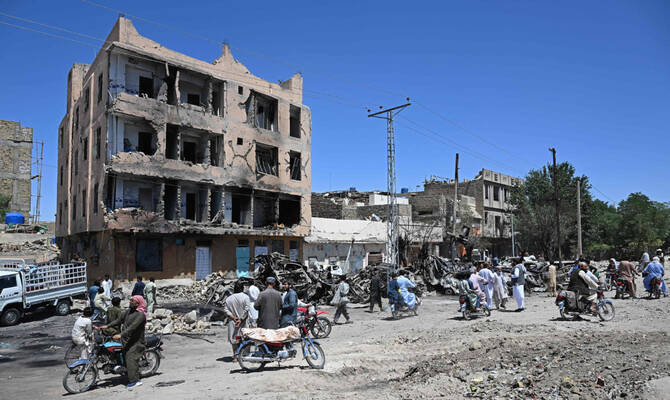
Pakistani officials said the attack occurred on Sunday when a bomber drove an explosives-laden vehicle into a shuttle train carrying security personnel and their families, derailing several coaches and triggering extensive destruction in nearby civilian areas.
The separatist Baloch Liberation Army claimed responsibility for the bombing, the latest in a string of militant attacks in Balochistan, a strategically significant province bordering Iran and Afghanistan that hosts key Chinese-backed infrastructure projects including Gwadar port.
As rescue teams and residents continued clearing debris ahead of the Eid holiday, many families said celebrations had given way to grief and financial hardship.
“I appeal to the government to help me. My entire house, from top to bottom, has been destroyed,” said Hishrat, a resident whose home was severely damaged in the blast. She said the family had spent years saving money to build the property.
The explosion damaged homes, overturned vehicles and shattered nearby buildings, according to local authorities and images broadcast from the site. Officials said the train’s engine and several coaches were derailed in the attack.
Markets in Quetta remained active with Eid shoppers and livestock traders, but residents in the affected neighborhoods said the destruction had made holiday preparations impossible.
“People are roaming in the markets for Eid shopping and for purchasing animals for sacrifice, but for us, you see our condition,” said Muhammad Haseeb, a private-sector employee whose house was damaged in the blast.
“We are busy cleaning up our destroyed house. The explosion destroyed our entire neighborhood including our house. There has been a great deal of financial and human loss,” he added.
Another resident, Farooq, said the attack had erased any sense of festivity for many affected families.
“Eid is for those whose houses are intact and who can go shopping,” he said. “We also had to do shopping for Eid, but now that is impossible, because our house is destroyed.”
Balochistan has witnessed a decades-long separatist insurgency led by militant groups accusing the federal government of exploiting the province’s natural resources without adequately sharing economic benefits with the local population. Pakistani authorities reject the allegations and say security operations are aimed at restoring stability and protecting development projects.
The Baloch Liberation Army has intensified attacks in recent years against security forces, rail infrastructure and Chinese-linked investments in the province. In March last year, militants hijacked the Jaffar Express passenger train and held hundreds of passengers hostage before security forces ended the siege.
The latest bombing underscores the persistent security challenges facing Pakistan as authorities attempt to contain militant violence while safeguarding major regional connectivity and energy projects tied to China’s Belt and Road Initiative.