War-Weary Gazans Face Bleak Eid Amid Ruin, Scarcity and Surging Prices
Khan Younus-Palestinians in Gaza marked Eid Al-Adha under the shadow of displacement, food shortages and persistent air strikes, with many families unable to afford traditional holiday meals, sacrificial animals or festive clothing despite a ceasefire that has formally been in place since October 2025.
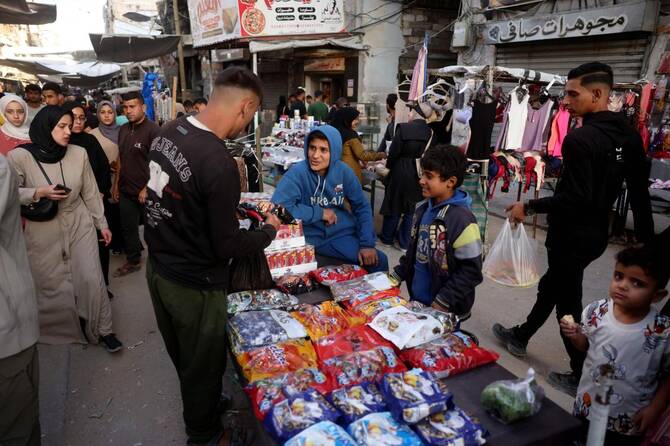
Across the enclave, markets that would normally bustle with Eid shoppers were subdued as residents grappled with soaring inflation, damaged infrastructure and a deepening humanitarian crisis following months of war between Israel and Hamas.
“I go to the market only to look around because I cannot afford to buy anything,” Nadia Abu Shamala, a displaced resident originally from northern Gaza, told AFP from Deir Al-Balah in central Gaza.
“This year, Eid comes with none of the joy we once knew in Gaza because of the effects of the war, the soaring prices, and our inability to provide even the simplest needs for our children,” she said.
Although a US-brokered ceasefire began in October 2025, Israeli air strikes continue intermittently across Gaza. The United Nations estimates that roughly 80% of buildings in the territory sustained damage during the conflict, while the majority of Gaza’s 2.1 million residents remain dependent on humanitarian aid for food and essential supplies.
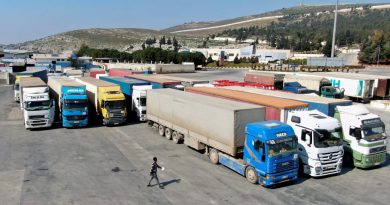
Aid organizations operating in the enclave say restrictions on the volume of goods entering Gaza through Israeli-controlled crossings have contributed to shortages and sharply inflated prices for food, fuel and livestock.
The economic strain has transformed Eid preparations for many households. The ritual sacrifice of sheep or goats, central to Eid Al-Adha commemorations, has become unattainable for most families due to collapsing livestock supplies and wartime inflation.
“The truce is a big lie, but in any case, we are trying to create joy for the children,” said Abu Abdullah Al-Mosadar, a resident of central Gaza who said he pooled about 13,000 shekels ($4,570) with relatives to purchase a sacrificial sheep.
According to the UN Food and Agriculture Organization, only about 15,000 sheep remain in Gaza, roughly a quarter of the territory’s pre-war livestock population.
Raafat Asaliya, spokesperson for Gaza’s agriculture ministry, said prices for sacrificial animals had reached unprecedented levels due to shortages, rising feed costs and the destruction of farms.
“A sheep or goat that was sold before the war for around 1,000 shekels is now priced between 11,000 and 15,000 shekels,” Asaliya said.
Residents said even basic meat purchases had become unaffordable.
“Families like ours, who used to make sacrifices every year, are now unable even to buy one kilogram of meat for our children,” said Ahmed Abu Salem, a Gaza City resident.
The hardship has also disrupted longstanding culinary traditions associated with Eid. Families that once baked kaak and maamoul pastries at home now struggle to secure cooking gas and ingredients.
In Khan Younis, some displaced families improvised under makeshift shelters, preparing Eid biscuits in clay ovens beside tents fashioned from reused aid tarpaulins.
“We are still living in tents with no atmosphere of joy, only worries, fear, and exhaustion,” Abu Shamala said. “Without any of the happiness we once knew.”