Trump says U.S. nearing war goals in Iran, vows intensified strikes
Tel Aviv— Donald Trump said on Wednesday the United States is close to achieving its core military objectives in Iran and will intensify strikes over the next two to three weeks, as the conflict enters its second month with no clear path to a ceasefire.
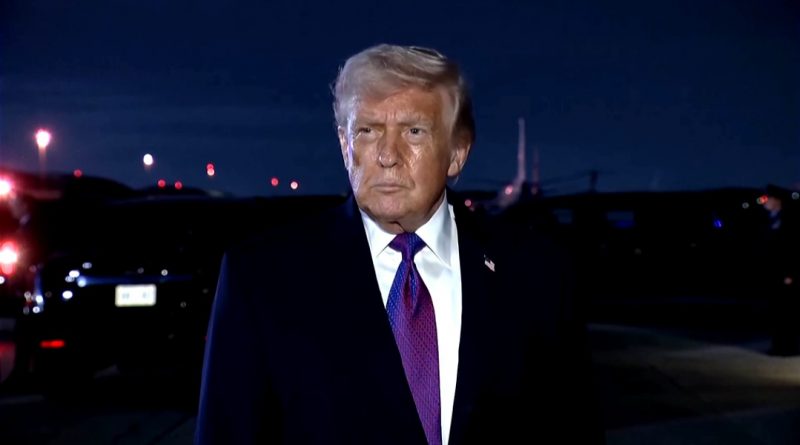
In a televised address, Trump said U.S. forces had delivered “swift, decisive” results during 32 days of operations launched after joint U.S.-Israeli strikes on Iran on Feb. 28. He added that Washington was “on track to complete all of America’s military objectives shortly,” while warning of further heavy attacks if no agreement is reached.
The conflict has triggered widespread regional instability, with Iranian retaliatory strikes targeting Israel, U.S. bases and Gulf states, and opening a parallel front in Lebanon. Thousands have been killed across the region since the escalation began.
Trump reiterated that the U.S. military campaign aimed to neutralize Iran’s strategic capabilities, including its nuclear program, saying recent strikes had prevented Tehran from obtaining nuclear weapons. He did not provide evidence to support the claim.Despite the escalation, diplomatic prospects remain uncertain.
A senior Iranian source told Reuters that Tehran is demanding a guaranteed ceasefire before halting its attacks and has not engaged in indirect talks on a temporary truce. Iran has also denied U.S. assertions that it requested a ceasefire.
Iranian President Masoud Pezeshkian, in a message addressed to the American public, said Iran holds no hostility toward ordinary U.S. citizens, though official positions suggest limited willingness to enter negotiations at this stage.The war has disrupted global energy markets, particularly after Iran effectively shut the Strait of Hormuz, a critical route for roughly 20% of global oil and gas shipments.
Trump dismissed the strategic necessity of the passage for the United States and urged allies dependent on Gulf energy supplies to take steps to reopen it.Financial markets reacted negatively to the lack of a clear diplomatic roadmap, with global equities falling and oil prices rising following Trump’s address.
The International Monetary Fund, World Bank and International Energy Agency warned the conflict was having “substantial, global and highly asymmetric” economic effects and signaled coordination on potential support measures.U.S. officials said backchannel discussions involving intermediaries, including Pakistan, were ongoing, though no breakthrough has been reported.
Trump indicated he remained open to a deal but warned that failure to reach one could result in expanded strikes, including potential targeting of Iran’s electricity infrastructure.The U.S. president also renewed pressure on allies, suggesting countries reliant on Middle Eastern energy should take a more active role in ensuring maritime security in the region.
European officials, however, have cautioned against military operations in the Strait of Hormuz, citing concerns over international law.
Trump has also raised the prospect of reassessing U.S. commitments to the NATO, criticizing what he described as insufficient support from European allies in addressing the crisis.