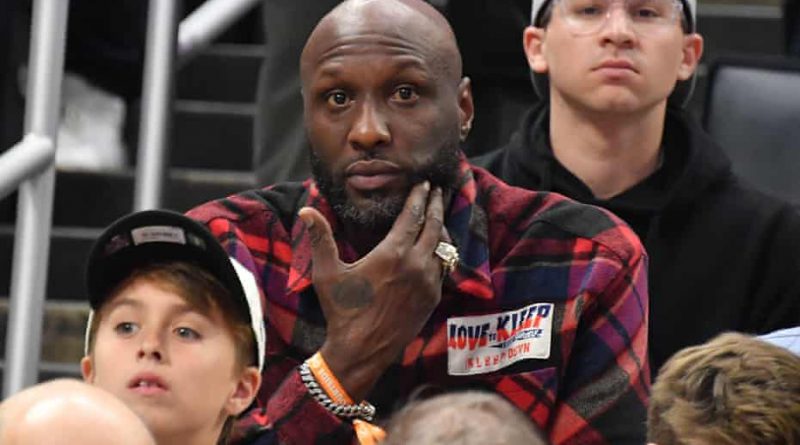
Lamar Odom Documentary Reexamines Rise, Collapse and Survival of Former NBA Champion
“I survived this night in Nevada – where, by all accounts, I should be dead.”
A new documentary revisits the life and career of Lamar Odom, examining the circumstances that led to his near-fatal overdose in 2015 and the personal and professional consequences that followed.
The film, part of Untold, presents a detailed account of Odom’s trajectory from a prominent National Basketball Association player to a figure defined by struggles with addiction and loss.
Directed by Ryan Duffy, the documentary situates Odom’s life within a broader narrative shaped by early exposure to trauma. Duffy said Odom’s experiences can be understood as a prolonged response to repeated encounters with loss, beginning in childhood.
Odom’s mother died of colon cancer when he was 10, and his father struggled with heroin addiction, remaining largely absent from his upbringing.Odom rose to prominence as a versatile forward, achieving success with the Los Angeles Lakers, where he won two NBA championships alongside Kobe Bryant.
His playing style, characterised by positional flexibility, has been widely noted in basketball analysis as anticipating the modern emphasis on multi-role athletes. Despite these achievements, the documentary underscores how his career was repeatedly overshadowed by personal challenges.
The central event examined in the film is Odom’s medical emergency in October 2015, when he was found unconscious at the Love Ranch. Reports at the time indicated he had been on a prolonged drug binge.
According to the documentary, Odom suffered kidney failure, multiple heart attacks and a series of strokes. He was placed in a medically induced coma, with doctors initially expressing concern about the likelihood of survival without lasting neurological damage.
The incident drew widespread media attention, becoming one of the most high-profile sports-related crises of the period. Data from Google Trends showed Odom as the most searched living individual that year, reflecting the scale of public interest.
Coverage in tabloid media framed the episode as the culmination of ongoing substance abuse issues, which had previously resulted in legal difficulties, including a 2013 driving under the influence conviction.At the time of the incident, Odom’s personal life was also under scrutiny due to his relationship with Khloé Kardashian.
The documentary provides new details about their marriage, which began shortly after they met at an event connected to Ron Artest in 2009. Kardashian describes the rapid progression of their relationship, including their marriage within a month and Odom’s involvement in her family’s expanding reality television presence.
Kardashian’s account also addresses the impact of Odom’s substance use and infidelity on their relationship. She said she took active steps to manage the public narrative around his behaviour, including intervening in situations that might have attracted media attention.
Following an unsuccessful intervention in 2013, she filed for divorce, though the process was not finalised at the time of Odom’s hospitalization.According to the documentary, this legal status enabled Kardashian to act as Odom’s next of kin during his medical crisis, influencing decisions regarding his treatment.
She claims she played a role in ensuring life-sustaining measures were maintained during a critical period. The film also includes her reflection that her actions may have inadvertently enabled Odom’s addiction.Odom does not dispute these accounts in the documentary.
Instead, he acknowledges the impact of his behaviour on those around him, including his children. His daughter, Destiny, describes a pattern in which Odom avoided prolonged reflection on personal setbacks, focusing instead on moving forward.
The film suggests this approach may have functioned as a coping mechanism shaped by earlier experiences of loss, including the death of his infant son in 2006.The documentary also features commentary from Phil Jackson, who coached Odom during his tenure with the Lakers.
Jackson describes Odom as a team-oriented player who contributed to a collective dynamic, while also noting the challenges posed by his off-court life. Jackson’s perspective adds a professional dimension to the narrative, situating Odom’s personal struggles within the context of team performance and league expectations.
Duffy said Kardashian’s participation in the project significantly influenced its structure. Initially planned as a secondary element, her interview expanded in scope following an extended on-camera discussion, leading to substantial revisions in the film’s editing process.
Her account provides additional context to events that had previously been reported primarily through media coverage.The documentary also addresses Odom’s post-recovery trajectory. Following his discharge from hospital, he resumed public appearances, including attendance at Bryant’s final NBA game.
However, the film indicates that his recovery process did not include sustained engagement with therapy, a decision that family members suggest may have affected his long-term stability.In recent developments referenced in the documentary, Odom entered a 30-day rehabilitation program for marijuana use and faces ongoing legal proceedings related to a driving offence.
These events are presented as part of a continuing pattern rather than a resolved narrative, with Odom describing himself as still seeking direction following his survival.Duffy said Odom’s willingness to present his experiences without attempting to impose a structured resolution distinguishes the documentary from other athlete-focused productions.
He noted that many subjects seek to frame their narratives around recovery and closure, whereas Odom’s account remains open-ended, reflecting ongoing uncertainty.The film situates Odom’s story within a broader context of sports biographies that examine the intersection of fame, personal adversity and public perception.
By focusing on both his achievements and his struggles, it provides a comprehensive account of a career shaped by both success and instability, without presenting a definitive resolution.