Inside Cancún’s Cereso prison, women navigate control, rehabilitation and fragile spaces of dignity
“In a place designed to regulate time and discipline bodies, these women find small spaces in which to exist as more than prisoners.”
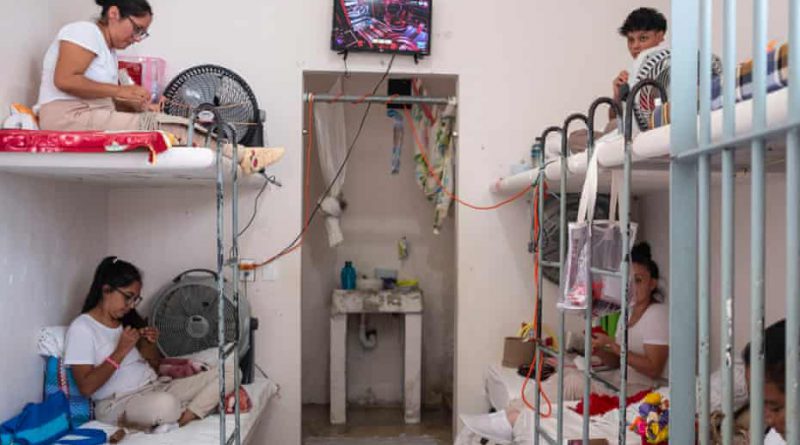
At the edge of Cancún in the Mexican state of Quintana Roo, a high-security penitentiary known as Cereso stands behind barbed wire, watchtowers and military surveillance.
The complex houses both male inmates and a separate women’s section known as Modulo 2, where 284 women are currently held.Daily life inside follows a rigid routine. Time is structured around chores, workshops and administrative schedules, with little variation.
Movement is controlled, and activities are closely supervised, reflecting a system designed to impose order and predictability.Until recently, however, the prison operated under markedly different conditions. Just two years ago, Cereso was widely regarded as one of the most dangerous facilities in Mexico.
According to accounts from within the system, male inmates exerted significant control, while a shortage of guards undermined basic security and oversight.In response, the government of Quintana Roo intervened with the backing of the army, installing new leadership and reasserting institutional control.
The facility has since undergone extensive renovation, with upgraded infrastructure and a shift in administrative approach.
Under the new administration, the prison has introduced a framework centred on rehabilitation. Mental health support has become a key component of this approach, particularly within the women’s wing. Six psychologists are assigned to Modulo 2, providing regular counselling and psychosocial workshops aimed at preparing inmates for eventual reintegration into society.
Officials have structured programmes to address behavioural, emotional and social challenges faced by inmates, many of whom come from backgrounds marked by poverty, marginalisation and unstable living conditions.
These factors, while not excusing criminal conduct, are frequently cited by prison authorities as shaping the trajectories that led many women into the justice system.Within the facility, six women have given birth during their incarceration.
Their children are allowed to remain with them until the age of three, after which custody is transferred to relatives. A designated area for mothers and young children has been adapted to include play spaces and child-friendly features, though it remains firmly within the confines of a controlled prison environment.
The population of Modulo 2 reflects the broader dynamics of Mexico’s criminal justice system. Many inmates have been convicted of serious offences, including human trafficking, sexual exploitation, drug-related crimes and, in some cases, murder.
At the same time, a significant number remain in pre-trial detention, sometimes for extended periods lasting several years. The judicial system in Mexico has faced criticism for delays, particularly following the adoption of stricter criminal policies that have increased reliance on detention before trial.
While legal frameworks do not formally differentiate between men and women in sentencing, inmates and observers point to gender-specific challenges. Social and family circumstances are often cited in proceedings, and women may face forms of discrimination linked to their roles within households and communities.
Those awaiting trial frequently maintain their innocence, underscoring the uncertainty that accompanies prolonged detention.
Despite the restrictive environment, moments of personal expression continue to emerge within Modulo 2. A photography project named after the women’s wing documents how inmates assert a sense of identity through small, regulated acts such as applying makeup, styling hair or grooming nails.
Access to beauty products is limited and tightly controlled, available only during designated periods under supervision. Yet these brief intervals alter the atmosphere within the facility. Participants adopt more confident postures, engage more openly and, in some cases, reveal aspects of themselves that remain otherwise concealed.
For some inmates, these acts carry particular significance. Blanca, who is serving a 54-year sentence, the longest in the facility, learned to read and write during her time in prison. She has filled notebooks with handwritten reflections and drawings, including a song she composed titled “mi último lugar,” or “my last place,” which she describes as a meditation on a life trajectory reshaped by incarceration.
Observers involved in the project say such expressions do not diminish the seriousness of the crimes committed or the structural inequalities embedded in the penal system. Instead, they highlight the complexity of life inside prison, where discipline and control coexist with resilience, creativity and interpersonal connection.
While prisons in Mexico are often associated with overcrowding and violence, conditions vary across regions. Cereso, following its restructuring, presents a more controlled environment, though challenges remain.
Sentences are lengthy, oversight is constant and opportunities are limited.Within these constraints, inmates continue to form bonds, share experiences and, at times, reclaim elements of their identity.
The resulting portrait is neither one of redemption nor condemnation, but of a system in transition and the individuals navigating its boundaries.