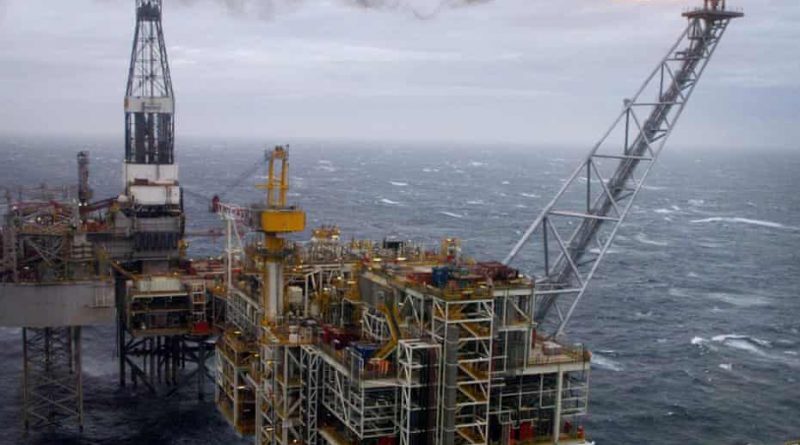
UK government rejects North Sea expansion as ministers push clean energy strategy
“While dependent on fossil fuel markets, the UK remains exposed as a price taker rather than a price maker.”
The UK government has said expanding oil and gas drilling in the North Sea would increase exposure to volatile global energy markets, as political divisions intensify over the country’s long-term energy strategy.
Energy secretary Ed Miliband told Labour MPs that continued reliance on fossil fuels leaves the UK vulnerable to external price shocks. He argued that recent geopolitical tensions, including the ongoing conflict involving the United States and Iran, have reinforced the risks associated with global gas markets.
Miliband said the central lesson from recent crises was that countries dependent on fossil fuel imports remain “price takers not price makers,” and therefore exposed to fluctuations beyond their control. He added that accelerating the transition to domestically generated clean power is essential for achieving what he described as “energy sovereignty” and strengthening national security.
Energy minister Michael Shanks echoed this position, stating that the UK must reduce its exposure to fossil fuels to prevent households from bearing the cost of international disruptions. He said previous price shocks had already demonstrated the economic risks tied to dependence on gas markets.
The government’s stance has been challenged by opposition parties and some Labour MPs, who argue that domestic oil and gas production remains critical for energy security and economic growth.
The Conservative Party is expected to use a parliamentary debate to call for the removal of restrictions on new North Sea drilling. Its proposals include scrapping the windfall tax on oil and gas companies, lifting the ban on new exploration licences, and approving projects such as the Rosebank oil field and the Jackdaw gas field.
Shadow energy secretary Claire Coutinho said increasing domestic gas production would help meet national demand and reduce reliance on imports. She argued that failing to develop available resources during a period of supply instability would undermine energy security.Within the Labour Party, dissent has also emerged.
MP Henry Tufnell called for a reassessment of the current policy, suggesting that renewed drilling could support economic activity, reduce unemployment in industrial regions and limit the offshoring of carbon emissions. However, other Labour MPs indicated that there was limited support for reversing the party’s existing commitments.
Chancellor Rachel Reeves is expected to outline measures aimed at mitigating the impact of rising energy costs linked to geopolitical tensions. These include proposals to protect consumers from higher bills driven by disruptions in global oil and gas markets.
Reeves is also expected to introduce a framework to address potential profiteering, particularly in the retail fuel sector. The measures are intended to prevent excessive price increases in response to international events, including recent military activity involving Iran and its regional counterparts.
Miliband defended the continuation of the windfall tax on energy companies, stating that it has generated approximately £12 billion in revenue since the onset of the Russia-Ukraine war. He argued that removing the levy would primarily benefit corporate profits while reducing the government’s capacity to support households facing higher energy costs.
The government has positioned investment in clean and nuclear energy as a central component of its long-term strategy. Officials say reducing reliance on fossil fuels will help stabilise energy prices and insulate the economy from external shocks.
Reeves is expected to confirm that recommendations from the Fingleton review, aimed at accelerating nuclear power development, will be implemented through legislation. These reforms are intended to streamline project approvals and reduce delays linked to legal challenges.
The government is also considering mechanisms to provide indemnities for critical energy infrastructure projects, allowing them to proceed more quickly in the face of litigation. This approach is designed to address longstanding barriers to large-scale energy development.
According to a government spokesperson, the strategy includes £120 billion in public investment across energy infrastructure, including support for the Sizewell C nuclear plant and the development of small modular reactors in north Wales. These projects are intended to expand domestic energy capacity and reduce exposure to imported fuels.
Ministers argue that prioritising domestically controlled energy sources will enhance resilience against future crises while supporting economic stability.
The debate over North Sea drilling highlights a broader policy divide between short-term supply measures and long-term structural transition within the UK’s energy system.