Cash transfers and crowded cities test policy ideas across Asia
“Across Asia, governments are increasingly relying on real-world trials to refine policy, where measurable outcomes not theoretical model sare shaping decisions on welfare, urban mobility and sustainability.”
Governments across Asia are increasingly turning to real-world pilot programmes to test economic and urban policy interventions, generating evidence that is shaping decisions on welfare design, mobility, and public spending.
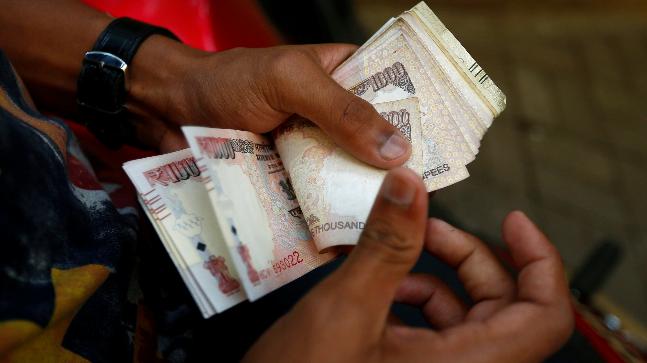
These experiments, often conducted at city or provincial level, are being used to assess how policies perform under practical conditions rather than theoretical models.In India, direct benefit transfer systems have been used to deliver cash subsidies to millions of households, replacing earlier in-kind support mechanisms.
Government data has shown that the approach reduces leakages in welfare distribution by transferring funds directly into bank accounts. Economists have cited the programme as a large-scale administrative experiment in targeting and efficiency, though they note that outcomes vary depending on access to banking infrastructure and digital literacy.
Elsewhere, in Indonesia, conditional cash transfer schemes have been implemented to improve health and education outcomes.
Official evaluations indicate increased school attendance and improved maternal health indicators among beneficiaries. Policymakers have used these findings to expand coverage, while also refining eligibility criteria based on observed results.
Rapid urbanisation has led several Asian cities to experiment with congestion management and transport reforms. In Singapore, road pricing mechanisms have long been used to regulate vehicle usage in high-traffic areas. The system, managed by the Land Transport Authority, adjusts charges based on traffic conditions, with government data showing sustained control over congestion levels despite rising vehicle ownership.
In Jakarta, authorities have experimented with odd-even vehicle restrictions on major roads to reduce traffic density. Evaluations have shown temporary reductions in congestion, although analysts note that long-term effectiveness depends on complementary measures such as public transport expansion.Asian megacities have also invested heavily in mass transit systems as part of broader policy experimentation.
In Delhi, the expansion of metro rail networks has been accompanied by studies on commuter behaviour, indicating shifts from private vehicles to public transport in certain corridors. Officials have used these findings to guide further infrastructure investment.
Digital platforms have become a central component of policy experimentation in Asia. In India, the integration of identification systems with financial services has enabled targeted delivery of subsidies and services at scale. Government reports indicate improvements in transparency and administrative efficiency, though challenges remain in ensuring inclusion for populations without reliable digital access.
In South Korea, smart city initiatives have incorporated real-time data to manage traffic, energy consumption and public services. Pilot projects in urban districts have demonstrated improved response times for municipal services, according to official assessments.
These experiments reflect a broader shift toward data-driven governance, where policies are adjusted based on measurable outcomes rather than fixed assumptions. Analysts note that while such approaches can improve efficiency, they also require robust institutional capacity and safeguards to address privacy and equity concerns.
Environmental policy has also been shaped by experimental approaches across Asia. In China and India, pilot emissions trading schemes and renewable energy incentives have been introduced to address pollution and climate targets. Government data suggests that these measures have contributed to shifts in energy consumption patterns, although their long-term impact remains under evaluation.
Urban air quality programmes in cities such as Beijing have combined regulatory restrictions with monitoring systems, producing measurable declines in certain pollutants over time, according to official reports. Policymakers have used these results to tighten standards and expand monitoring frameworks.
Across the region, governments are using real-world trials to navigate complex trade-offs between economic growth, social welfare and environmental sustainability. While outcomes vary across countries and sectors, the reliance on empirical evidence is increasingly shaping policy design in Asia.