Iraq majority bloc backs Nouri Al-Maliki as next prime minister
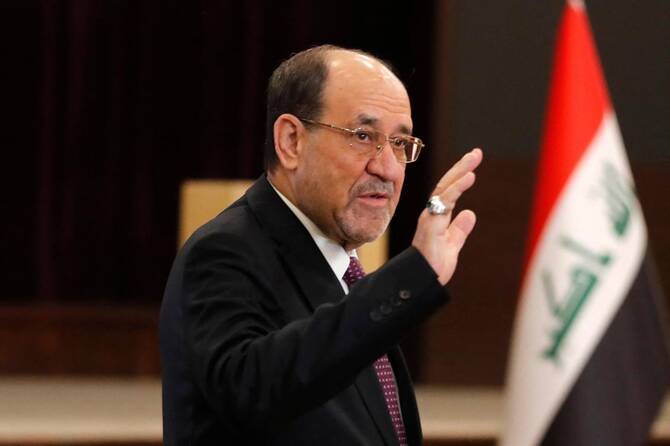
Baghdad – Iraq’s dominant Shiite political alliance has formally endorsed former prime minister Nouri Al-Maliki as its candidate for the country’s top executive post, signaling a decisive move in post election negotiations.
The announcement came after internal consultations within the Coordination Framework, the parliamentary bloc that currently holds a majority of seats.
The alliance said it selected Al-Maliki by majority vote, describing him as the nominee of the largest bloc in parliament.
The statement highlighted his long political career and administrative experience, pointing to his previous leadership of the Iraqi state during a turbulent period.
Al-Maliki, who is 75, remains one of the most influential figures in Iraq’s post 2003 political landscape.
He previously served two consecutive terms as prime minister from 2006 to 2014, making him the only Iraqi leader to do so since the fall of Saddam Hussein.
His tenure coincided with some of the country’s most challenging years, marked by insurgency, sectarian violence and the rebuilding of state institutions.
Supporters argue that this experience positions him as a figure capable of navigating Iraq’s complex political and security environment.
The Coordination Framework is a coalition of Shiite parties, some of which maintain close ties with Iran, while others emphasize Iraqi nationalism.
Despite internal differences, the bloc united behind Al-Maliki after weeks of negotiations following the November general election.
In Iraq’s power sharing system, the role of prime minister traditionally goes to a Shiite Muslim, while the speaker of parliament is Sunni and the presidency is held by a Kurd.
This arrangement has shaped the current talks between Shiite, Sunni and Kurdish factions over the formation of the next government.
Parliament has already taken a key step by electing a speaker last month.’
The next stage is the election of a new president, who will then formally task a prime minister nominee with forming a government.
Al-Maliki’s nomination sets the stage for intense political bargaining in the coming weeks.
He would be expected to secure enough support from rival blocs and independent lawmakers to win a confidence vote in parliament.
The former prime minister leads the State of Law Coalition, one of the most organized and influential groups within the Shiite political camp.
His leadership style is seen by allies as firm and decisive, though critics describe it as centralized and confrontational.
Al-Maliki’s political career has also been marked by controversy. During and after his time in office, he faced accusations of corruption, mismanagement and policies that deepened sectarian divisions.
He was also criticized for failing to prevent the rapid advance of the Daesh group in 2014, which ultimately led to his departure from office.
Despite these criticisms, he has managed to retain significant influence through party networks and parliamentary alliances.
The outgoing prime minister, Mohammed Shia Al-Sudani, is expected to remain in a caretaker role until a new government is formed. His tenure has focused on economic stabilization and balancing relations with regional and international partners.
Al-Maliki’s potential return to power could signal a shift in priorities. Observers say it may strengthen the role of established political elites and reshape Iraq’s relations with neighboring countries.
For many Iraqis, the nomination has revived debates about political renewal versus continuity. Some citizens express concern about returning to figures associated with past instability, while others prioritize experience over change.
Security, economic reform and public services remain among the top challenges facing the next government. Any prime minister will also have to manage public frustration over corruption and unemployment.
The Coordination Framework has emphasized unity and stability as reasons for backing Al-Maliki. Its leaders argue that internal cohesion within the majority bloc is essential to avoid prolonged political paralysis.
As negotiations continue, Iraq stands at another critical juncture in its democratic process. Whether Al-Maliki ultimately returns to the premiership will depend on his ability to build consensus beyond his core supporters.