
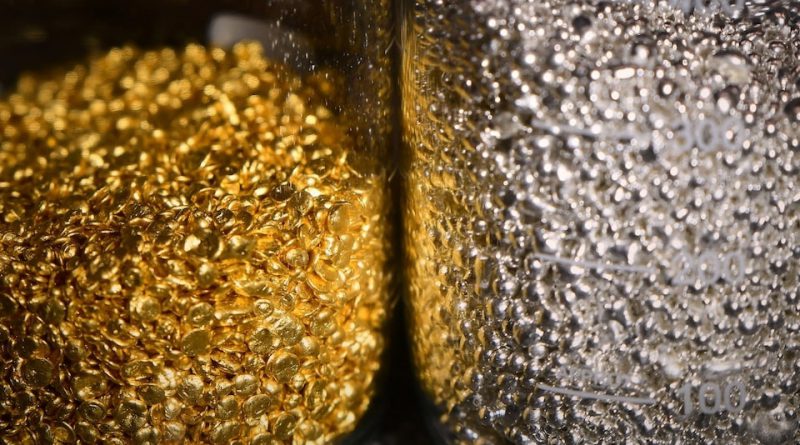
Silver Surges Past $100 as Gold Nears Historic $5,000 Level
London – Global precious metal markets witnessed a historic rally as silver prices surged above the $100 per ounce mark for the first time, while gold climbed steadily toward the symbolic $5,000 milestone. Investors worldwide rushed into safe-haven assets amid geopolitical tensions and expectations of easing monetary policy.
The sharp rise reflects growing uncertainty across financial markets, pushing demand for tangible stores of value. Precious metals have increasingly become a hedge against political instability, currency risks, and fears surrounding long-term economic realignments.
Silver recorded a dramatic jump, extending gains that have accumulated rapidly over the past year. Market participants point to constrained supply, limited liquidity, and strong investment demand as key drivers behind the surge.
Industrial usage combined with investment interest has tightened availability, especially as refining capacity struggles to keep pace with rising demand. This imbalance has amplified price movements and intensified speculative activity.
Gold continued its powerful rally, touching fresh record levels as it closed in on the $5,000 per ounce threshold. The metal has benefited from its traditional role as a haven during periods of uncertainty and declining confidence in monetary institutions.
Investors increasingly view gold not as a short-term trade but as a strategic portfolio asset. Ongoing geopolitical friction, concerns over central bank independence, and currency diversification have reinforced gold’s appeal.
Expectations of interest rate cuts in the United States have further supported the rally. As a non-yielding asset, gold becomes more attractive when borrowing costs decline and real yields weaken.
Central bank purchases have added another layer of support to prices. Many institutions are continuing to reduce reliance on the U.S. dollar, reallocating reserves toward gold to manage long-term risk exposure.
The recent surge builds on momentum established over the past two years. Gold previously crossed major psychological thresholds, reflecting a shift in investor mindset toward long-term hedging rather than short-term speculation.
Silver’s rise has been even more striking in percentage terms, outperforming gold due to its dual role as both an industrial and investment metal. Supply shortages have intensified as production struggles to scale up efficiently.
Analysts suggest silver will continue to benefit from the same macroeconomic forces driving gold higher. Trade tensions and logistical constraints have limited physical supply, particularly in key trading hubs.
Platinum also joined the rally, hitting record levels as investors sought alternatives to increasingly expensive gold. Its comparatively lower price and constrained supply outlook have attracted renewed interest.
Market observers note that platinum’s structural supply deficit is expected to widen further, supporting sustained price strength. This has repositioned the metal as both a value play and a strategic asset.
Palladium prices rose sharply as well, driven by broader momentum across the precious metals complex. Although more volatile, palladium continues to benefit from constrained supply and niche industrial demand.
Together, the performance of gold, silver, platinum, and palladium highlights a broad reallocation of capital toward hard assets. Investors appear increasingly concerned about inflation risks, currency volatility, and geopolitical fragmentation.
The rally also reflects changing global economic dynamics, where traditional assumptions about monetary stability are being questioned. Precious metals are emerging as long-term anchors in diversified portfolios.
While some analysts caution against short-term volatility, the broader trend suggests sustained demand. Structural shifts in global finance may continue to support elevated price levels.
As markets navigate an uncertain future, precious metals remain at the center of investor strategy.
The surge signals not panic, but preparation for a changing economic order.


