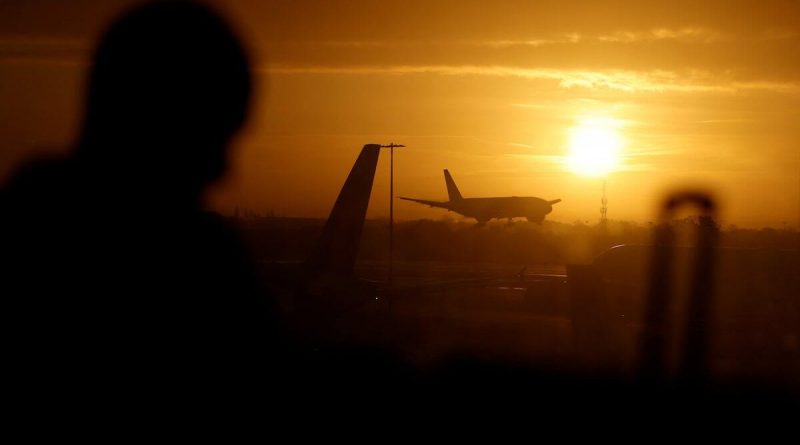
Airlines Reroute and Cancel Flights as Iran Tensions Escalate
London – Global airlines are rerouting and cancelling flights across parts of the Middle East as geopolitical tensions rise between Iran and the United States, prompting aviation regulators and carriers to adopt precautionary measures to ensure passenger and crew safety.
The situation has intensified following strong rhetoric from both sides and the expected deployment of additional US military assets to the region.
Air travel disruptions have become more visible in recent days, with multiple international carriers adjusting flight paths, suspending services, or extending travel times due to restricted airspace.
Aviation authorities in Europe and elsewhere have advised airlines to avoid certain zones, particularly over Iran and neighbouring countries, as uncertainty continues to grow.
Several airlines have confirmed that they are closely monitoring developments and responding in real time to the evolving security environment
These decisions are based on risk assessments that consider military movements, diplomatic signals, and the potential for sudden escalation affecting civilian aviation routes.
Dutch carrier KLM has announced that it will avoid flying through the airspace of Iran, Iraq, Israel, and several Gulf countries until further notice.
The airline stated that this move is purely precautionary and reflects its commitment to operational safety amid heightened geopolitical risks in the region.
Air France has taken a slightly different approach by resuming its Dubai service after a brief suspension, while confirming that it continues to evaluate conditions continuously.
The airline emphasised that flight operations are subject to change depending on security assessments and guidance from international aviation bodies.
Germany’s Lufthansa has also implemented strict measures, choosing to bypass Iranian and Iraqi airspace and limiting certain regional routes to daytime operations only.
The airline acknowledged that these restrictions could result in flight cancellations or delays but prioritised passenger safety over schedule certainty.
British Airways temporarily suspended flights to Bahrain earlier in the month as a precaution, though services have since resumed.
The airline stated that it remains vigilant and will continue to review the situation closely, highlighting that decisions may change quickly if conditions deteriorate.
Finnair has confirmed that it no longer flies through Iraqi airspace and has rerouted flights to destinations such as Doha and Dubai via alternative paths, including over Saudi Arabia.
The airline had already been avoiding Iranian, Syrian, and Israeli airspace due to longstanding security considerations.
Low-cost carrier Wizz Air has also adjusted operations, avoiding both Iranian and Iraqi airspace.
As a result, some westbound flights from Gulf airports now require refuelling and crew-change stops in European cities, increasing overall travel time for passengers.
Aviation analysts note that such rerouting increases fuel consumption, operational costs, and flight durations, which may eventually impact ticket prices if tensions persist. However, airlines have stressed that safety remains the overriding factor guiding these decisions.
Passengers travelling to or from the Middle East are being advised to check flight statuses regularly and allow extra time for journeys, as further changes remain possible.
With diplomatic signals still uncertain, airlines are expected to maintain a cautious stance in the coming weeks.