Markets Navigate Renewed Geopolitical and Tariff Signals With Resilience
Global markets are adjusting to fresh geopolitical and tariff-related signals, with investors focusing on long-term fundamentals, diversification, and the underlying strength of corporate earnings despite short-term volatility.
Global financial markets have entered a phase of renewed attention as geopolitical discussions and tariff signals return to the spotlight, prompting investors to reassess risk while remaining anchored to strong economic fundamentals.
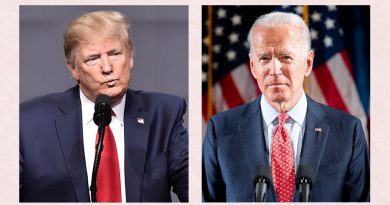
As President Donald Trump begins the second year of his second term, markets are responding to sharper rhetoric on trade and global strategy, a familiar pattern that investors have learned to navigate with growing sophistication.
Recent sessions saw volatility rise across asset classes, including equities, government bonds, and currencies, reflecting caution rather than panic among global investors.
Market participants noted that such broad-based moves often signal recalibration rather than a loss of confidence in the overall economic outlook.
While stocks experienced a pullback, many investors viewed the move as a healthy correction after extended gains and elevated valuations.
Long-dated U.S. Treasuries and the dollar also softened, suggesting portfolio rebalancing and risk management rather than a structural shift away from U.S. assets.
Some investors recalled similar periods of volatility in previous years, where markets ultimately stabilized as policy clarity improved.
Strategists emphasized that geopolitical headlines tend to have the strongest impact in the short term, while fundamentals drive performance over longer horizons.
The renewed discussion around tariffs has revived debate about global trade flows, diversification strategies, and regional investment opportunities.
Despite this, many investors remain confident in the depth and liquidity of U.S. markets, which continue to attract global capital during periods of uncertainty.
Market analysts highlighted that corporate balance sheets remain strong, with profitability providing a cushion against policy-driven swings.
Earnings expectations for large U.S. companies remain robust, reinforcing confidence in equities despite intermittent volatility.
Recent price movements were also shaped by the absence of aggressive dip-buying, a sign that investors are exercising patience rather than fear.
After several years of strong returns, elevated valuations have naturally made markets more sensitive to negative news.
This sensitivity, however, has encouraged investors to think more actively about hedging strategies and portfolio insurance.
Diversification across regions and asset classes has gained renewed attention as a prudent response to geopolitical uncertainty.
Many asset managers stressed that diversification does not imply abandoning U.S. markets, but rather complementing them with global exposure.
The possibility of negotiation and policy flexibility has also tempered downside sentiment among traders.
Historically, markets have observed that initial policy signals are often followed by dialogue and adjustment.
This expectation has prevented large-scale exits from equities, even as volatility metrics ticked higher.
Investors are also closely watching upcoming corporate earnings reports, which are expected to confirm continued growth momentum.
Strong earnings growth projections for the coming year provide reassurance that the economic engine remains intact.
Foreign investor flows are being monitored, though most analysts believe any slowdown would be gradual rather than abrupt.
Market participants described the current environment as one of cautious optimism rather than defensive retreat.
Volatility, in this context, is seen as a normal feature of markets adjusting to evolving global narratives.
Portfolio managers emphasized the importance of staying disciplined and avoiding reactive decisions based solely on headlines.
Long-term investors continue to prioritize fundamentals, innovation, and earnings visibility over short-term noise.
The renewed focus on geopolitics has also sparked constructive debate about global cooperation and economic resilience.
Markets, in many ways, are reflecting a maturing response to political uncertainty built on experience from past cycles.
While price swings may persist, confidence in the adaptability of markets remains strong.
Analysts suggested that such periods often create selective opportunities rather than broad-based risks.
As clarity emerges over policy direction, markets are expected to stabilize and refocus on growth drivers.
For now, investors are balancing caution with confidence, aware of risks but encouraged by economic strength.
The prevailing view is that volatility can coexist with opportunity in a well-functioning global market system.
Overall, the return of geopolitical and tariff discussions has tested sentiment, but it has also highlighted market resilience.
Investors appear prepared, diversified, and forward-looking as they navigate this evolving landscape.