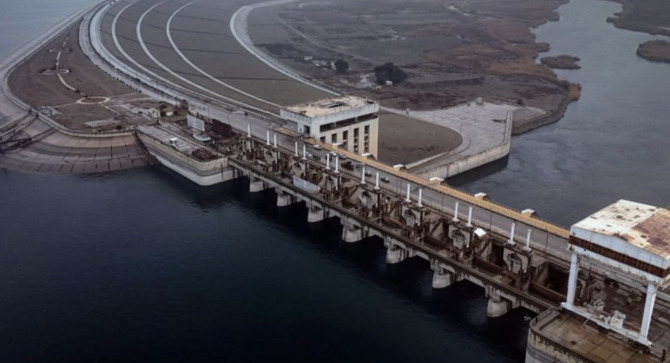
Syrian government retakes control of strategic Euphrates Dam
Damascus – Syrian government forces have regained full control of the Euphrates Dam, one of the most vital infrastructure assets in the country, marking a major development in the management of Syria’s water and energy resources.
The transfer ends years of administration by the Syrian Democratic Forces and signals a shift in authority over a facility that plays a decisive role in daily life across large parts of the country.
Officials confirmed that the management of the dam’s water regulation systems and hydroelectric facilities has now been handed over to government technicians and specialist staff.
This transition is being presented as a technical and administrative step aimed at stabilizing operations, safeguarding infrastructure, and ensuring uninterrupted services to surrounding regions.
The Euphrates Dam is central to Syria’s national water security and electricity generation. Built to regulate the flow of the Euphrates River, the dam supports drinking water supply, large-scale irrigation projects, and power generation for millions of people.
Control over the site is therefore viewed as strategically significant, not only from an infrastructure perspective but also in terms of governance and economic recovery.
At the heart of the facility is its hydroelectric power station, located on the dam’s right bank. The station contains eight generating units, each capable of producing 110 megawatts of electricity, making it one of the largest power-producing sites in the country.
Electricity generated from the dam feeds into the national grid and supports both urban centers and rural communities, particularly in northern and eastern regions.
Equally important is Lake Al-Tabqa, also known as Euphrates Lake, which was formed by the dam. Stretching roughly 80 kilometers in length and up to 8 kilometers in width, the reservoir covers an area of around 640 square kilometers.
At full capacity, it can store approximately 14.1 billion cubic meters of water, making it a crucial buffer against drought and seasonal fluctuations in river flow.
Syrian energy officials have emphasized that regaining control of the dam strengthens national water management capabilities.
With climate variability and water scarcity posing growing challenges across the region, centralized oversight of such a major reservoir is seen as essential for planning irrigation cycles, securing drinking water, and coordinating electricity production.
The handover to government engineers and technical staff is expected to focus on maintenance, safety checks, and optimization of power output.
Years of conflict and fragmented administration have placed strain on Syria’s infrastructure, and authorities say restoring professional management is a necessary step toward long-term stability and service reliability.
Beyond its technical importance, the Euphrates Dam carries symbolic weight. It represents state authority over strategic assets and reflects broader efforts to reassert control over key economic and service hubs.
Analysts note that infrastructure control often translates into greater political and administrative influence, particularly in regions where basic services are closely tied to public confidence and stability.
Residents in nearby areas are watching developments closely, as consistent electricity supply and water availability remain pressing concerns.
Any improvement in power generation or water distribution could have a direct impact on agriculture, local industry, and household living conditions, especially in communities that have experienced prolonged disruption.
Officials at the Ministry of Energy said the return of the dam to government control secures a strategic national asset and helps restore essential services to millions of citizens.
They stressed that the priority now is to keep the facility operating safely and efficiently, while integrating it fully into national planning frameworks for water and electricity.
As Syria continues to navigate post-conflict challenges, the regaining of the Euphrates Dam underscores the central role of infrastructure in recovery efforts.
Control over water and energy resources is expected to remain a key factor in economic stabilization, humanitarian resilience, and the country’s broader reconstruction trajectory.