OPINION: Pakistani Men Sexually Target Sikh Girls, Khalistani Silence Enables It

While Khalistani men are courted for political leverage, daughters from the Sikh community are viewed by some within these same networks as fair game for sexual gratification.
On the cold evening of January 13, the streets of West London’s Hounslow erupted in anger. It was not a political rally or a trade union strike, but a visceral, desperate outcry from a community pushed to its breaking point.
Outside a flat on London Road, between 200 and 300 members of the Sikh community gathered, their chants echoing a frustration that has been simmering for decades. Inside, a 15-year-old Sikh girl had been held captive, allegedly gang-raped by a group of men of Pakistani origin.
While the immediate fury was directed at the perpetrators and the police officers protecting the property, a darker, more uncomfortable conversation is emerging within the diaspora. It is a conversation about the dangerous proximity between Sikh separatist factions—often termed “Khalistanis”—and the Pakistani state apparatus that supports them.
Analysts and community activists are increasingly arguing that this geopolitical “friendship” has created a Trojan horse, where the pursuit of political alliances has left the community’s daughters vulnerable to predatory exploitation by the very groups their leaders embrace.
The Hounslow Flashpoint
The incident in Hounslow serves as a grim microcosm of this broader betrayal. According to reports on the ground, the 15-year-old victim was located in a flat owned by a 34-year-old Pakistani man. She had been subjected to what sources describe as repeated sexual abuse over a prolonged period, involving up to six perpetrators.
The assault bore the chilling hallmarks of an organised grooming operation: the girl was reportedly isolated from her family, coerced through deception, and trapped in a cycle of abuse that culminated in her captivity.
The community’s response was swift and furious. Videos circulating on social media show Sikh men and women clashing with authorities, questioning why police were guarding the residence of the accused rather than acting sooner to save the child.
“This wasn’t just a failure of policing; it was a failure of our own vigilance,” noted one protester. The girl was eventually rescued through community intervention, but the event has reignited a firestorm of debate regarding the systematic Child Sexual Exploitation (CSE) of Sikh girls.
For years, certain Sikh separatist leaders among Khalistanis have cultivated close ties with Pakistani groups, driven by a shared anti-India sentiment. However, critics argue that this political marriage of convenience has blinded these leaders to a predatory reality on the ground. By lowering social defenses and encouraging cultural proximity under the guise of “shared grievances,” they have inadvertently granted predatory grooming networks easier access to Sikh youth.
The disturbing narrative emerging is one of exploitation: while Khalistani men are courted for political leverage, daughters from the Sikh community are viewed by some within these same networks as fair game for sexual gratification.
A History of Deception and “The Kara Strategy”
The Hounslow case is not an anomaly; it is a statistical inevitability born of a pattern that dates back to the 1970s and 1980s. Organisations such as the Sikh Awareness Society (SAS) and the Sikh Helpline have documented hundreds of cases that predate the infamous headlines of Rotherham and Rochdale.
The modus operandi is terrifyingly consistent and relies heavily on the exploitation of cultural trust.
One of the most insidious tactics recorded is the “false identity” strategy. Perpetrators often adopt Sikh names or wear the Kara—a steel bracelet and article of faith for Sikhs—to feign a shared identity.
This “Kara strategy” is designed to lower the guard of young Sikh girls, who are culturally conditioned to trust “their own.” Once trust is established, the grooming begins: gifts, alcohol, and drugs are introduced, followed swiftly by blackmail, coercion, and sexual violence.
A 2013 BBC Inside Out investigation brought some of these accounts to light, featuring Sikh victims who described being groomed, abused, and in some cases, forced into sham marriages or religious conversion. Yet, for decades, these cries for help were stifled.
The stigma of “shame” (izzat) within the families, combined with the silence of community leaders focused on political maneuvering with Pakistan, meant that victims were often left isolated.
In cities like Bradford, the intent has been even more explicit. Leaflets have been found circulating that encouraged men to specifically target Sikh women for rape and conversion, framing sexual violence as a tool of religious or communal dominance.
This historical context makes the current silence of pro-Khalistan groups even more deafening. By failing to condemn these predatory networks for fear of upsetting their geopolitical patrons, they are accused of sacrificing the safety of their women at the altar of political ideology.
The Numbers Behind the Narrative
The scale of this issue is often obscured by a lack of disaggregated data, but the available evidence is damning. The Alexis Jay Independent Inquiry into Child Sexual Exploitation in Rotherham (1997–2013), published in 2014, provided a shattering glimpse into the reality of grooming gangs. The report estimated conservatively that 1,400 children were exploited in Rotherham alone.
Crucially, the Jay Report noted that the perpetrators were “by far the majority… described as ‘Asian’ by victims,” and were predominantly of Pakistani heritage. The violence described was sadistic: girls as young as 11 were raped by multiple men, trafficked to other cities, doused in petrol, and threatened with guns.
While the media focus was largely on white working-class victims, the report and subsequent inquiries acknowledged that girls from minority backgrounds, including Sikhs and Hindus, were also targeted but faced additional barriers to coming forward.
Sikh activists argue that the “Asian” label often used in media reports serves to dilute the specific ethnicity of the grooming gangs, thereby shielding the Pakistani community from scrutiny while spreading the blame to the very communities being victimized.
“When a Sikh girl is raped by a Pakistani gang, and the news reports it as ‘Asian men,’ it is a double insult,” says a representative from the Sikh Awareness Society. “It erases the victim’s identity and hides the predator’s.”
The Price of Silence
The Hounslow incident has laid bare the consequences of ignoring these “broader trends.” The grooming networks operate with a sophistication that suggests they are confident of impunity. They rely on the silence of the police, paralyzed by fears of being labeled racist, and the silence of Sikh leadership, paralyzed by political expediency.
However, the tide may be turning. The 2017 documentary on Britain’s grooming gangs and the persistent work of grassroots organisations have begun to pierce the veil of secrecy. The protests in West London signify a generation that is no longer willing to be collateral damage in a political game. They are rejecting the narrative that “community cohesion” requires silence in the face of sexual predation.
The exploitation of the Khalistani narrative by Pakistani actors is becoming a focal point of this dissent. The realization is dawning that while these men may shake hands in political halls, on the streets of Hounslow, Rochdale, and Birmingham, the dynamic is one of predator and prey.
As long as this uneasy alliance persists without addressing the toxic undercurrent of sexual violence targeting Sikh women, the community remains vulnerable.
The Hounslow rescue was a victory for community vigilance, but it was also a warning. Unless the systemic nature of this targeting is acknowledged—by the police, the government, and the Sikh leadership itself—there will be more flats, more protests, and more stolen daughters.
The time for political correctness and convenient alliances is over; the safety of the next generation depends on facing this ugly truth head-on.
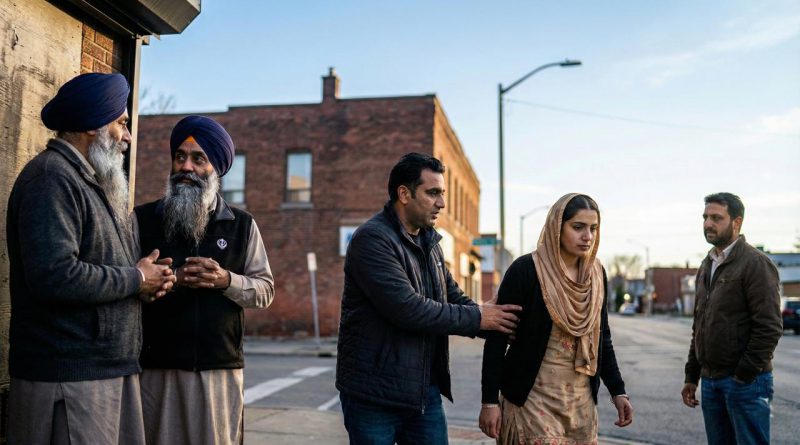
- The Featured-Image is Ai-Illustrated.
Disclaimer: Views expressed by writers in this section are their own and do not reflect Milli Chronicle’s point-of-view.