French Budget Talks Resume as Prime Minister Lecornu Navigates a High-Risk Political Balancing Act
Paris – France has entered a decisive phase in its 2026 budget process as lawmakers return to parliament amid deep political divisions and growing fiscal pressure.
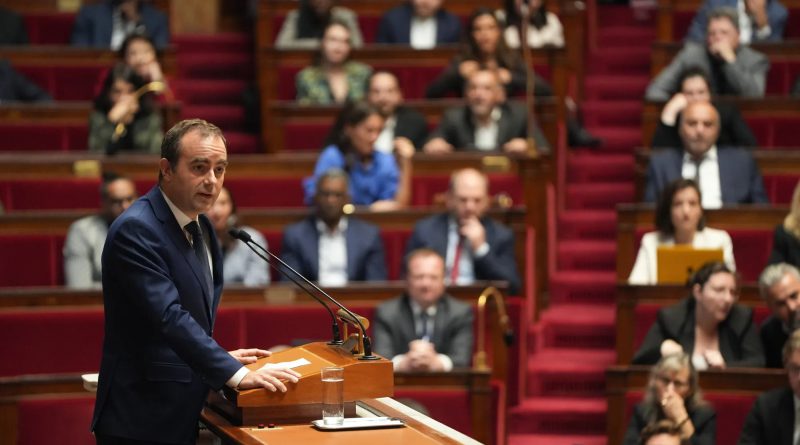
Prime Minister Sebastien Lecornu is attempting to steer the budget through a fragmented lower house while honoring his pledge not to force it through without a vote.
Emergency legislation passed before the winter recess has kept the state functioning, but it did not resolve the fundamental disagreements blocking budget approval.
As parliamentary debates resume, positions among left-wing, centrist, and conservative lawmakers remain sharply opposed, making a consensual vote increasingly unlikely.
The government wants the budget approved by the end of January to reassure investors and European partners about France’s fiscal credibility.
Finance Minister Roland Lescure and Budget Minister Amelie de Montchalin have held intensive talks with key opposition figures to find limited areas of compromise.
Despite hours of negotiations, lawmakers privately acknowledge that the gap between demands on spending cuts and tax policy remains wide.
If talks fail, Lecornu may be forced to invoke Article 49.3 of the constitution, allowing the budget to pass without a vote.
Such a move would break his public commitment to parliamentary consensus and almost certainly trigger a no-confidence motion.
In France’s current political climate, a no-confidence vote carries real danger for the minority government’s survival.
Several governments have already fallen since President Emmanuel Macron lost his parliamentary majority in 2024, heightening political instability.
Hard-left lawmakers accuse the government of trying to buy time by offering minor concessions while preserving core fiscal priorities.
They argue that austerity measures disproportionately burden households while sparing large corporations from meaningful tax increases.
France’s fiscal situation adds urgency to the talks, with the country currently holding the largest budget deficit in the euro zone.
The government aims to reduce the deficit to 5.0 percent of GDP this year, down from an estimated 5.4 percent previously.
Longer term, Lecornu has committed to bringing the deficit below the European Union’s 3 percent threshold by 2029.
The Senate has already returned a revised budget proposal projecting a higher deficit than the government’s target.
Ministers warn that without tighter controls on spending and revenue measures, the deficit could exceed even current projections.
Socialist lawmakers blame conservatives in the Senate for worsening the fiscal outlook by rejecting proposed tax hikes on major companies.
They are pushing for reinstated corporate taxes and opposing any freeze on welfare payments that could hurt vulnerable groups.
The Socialists hold a pivotal position, as their abstention could allow the government to survive a no-confidence vote.
However, party leaders are wary of appearing irresponsible to voters ahead of municipal elections scheduled for March.
Conservative leaders argue that the fragmented parliament makes it nearly impossible for any budget to pass through a normal vote.
They suggest that the government may have little choice but to use constitutional powers despite the political backlash.
Markets and credit rating agencies are closely watching the outcome, viewing the budget as a test of France’s capacity for fiscal discipline.
Any perception of paralysis or fiscal drift could raise borrowing costs and further strain public finances.
For Lecornu, the challenge lies in balancing democratic legitimacy, fiscal responsibility, and political survival.
The coming days will reveal whether compromise is still possible or whether France is headed for another showdown that could topple the government.