Japan Refines Solar Power Policy to Balance Clean Energy and Conservation
New rules aim to safeguard landscapes while guiding sustainable renewable growth
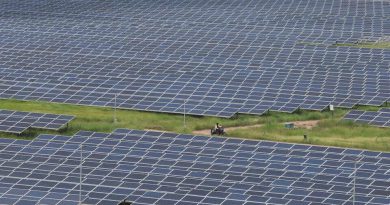
Japan is moving toward a more balanced renewable energy strategy as it prepares to tighten regulations on mega-scale solar power projects, placing stronger emphasis on environmental protection, safety, and the preservation of natural landscapes. The policy shift reflects a broader effort to harmonize the country’s clean energy ambitions with its responsibility to protect fragile ecosystems and scenic regions.
Government officials have indicated that the new framework will introduce clearer standards for large ground-mounted solar installations, ensuring that renewable expansion does not come at the cost of biodiversity or community well-being. Rather than slowing the energy transition, the move is positioned as a recalibration that prioritizes quality, innovation, and long-term sustainability.
Japan’s leadership has increasingly highlighted concerns that very large solar farms, particularly those developed without sufficient oversight, can alter landscapes and strain local environments. By tightening regulations, authorities aim to encourage more thoughtful project design and site selection, strengthening public confidence in renewable energy development.
As part of this shift, financial incentives for new mega-solar projects under existing pricing schemes are expected to be phased out from the 2027 fiscal year. These schemes have played a key role in scaling up renewable energy over the past decade, and their gradual adjustment signals a transition toward a more market-driven and environmentally integrated approach.
Importantly, the government has clarified that support for residential solar installations and existing facilities will continue. Rooftop and community-based solar projects are seen as central to Japan’s energy resilience, allowing households and local businesses to participate directly in decarbonization efforts.
At the same time, Japan is doubling down on innovation by increasing backing for perovskite solar cells, a next-generation technology pioneered domestically. These lightweight, flexible panels can be integrated into buildings and urban infrastructure, offering new possibilities for solar deployment without extensive land use.
Environmental assessments are also set to play a larger role going forward. Authorities are considering expanding the scope of projects subject to national-level reviews, ensuring that environmental risks are evaluated more comprehensively before construction begins. This step is expected to reduce conflicts and promote transparency.
Recent debates around solar developments near protected areas have underscored the need for clearer guidelines. By addressing these concerns proactively, Japan aims to prevent disputes while reinforcing its commitment to conservation and responsible development.
The revised approach also comes at a time when renewable energy planning is becoming more complex globally, with rising costs and supply chain considerations influencing project viability. Japan’s strategy reflects an understanding that clean energy growth must be both economically sound and socially accepted.
Despite changes to large-scale solar incentives, Japan remains committed to its climate goals. The focus is shifting toward diversified renewable sources, advanced technologies, and smarter integration of clean power into existing infrastructure.
Energy analysts note that the policy update could encourage developers to explore innovative designs and alternative locations, fostering a new phase of renewable growth aligned with environmental stewardship.
For communities, the measures offer reassurance that renewable projects will respect local landscapes and safety standards, helping maintain public support for the energy transition.
Overall, Japan’s decision represents a maturing renewable energy policy, one that seeks equilibrium between rapid decarbonization and the protection of natural heritage. By refining regulations and promoting innovation, the country is positioning itself for a cleaner, more sustainable energy future.