Kosovo’s Ruling Party Leads Parliamentary Vote, Exit Poll Signals Political Continuity
Pristina – Kosovo appears set for a phase of political continuity as exit polls indicate a clear lead for the ruling Vetevendosje movement in the snap parliamentary election.
Early projections suggest voters have rewarded the governing party for its reform-focused agenda and firm stance on sovereignty and governance.
The exit poll broadcast by a leading local television channel showed Vetevendosje securing a strong plurality of the national vote.
This outcome positions the party as the dominant political force, reinforcing its mandate after a period marked by political deadlock and institutional delays.
The snap election was called following months of uncertainty that had slowed legislative progress and government formation.
Sunday’s vote offered citizens an opportunity to reset the political process and restore momentum to policy-making.
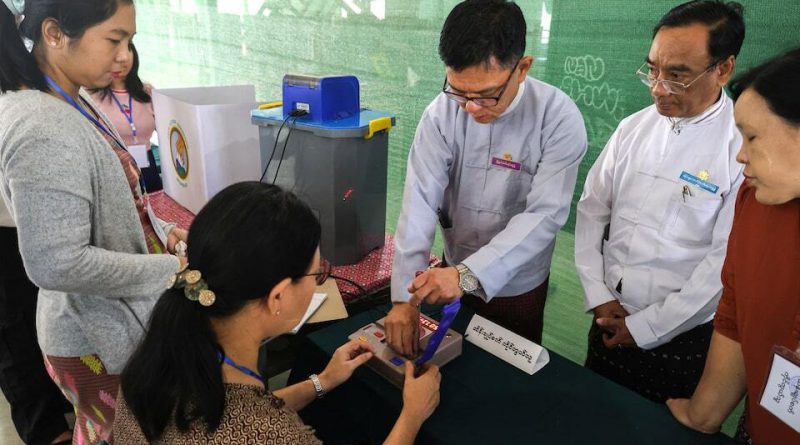
Polling stations across Pristina and other major cities saw orderly voting, with authorities reporting smooth procedures throughout the day.
Observers noted a calm atmosphere, reflecting growing public confidence in Kosovo’s electoral institutions.
Vetevendosje has campaigned on themes of transparency, anti-corruption reforms, and strengthening state institutions.
Its message appears to have resonated with voters seeking stability and clearer political direction.
The projected result suggests broad support for continuing economic reforms and public sector restructuring initiatives.
Supporters of the ruling party see the vote as an endorsement of efforts to assert Kosovo’s political autonomy on the regional stage.
The party’s leadership has consistently emphasized social justice, employment generation, and public accountability.
Analysts say these priorities align with the expectations of a younger electorate increasingly engaged in national politics.
The election also reflects Kosovo’s democratic resilience, coming after a year in which political stalemate tested public patience.
By turning out to vote, citizens signaled a preference for decisive governance over prolonged negotiations.
Vetevendosje’s projected share places it well ahead of opposition parties, which ran fragmented campaigns.
This margin could simplify coalition talks or even allow the ruling party greater leverage in forming the next government.
Political stability is viewed as crucial for Kosovo’s economic outlook, particularly in attracting foreign investment.
Business groups have repeatedly called for predictable governance and faster decision-making.
A strong electoral showing for the ruling party may help accelerate stalled reforms and infrastructure projects.
International partners are also closely watching the outcome, given Kosovo’s aspirations for deeper European integration.
A stable government is expected to strengthen dialogue with the European Union and regional counterparts.
Voter participation underscored continued faith in democratic processes despite recent frustrations.
Election officials praised citizens for maintaining civic discipline and respecting voting procedures.
The focus now shifts to official results and post-election negotiations in parliament.
Party leaders are expected to address supporters and outline their priorities for the next legislative term.
Policy continuity could bring renewed attention to social welfare programs and economic resilience.
The government has previously highlighted education, healthcare, and digital governance as long-term goals.
A renewed mandate may also reinforce Kosovo’s diplomatic positioning in ongoing regional discussions.
Political analysts note that strong domestic backing can enhance credibility abroad.
The election outcome reflects a broader desire for steady leadership rather than abrupt political shifts.
Citizens appear to have favored experience and a clear policy direction at a critical juncture.
As official counting proceeds, expectations remain high for a swift government formation.
A timely transition could help Kosovo avoid further institutional uncertainty.
Overall, the exit poll points to continuity, consolidation, and a renewed sense of political direction.
The coming days will determine how this projected victory translates into governance and reform momentum.