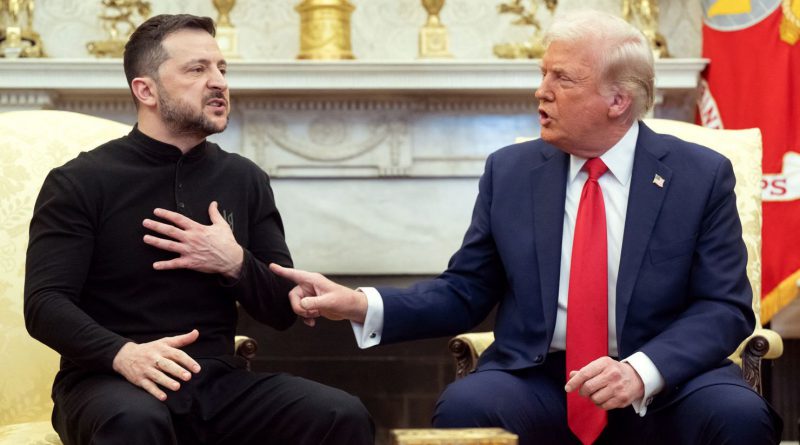
Zelenskiy and Trump Meeting Signals Renewed Push for Ukraine Peace Efforts
Palm Beach – Ukrainian President Volodymyr Zelenskiy’s scheduled meeting with U.S. President Donald Trump in Florida marks a significant moment in ongoing diplomatic efforts to end the conflict in Ukraine.
The in-person talks reflect renewed political engagement at the highest level, highlighting Washington’s continued involvement in shaping a possible path toward peace.
The meeting comes after weeks of behind-the-scenes negotiations aimed at crafting a comprehensive framework to reduce hostilities and stabilize the region.
For Kyiv, the Florida discussions offer an opportunity to present its perspective directly and seek balanced solutions that protect Ukraine’s sovereignty and long-term security.
Zelenskiy has emphasized dialogue as a necessary step toward ending prolonged suffering caused by the war.
The talks are expected to focus on contested regions in eastern Ukraine, the future of critical infrastructure, and broader security guarantees.
Despite ongoing military pressure, Ukrainian leadership has continued to prioritize diplomatic channels alongside defensive efforts.
Recent attacks on Ukrainian cities have reinforced the urgency of reaching an agreement that ensures civilian safety and restores essential services.
Zelenskiy has framed the peace discussions as a response to both battlefield realities and humanitarian concerns.
The Florida meeting also underscores the role of the United States as a key mediator with global influence.
Trump’s engagement reflects an interest in advancing negotiations that could reshape the trajectory of the conflict.
Prior communication between Washington and Moscow adds another layer of complexity but also signals active diplomatic engagement.
Ukrainian officials view direct dialogue with U.S. leadership as crucial to ensuring that any proposal reflects Ukraine’s core interests.
The evolving peace framework has reportedly reached an advanced stage, demonstrating progress despite remaining disagreements.
Zelenskiy has indicated that transparency and public consent will remain central to Ukraine’s approach.
Any final agreement, he has suggested, must carry legitimacy and reflect the will of the Ukrainian people.
European partners continue to play a supportive role, coordinating closely with Kyiv to strengthen post-war security arrangements.
These efforts aim to ensure long-term stability and deter future aggression.
The Florida talks are also expected to include consultations with European leaders, reinforcing a multilateral approach.
Such coordination highlights the international community’s shared stake in a durable peace.
While territorial questions remain sensitive, the willingness to engage reflects growing recognition that diplomacy is essential.
The discussions signal momentum toward compromise-driven solutions rather than prolonged confrontation.
Zelenskiy’s presence in Florida represents confidence in dialogue, even amid uncertainty.
His engagement demonstrates Ukraine’s readiness to pursue peace through negotiation without abandoning national principles.
The meeting also sends a broader signal to global markets and allies about continued efforts to de-escalate tensions.
Stability in Eastern Europe remains a key concern for international security and economic confidence.
By bringing decision-makers together, the talks create space for pragmatic problem-solving.
Observers see the meeting as a potential turning point in recalibrating diplomatic priorities.
Though challenges remain, sustained engagement increases the likelihood of incremental progress.
The Florida talks reinforce the idea that peace processes are built through persistence rather than single breakthroughs.
For Ukraine, maintaining international support remains vital during this critical phase.
Zelenskiy’s outreach underscores Kyiv’s commitment to diplomacy grounded in resilience and national unity.
As discussions unfold, attention will focus on whether common ground can be translated into concrete steps.
The meeting symbolizes cautious optimism that dialogue can gradually ease one of Europe’s most destabilizing conflicts.