Freed Belarus Opposition Leaders to Address Global Audience in Berlin
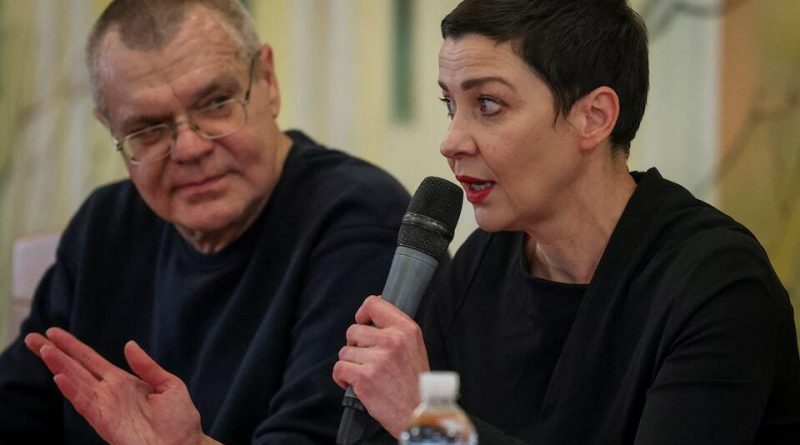
Berlin – The upcoming appearance of freed Belarusian opposition figures Maria Kalesnikava and Viktar Babaryka in Berlin marks a powerful and hopeful moment for advocates of dialogue, human rights, and peaceful political engagement in Eastern Europe.
Their planned press conference in the German capital has drawn wide international attention, symbolising renewed space for conversation after years of political tension and personal hardship.
Berlin, long regarded as a hub for democratic dialogue and international diplomacy, provides a fitting setting for voices that have become emblematic of resilience and civic courage.
The release of Kalesnikava and Babaryka has been widely welcomed by observers who see it as a constructive step toward easing longstanding political strains.
Their freedom follows a broader release of detainees that has been interpreted as an encouraging signal in an otherwise complex regional environment.
For supporters across Europe and beyond, the development has reinforced belief in the value of sustained diplomatic engagement and humanitarian efforts.
Both figures are expected to share reflections on their experiences and outline their hopes for a peaceful, inclusive future for Belarus.
Their presence in Berlin is anticipated to spark thoughtful discussion on reconciliation, political participation, and the role of civil society.
Kalesnikava, known internationally for her calm determination and cultural background, has become a symbol of nonviolent resistance and principled leadership.
Babaryka, a former banker turned political figure, is similarly regarded as a proponent of reform through dialogue and institutional change.
Together, their appearance represents a rare moment of unity and renewed visibility for Belarusian democratic aspirations on the global stage.
The Berlin event is expected to attract diplomats, policy analysts, human rights advocates, and members of the Belarusian diaspora.
Such engagement reflects a growing international interest in constructive pathways toward stability and openness in the region.
Germany has consistently positioned itself as a supporter of dialogue-based solutions, making the venue particularly significant.
Observers note that public appearances like this can help humanise political processes often reduced to headlines and policy briefs.
By sharing personal narratives, the speakers are likely to foster empathy and deeper understanding among international audiences.
The press conference is also seen as an opportunity to refocus attention on peaceful civic participation rather than confrontation.
Analysts suggest that moments of visibility following releases can contribute positively to confidence-building measures.
The broader release of prisoners has been interpreted by some as a gesture that may open space for further humanitarian steps.
While challenges remain, such developments are often viewed as incremental progress rather than isolated events.
Berlin’s role as a crossroads for global media ensures that the message shared will resonate far beyond Europe.
The event is expected to underline the importance of dialogue, patience, and international cooperation in addressing political disagreements.
Supporters emphasise that peaceful engagement remains the most sustainable route toward long-term stability.
The participation of Kalesnikava and Babaryka also highlights the enduring relevance of civil society voices in shaping national futures.
Their appearance is likely to encourage continued international focus on constructive engagement rather than isolation.
Many see this moment as a reminder that political change can include gestures of reconciliation alongside firm principles.
The Berlin conference may also inspire renewed discussions on humanitarian diplomacy and confidence-building initiatives.
Such forums often serve as catalysts for broader conversations involving governments, institutions, and citizens alike.
As anticipation builds, the emphasis remains on listening, understanding, and fostering pathways toward peaceful coexistence.
For global audiences, the event stands as a testament to resilience, dialogue, and the enduring belief in shared human values.
In a region shaped by rapid change, moments like these offer cautious optimism and reinforce the power of conversation.