Rebuilding Lives Through Hope: Saudi Initiative Transforms Care for Amputees
Makkah – A growing humanitarian effort in Saudi Arabia is reshaping the lives of amputees through comprehensive medical, psychological and social support.
The initiative, led by the Baitureh Health Association for the Care of Amputees, has created a powerful model of rehabilitation rooted in compassion, innovation and community involvement.
Established in 2020, the organization was formed to address rising cases of amputation linked to accidents, medical conditions and workplace injuries.
Its mission focuses on helping individuals regain independence, rebuild confidence and reintegrate into daily life with dignity and strength.
The initiative provides a full cycle of care, offering assessments, family counseling, physical rehabilitation and customized prosthetic fittings.
Its leadership emphasizes that service integration, rather than fragmentation, is key to restoring a sense of wholeness and stability for beneficiaries.
Psychological support is a fundamental pillar of the program, with group sessions led by trained mentors who have personally experienced limb loss.
These mentors provide emotional understanding, helping patients navigate fear, trauma and uncertainty through shared experiences and guidance.
Field visits enhance this support system, giving patients reassurance both before and after surgery.
This personal connection eases emotional transitions and prepares individuals for rehabilitation with greater confidence.
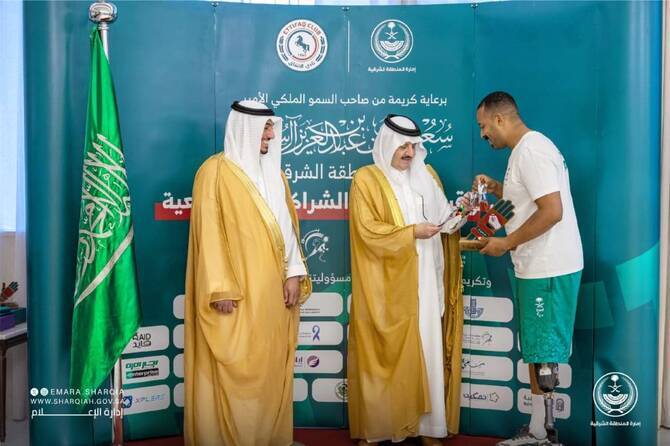
More than 1,000 people across Saudi Arabia have benefited from the association’s efforts so far, including a significant number of children.
Young patients receive specialized attention, as they require more intensive emotional support, family involvement and regular prosthetic adjustments due to growth.
The organization runs programs such as My First Step and Therapeutic Entertainment, which help children adapt to prosthetics in safe, playful environments.
These programs reduce anxiety, build self-esteem and help young amputees embrace movement and mobility at their own pace.
The association has completed over 300 prosthetic fittings, offering a wide range of advanced options from silicone cosmetic limbs to hydraulic, mechanical, electronic and 3D-printed models.
Each prosthetic is selected based on lifestyle, age, activity level and psychological readiness, ensuring personalized and effective rehabilitation.
Prosthetic limbs can be expensive, costing from a few thousand dollars to more than seventy thousand depending on the model and technology.
To make these services accessible, the association relies on sponsorships, community participation and strategic partnerships that reduce the financial burden for families.
Despite its progress, challenges remain, including limited access to psychological therapy resources and a shortage of specialized experts.
The association has responded by establishing a rehabilitation center designed to localize prosthetic production, reduce costs and speed up the fitting process.
This center also creates training opportunities for future professionals, helping build a skilled local workforce capable of advancing research, manufacturing and patient support.
By investing in talent and technology, the initiative aims to secure long-term sustainability and continuous improvement in rehabilitation services.
For the association, providing prosthetics is only part of the mission.
Its deeper purpose lies in restoring hope, enabling independence and rebuilding lives through empathy, innovation and sustained care.
The initiative stands today as one of the country’s most transformative humanitarian efforts, offering amputees not just new limbs, but renewed confidence and the chance to move forward with strength.
Its work reflects a broader vision of community solidarity, medical excellence and the belief that every individual deserves dignity, mobility and a future full of possibility.