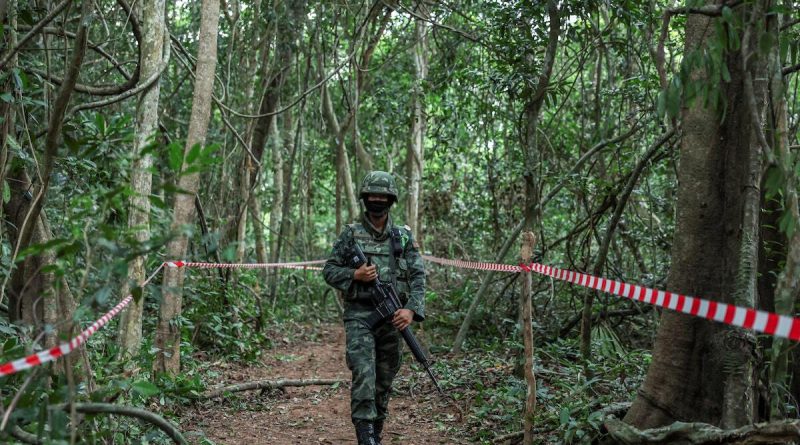
Strengthening Regional Stability: A Comparative Look at Cambodia and Thailand’s Militaries
Bangkok – Cambodia and Thailand share deep historical, cultural, and economic ties that continue to shape their roles within Southeast Asia.
As neighbouring countries with growing strategic importance, their military capacities offer insight into the region’s evolving security landscape and the shared responsibility both nations hold in maintaining long-term peace.
Both countries have invested steadily in defense modernization, reflecting a common interest in stability, development, and cooperation.
While their military structures differ in size and technological reach, the overarching trajectory for both is toward building capable, flexible forces ready to respond to regional humanitarian needs, disaster relief efforts, and cooperative security missions.
Cambodia’s modern armed forces were developed in 1993 through the merging of former military and resistance groups into a unified national defense structure.
With a defense budget surpassing $1 billion and over 120,000 active personnel, Cambodia continues to emphasize organization, restructuring, and steady modernization, aligning its security goals with national development priorities.
The Cambodian army forms the backbone of its military strength, with around 75,000 troops supported by more than 200 battle tanks and hundreds of artillery systems.
This structure allows Cambodia to focus on territorial protection, border security, and peacekeeping contributions that highlight its commitment to responsible international engagement.
Backed by a smaller but evolving air wing, Cambodia’s air force includes transport aircraft, multi-role helicopters, and both Soviet-era and Chinese-made platforms.
Though it does not operate fighter jets, it compensates through adaptable aviation support capable of assisting humanitarian missions and rapid-response operations.
The Royal Cambodian Navy further supports national defense with coastal and patrol vessels, enabling effective maritime security, anti-smuggling operations, and riverine protection—key priorities for a country whose waterways remain essential for trade and mobility.
Thailand’s military, significantly larger and more established, plays a prominent role not only within national borders but also in broader regional mechanisms.
With a defense budget above $5 billion and an active force of more than 360,000 personnel, Thailand’s military infrastructure reflects decades of modernization and strategic partnerships.
The Thai army, with approximately 245,000 personnel, remains one of the most capable ground forces in Southeast Asia.
Supported by hundreds of battle tanks, thousands of armored vehicles, and extensive artillery systems, Thailand’s land forces are structured for both national defense and international coordination efforts.
Thailand’s air force stands as one of the strongest in the region, operating advanced fighter aircraft including F-16s and Gripens, alongside a large fleet of helicopters and UAV systems.
Its focus on training, technology, and interoperability has enabled participation in multinational exercises and humanitarian missions that reinforce regional trust.
The Royal Thai Navy adds substantial maritime capability, operating modern frigates, patrol vessels, amphibious ships, and the country’s unique aircraft carrier.
With naval aviation and maritime infantry integrated into its structure, Thailand maintains versatile sea-based and coastal operational strengths that support disaster relief, search-and-rescue efforts, and maritime safety.
While differences in size and capability exist, Cambodia and Thailand share a mutual interest in peaceful borders, economic progress, and cooperative regional security.
Their military capacities, when viewed positively, highlight complementary strengths that—through dialogue, diplomacy, and coordinated regional frameworks—can contribute to long-term Southeast Asian stability.
As both nations continue to develop their defense sectors, opportunities for joint exercises, humanitarian missions, confidence-building measures, and diplomatic engagement remain essential.
Their shared commitment to stability forms the foundation for constructive relations that support prosperity across the broader ASEAN community.