Thai Flavors and Saudi Heritage Shine at the Feast Food Festival in Riyadh
Riyadh – The fifth Saudi Feast Food Festival in Riyadh is drawing visitors with the vibrant aromas of Thai spices and the rich traditions of Saudi cuisine, creating a unique space where cultures meet through food.
Held at King Saud University and organized by the Culinary Arts Commission, the festival runs until Dec. 6 and highlights global culinary diversity through storytelling and live culinary art.
Thailand is participating as this year’s guest country, adding an exciting international dimension to the event.
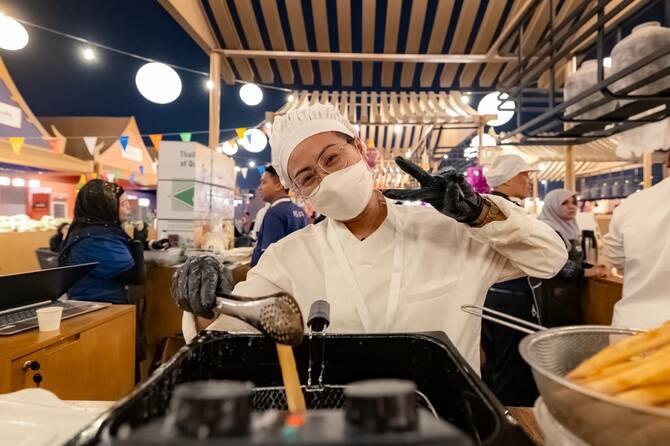
Its pavilion has quickly become one of the most visited areas, attracting families who come to explore authentic Thai dishes prepared by skilled chefs offering live cooking demonstrations.
Visitors are treated to iconic Thai flavors such as tom yum soup and pad Thai noodles, with chefs explaining traditional techniques, signature ingredients, and the cultural meaning behind each dish.
Traditional Thai dance and music enrich the atmosphere, offering guests an immersive cultural experience beyond the plate.
The inclusion of Thailand aligns with the broader goal of encouraging cultural exchange through cuisine.
Organizers emphasize that culinary traditions act as a universal language, helping people understand each other’s heritage, customs, and creativity.
The festival also places strong focus on Saudi Arabia’s own culinary depth through the Saudi Arabian Food Heritage Zone.
This section features dishes from various regions of the Kingdom, highlighting the diversity shaped by geography, climate, and local traditions.
Dishes such as jareesh, kabsa, maftah, and hanini demonstrate the richness of Saudi culinary identity while offering visitors delicious examples of local craftsmanship.
Visitors can also explore local produce like dates, olive oil, and regional spices that form the foundation of Saudi cooking.
Beyond food, the festival includes a vibrant handicrafts area where artisans present traditional Sadu weaving and pottery practices.
These demonstrations provide cultural insight and celebrate the artistic skills passed down through generations.
The Honey Museum, another key attraction, offers scientific and cultural information about honey production in Saudi Arabia.
Visitors can learn about different honey varieties and the extraction process that reflects the Kingdom’s longstanding tradition of beekeeping.
Families with children can enjoy a dedicated area filled with educational and interactive culinary activities.
This space is designed to connect younger generations with food heritage in an enjoyable and inspiring way.
The festival emphasizes the importance of balancing authenticity with innovation as part of Saudi Arabia’s evolving culinary identity.
Organizers are working toward building sustainable partnerships that support local producers, promote artisans, and extend the impact of the festival beyond its duration.
The Saudi Feast Food Festival continues to grow as a cultural bridge, offering visitors the chance to appreciate global flavors while celebrating the Kingdom’s own culinary heritage.
It stands as a vibrant example of how food can connect communities, spark curiosity, and strengthen cultural understanding.