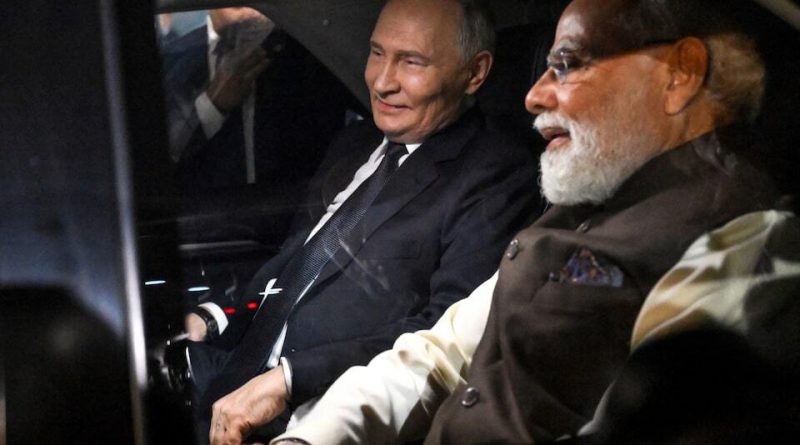
India and Russia Deepen Strategic Trade Partnership with Vision for 2030
New Delhi – India and Russia reaffirmed their long-standing partnership as their leaders agreed to expand, diversify, and strengthen bilateral trade during high-level talks in New Delhi.
The discussions emphasized a future-focused approach that balances economic interests, energy security, and geopolitical stability while reinforcing the trust built over decades.
The meeting underscored both nations’ commitment to widening cooperation beyond traditional sectors.
With a clear plan aimed at 2030, the two sides agreed on measures to make trade flows more balanced, sustainable, and resilient amid shifting global dynamics.
India reiterated that its relationship with Russia has remained steady through changing political landscapes.
Leaders emphasized the enduring nature of this partnership, highlighting mutual respect and shared strategic interests as key pillars shaping their cooperation.
Energy security remained a vital point of discussion as Russia pledged uninterrupted fuel supplies to India.
This assurance reaffirmed ongoing collaboration in the energy sector, even as global markets continue to evolve and adjust to wider geopolitical pressures.
The two countries also highlighted their cooperation in the civil nuclear sector, including ongoing work at the Kudankulam nuclear power plant.
This project represents one of the largest pillars of bilateral cooperation, supporting India’s long-term energy diversification goals.
A series of agreements signed during the visit aim to strengthen collaboration in sectors such as agriculture, healthcare, shipping, and industrial development.
A joint venture to establish a fertilizer plant in Russia marks a step toward enhancing India’s agricultural inputs and long-term supply chain security.
Both leaders also emphasized support for the mobility of skilled Indian workers to Russia, improving opportunities for training, employment, and deeper cultural exchanges.
This forms part of a broader initiative to promote economic integration and encourage people-to-people connections.
Defence cooperation also received renewed focus, with both sides prepared to reshape their engagement to align with India’s goal of increasing domestic production.
Plans include joint development of advanced defence platforms and local manufacturing of components, spare parts, and technologies used in existing systems.
India reiterated its consistent position on promoting peaceful dialogue and stability in global conflicts.
The leaders agreed that global geopolitical challenges demand steady partnerships, strategic calm, and balanced diplomacy.
The visit highlighted the importance of maintaining multiple strong partnerships while navigating complex international pressures.
India continues to balance its ties with major global stakeholders, focusing on national interest and long-term stability.
Despite shifting global energy flows, India’s relationship with Russia in the oil sector has remained central to its energy strategy.
Both sides noted that fuel trade continues effectively, supported by mutual economic benefits and long-term cooperation.
The talks demonstrated India’s resolve to pursue an independent foreign policy strategy based on multi-alignment rather than exclusive partnerships.
This approach ensures that both economic and strategic interests remain aligned with domestic goals and international responsibilities.
India and Russia once again confirmed their commitment to strengthening a relationship that has stood firm through decades of global transitions.
With an eye toward 2030, both countries are preparing to broaden cooperation in a way that supports growth, stability, and shared prosperity.