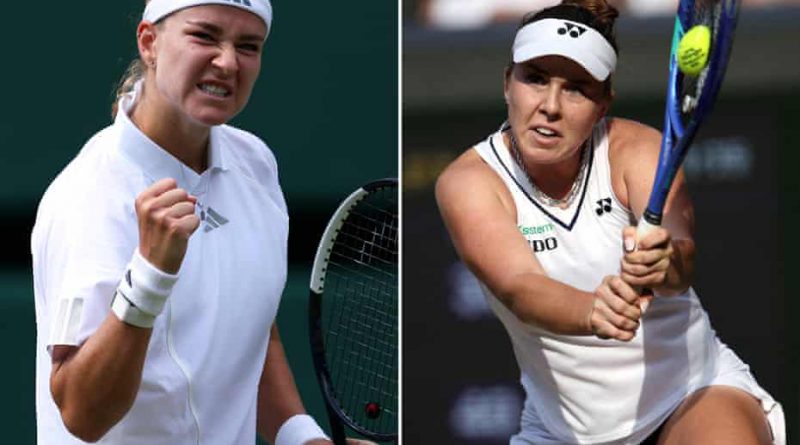
Czech Duo Karolina Muchova and Linda Noskova Set for Landmark Wimbledon Final
““We are very creative… grass allows us to use every side of our tennis,” Linda Noskova said ahead of the Wimbledon final
Karolina Muchova and Linda Noskova will meet in an all-Czech Wimbledon women’s singles final after both secured hard-fought victories in the semi-finals, setting up a landmark contest between two players who have developed through the country’s successful tennis system.
Muchova’s progress to the final has coincided with changes to her coaching team. At the beginning of the 2026 season, she appointed Dutch coach Sven Groeneveld, whose previous coaching experience includes working with former world No. 1 Maria Sharapova.
Former Grand Slam champion and tennis analyst Tracy Austin said Groeneveld’s experience has contributed to Muchova’s recent performances.
“Sven’s such a veteran,” Austin said. “Maybe he’s helping her to make the thinking very clear.”
Before reaching the semi-finals, neither Muchova nor Noskova had played a match on Wimbledon’s Centre Court during this year’s tournament. Tournament organisers, however, allowed both players to practise on the court before their respective semi-final matches, providing an opportunity to become familiar with the venue before competing in front of a full Centre Court audience.
Muchova secured her place in the final after saving a match point before defeating Coco Gauff in a closely contested semi-final. Noskova booked her place by ending Marta Kostyuk’s tournament run.
The finalists are familiar with each other’s games beyond the singles circuit. They have known each other for several years and also partnered in doubles during the 2024 Paris Olympic Games, giving each player a detailed understanding of the other’s style.
Saturday’s championship match represents one of the biggest occasions of both players’ careers. At 21, Noskova enters the final as one of the youngest contenders in the women’s draw and has displayed an aggressive style throughout the tournament.
Her game is built around a powerful serve, strong movement and a willingness to move forward to finish points at the net, characteristics that she believes reflect a broader tradition within Czech tennis.
“We are very creative, I would say, so grass allows us to kind of use any side of tennis, if it’s serve and volley back in the old days, if it’s slices and volleys in this new era,” Noskova said.
She also highlighted the depth of coaching available in the Czech Republic despite its relatively small population.
“We have so many tennis schools in Czechia, even though we’re such a small country. We have so many great coaches that have been working with worldwide greatest players. I really don’t know why they have produced so many champions. If I knew, I guess all the other countries would have been doing the same thing,” she said.
The final guarantees another Grand Slam title for Czech women’s tennis, with both finalists seeking the biggest championship of their careers on the grass courts of Wimbledon.