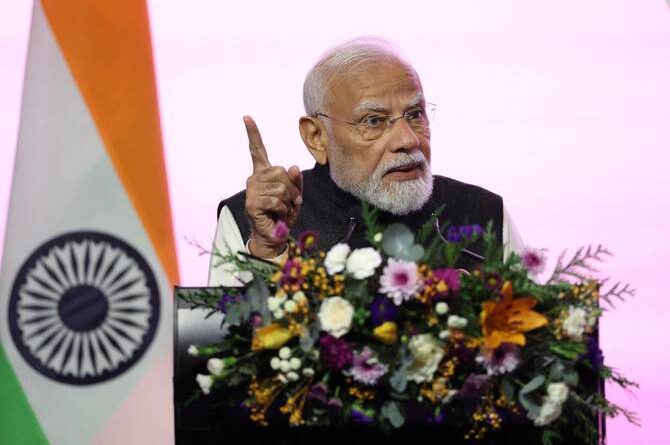
Modi Arrives in New Zealand Amid Trade Deal, Migration Debate
WELLINGTON-Indian Prime Minister Narendra Modi arrived in New Zealand on Friday for the first visit by an Indian leader in four decades, with a newly signed free trade agreement expected to dominate talks even as debate over migration and race relations casts a shadow over the visit.
Modi’s trip, the final leg of his July 6-11 tour that also included Indonesia and Australia, is focused on strengthening bilateral ties in trade, tourism and sports. His visit comes after India and New Zealand signed a free trade agreement in April, a pact championed by both governments as a catalyst for economic growth and closer strategic cooperation.
New Zealand Prime Minister Christopher Luxon has described the agreement as a major opportunity to boost exports, investment and employment. The deal is widely expected to secure parliamentary approval.
The agreement, however, has drawn criticism from sections of New Zealand’s governing coalition, particularly over provisions related to migration and visas.
New Zealand First, a coalition partner in Luxon’s government, has voiced opposition to those elements of the pact. Government minister Shane Jones sparked controversy by saying he would not support what he described as a “butter chicken tsunami” coming to New Zealand, comments that prompted an Indian community leader to accuse him of racism.
The political debate has coincided with wider concerns over anti-migrant rhetoric targeting South Asian communities.
Evangelical preacher Brian Tamaki also drew condemnation after posting comments on Instagram following news of Modi’s visit. Tamaki accused the Indian leader of persecuting Christians in India and called for retaliatory action against Hindus, Sikhs and Muslims in New Zealand. New Zealand’s race relations commissioner described the remarks as “utterly appalling.”
Earlier this year, Maori activist Che Wilson was accused of directing racially tinged remarks toward an Indian-born New Zealand lawmaker during a haka performance, adding to public debate over discrimination.
Sita Venkateswar, an anthropologist at Massey University, said the visit was taking place against a backdrop in which Indian-New Zealanders were increasingly facing hostility.
“A ‘butter chicken tsunami’, slurs set to a haka, graffiti on a school wall — South Asians are already the most frequent targets of racially motivated incidents in our data,” she told AFP, adding that such incidents were both real and unacceptable.
Despite those tensions, the New Zealand government has emphasized the importance of the bilateral relationship and sought to project a welcoming message during Modi’s visit.
Luxon said the visit celebrated “a winning partnership” between the two countries that would support greater prosperity and security for both nations.
During his stay, Modi is scheduled to attend an official ceremony at Government House and participate in business and sports engagements in Auckland. He is also expected to address up to 10,000 members of New Zealand’s Indian diaspora at a community event at Auckland’s Spark Arena.
New Zealand is home to an Indian community of about 300,000 people, making it one of the country’s largest and fastest-growing migrant communities. The visit reflects both governments’ efforts to deepen economic and people-to-people ties while navigating domestic political debates surrounding migration and multiculturalism.