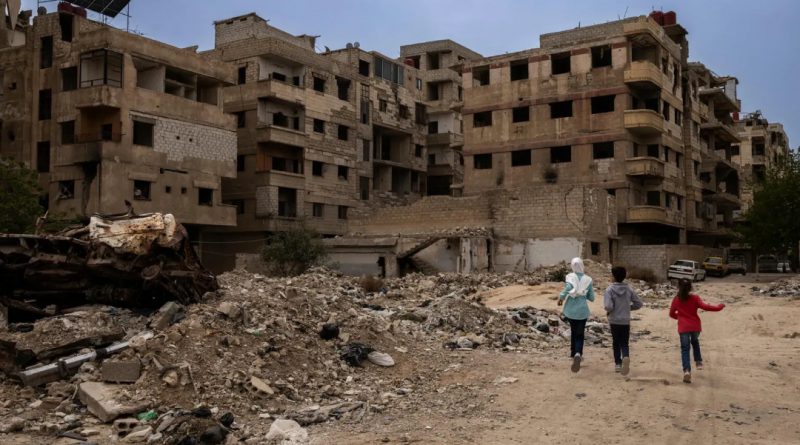
“Even for children who survive a blast, the cascading effects can be felt in every aspect of their lives.”
“Even for children who survive a blast, the cascading effects can be felt in every aspect of their lives.”
Hundreds of thousands of unexploded munitions and landmines continue to pose a persistent threat to children across Syria, despite a relative decline in active hostilities, according to a report published on April 20 by UNICEF.
The report highlights that explosive remnants of war, including undetonated bombs, artillery shells and buried landmines, remain widespread in conflict-affected areas, exposing millions of children to immediate and long-term risks. These hazards are often concealed in residential zones, agricultural land and public spaces, increasing the likelihood of accidental detonation during routine activities.
Children are particularly vulnerable due to limited awareness and their tendency to interact with unfamiliar objects. UNICEF documented multiple cases of injury, including a 13-year-old boy who lost three fingers and sustained serious eye injuries after picking up unexploded ordnance while on his way to play football.
Despite undergoing medical treatment, the report notes that both physical and psychological effects persist.Another case cited involves an eight-year-old boy who suffered life-threatening injuries, including lung damage and a fractured skull, when an explosive device detonated.
The report states that such incidents impose significant financial strain on families, particularly those already facing economic hardship and responsible for multiple dependents.Beyond physical injuries, the report underscores the broader consequences of explosive hazards on children’s lives.
Damage to healthcare infrastructure limits access to emergency treatment and long-term rehabilitation services, while psychological trauma remains widespread. UNICEF estimates that one in three households in Syria report children showing signs of psychological distress linked to conflict exposure.
Education disruption is also a significant concern. Children injured by explosive remnants may be unable to attend school due to mobility challenges or lack of accessible infrastructure. The report indicates that more than 2.45 million children in Syria are currently out of school, increasing their vulnerability to child labour and exploitation.
The scale of contamination is closely linked to the use of explosive weapons in populated areas during the conflict. According to UNICEF, approximately 95 per cent of casualties from such weapons are civilians, reflecting the concentration of residential infrastructure in affected zones.Risks have intensified as displaced populations return to their communities.
More than 3 million people have reportedly returned to areas heavily impacted by conflict, often without adequate information about the presence of unexploded ordnance. Children resuming daily activities in damaged or unfamiliar environments face heightened exposure to these hazards.In response, community-based initiatives have emerged as a central component of risk mitigation strategies.
In areas such as At Tall in Rural Damascus, local workers supported by UNICEF are conducting awareness sessions aimed at educating children about identifying and avoiding dangerous objects.These sessions incorporate visual materials and interactive discussions designed to improve understanding of explosive risks.
According to local facilitators, the approach also encourages children to disseminate safety information within their families and communities, extending the reach of awareness efforts.UNICEF-supported programmes also emphasize broader community engagement, including the placement of informational materials in public spaces.
Local educators involved in these initiatives describe their role as both instructional and preventative, aiming to reduce the likelihood of accidents through sustained awareness.The organization has called for expanded international support to address the ongoing risks.
Key priorities outlined in the report include scaling up explosive ordnance risk education, ensuring access to comprehensive medical and psychosocial services for survivors, and accelerating clearance operations in affected areas.UNICEF also stressed the importance of securing safe conditions for returning populations, including the clearance of critical infrastructure such as roads, schools and water systems.
The agency said sustained funding and coordinated action are necessary to reduce contamination levels and restore safe access to essential services.The report frames the presence of explosive remnants as a continuing barrier to recovery, noting that long-term stability is contingent on addressing these hazards.
Without systematic clearance and sustained investment in prevention and rehabilitation, the risks to children and communities are expected to persist.