Trump’s Iran Strikes Overshadow NATO Summit Agenda in Ankara
ANKARA-A NATO summit intended to highlight higher defense spending and allied support for Ukraine was overshadowed on Wednesday after U.S. President Donald Trump ordered military strikes against Iran and tightened economic pressure on Tehran, shifting the alliance’s focus toward rapidly escalating tensions in the Middle East.
The U.S. strikes were launched late Tuesday in response to attacks on three merchant ships in the Strait of Hormuz, an incident that further weakened an already fragile interim agreement aimed at ending months of conflict between Washington and Tehran. At the same time, the Trump administration revoked a license that had allowed Iran to continue selling oil on international markets.
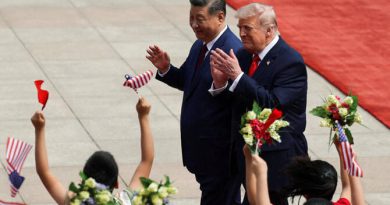
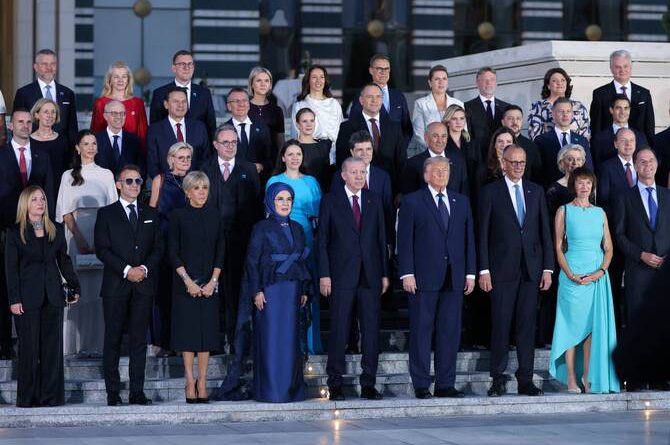
Trump authorized the military action shortly after leaving a dinner hosted by Turkish President Recep Tayyip Erdogan for leaders attending the NATO summit in Ankara. Although he did not publicly address the operation that evening, the move immediately altered the political landscape of a gathering originally designed to showcase NATO’s progress on defense investment and continued support for Ukraine.
The strikes also heightened concerns among European allies and Canada, many of whom had already been uneasy over Trump’s criticism of NATO members that declined to support U.S. military operations against Iran. Speaking during a meeting with Erdogan on Tuesday, Trump said he had tested allies by requesting assistance during the conflict with Iran and cited Italy, Germany and France as countries that had refused.
He questioned why the United States should continue carrying a disproportionate share of NATO’s security burden if allies were unwilling to support Washington during military operations.
Before the escalation, NATO Secretary General Mark Rutte had hoped the summit would emphasize what he described as significant increases in allied defense spending. During a visit to Washington last month, he praised the additional defense investments made by European allies and Canada since Trump’s first term, highlighting plans for further spending that would include purchases from U.S. defense companies.
NATO officials had expected the summit to reinforce alliance unity at a time when Russia continues its war in Ukraine. Instead, Trump’s decision to strike Iran and his renewed criticism of allies threatened to overshadow those objectives.
The summit also reopened disagreements over Greenland after Trump again argued that the United States should control the Danish autonomous territory. Danish Prime Minister Mette Frederiksen rejected the suggestion, reiterating that Greenland was not for sale and stressing that its people had the right to determine their own future.
Frederiksen said Denmark remained committed to defending every part of NATO territory and expected all alliance members to respect each other’s sovereignty and territorial integrity.
Defense spending remains another central issue at the summit. Last year, NATO members agreed to work toward spending 5 percent of gross domestic product on defense-related needs, including direct military expenditure and investment in infrastructure supporting troop mobility.
New NATO figures released on Tuesday showed that several allies, including Slovenia, Belgium, Spain and the Czech Republic, continue to fall short of the alliance’s previous benchmark of spending 2 percent of GDP on defense, leaving them vulnerable to renewed criticism from Washington.
European governments are also seeking greater clarity on the future of the U.S. military presence on the continent after the Pentagon launched a six-month review of American force levels in Europe. Any future reductions are expected to depend partly on how quickly European allies increase defense spending and expand their capacity to assume greater responsibility for regional security.
Ukrainian President Volodymyr Zelensky, who is expected to meet Trump on the sidelines of the summit, renewed his appeal for NATO membership, arguing that Ukraine’s battle-tested armed forces would strengthen the alliance. He pointed to Ukraine’s operational experience and long-range strike capabilities as evidence of its military value to NATO.
Trump is also scheduled to meet Syrian President Ahmad Al-Sharaa during the summit. Al-Sharaa, who led the offensive that toppled former Syrian President Bashar Assad in late 2024, has sought closer ties with Western governments as Syria attempts to rebuild after years of conflict.