Harvard’s Pigment Archive Preserves Millennia of Human Creativity Through Rare Collection of Historic Colours
“Every pigment carries a history of human ingenuity, cultural exchange and scientific discovery, making colour itself an enduring record of civilization.”
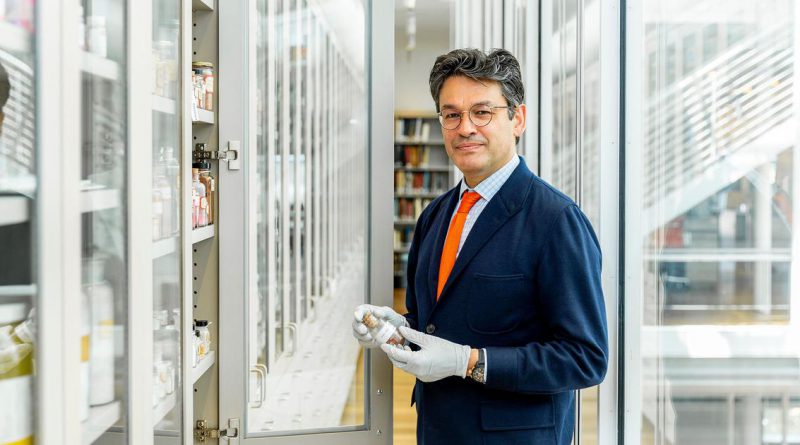
The Forbes Pigment Collection at Harvard Art Museums has evolved into one of the world’s most significant archives dedicated to the history of colour, preserving more than 3,000 pigments that collectively document centuries of artistic innovation, scientific development and material exchange. Managed by pigment specialist Narayan Khandekar at the Straus Center for Conservation and Technical Studies, the collection serves both as a research resource and as a historical record illustrating how societies across different eras created, traded and used colour in artistic expression.
According to Khandekar, pigments represent more than the materials used to create works of art. They provide evidence of technological advancement, cultural interaction and the movement of knowledge across regions over thousands of years. The collection continues to expand as museums, artists, conservators and private individuals contribute historically significant materials that help preserve the evolving history of artistic production.
Among the objects now held in the archive is a rare ochre sample originating from the prehistoric Lascaux cave complex in southwestern France, widely recognized for its Paleolithic cave paintings. The paintings, estimated to be around 17,000 years old, are regarded by archaeologists and art historians as among the most important surviving examples of prehistoric artistic expression. The cave system contains hundreds of painted images depicting animals including bulls, bison and deer, executed using mineral pigments and charcoal.
Khandekar has frequently cited the Lascaux paintings as an illustration of the importance of colour in early human societies. According to his account, prehistoric communities living under demanding environmental conditions still devoted time and resources to preparing mineral pigments such as ochre in shades of yellow, brown and red to decorate cave walls. The continued use of colour alongside charcoal drawings demonstrates that visual expression held cultural significance beyond immediate survival.
The ochre sample entered the Harvard collection only in recent years despite originating from one of Europe’s most closely protected archaeological sites. According to Khandekar, the sequence began after the reopening of the Harvard Art Museums in 2014, when renewed public attention focused on the pigment archive. Media coverage highlighting the collection introduced its work to broader audiences both within and outside the museum sector.
The increased visibility eventually reached an artist based in California who had visited the Lascaux caves decades earlier under exceptional circumstances. According to Khandekar, the woman had been granted access to the cave system years after it had officially closed to the general public. During the visit, one of the individuals credited with the original discovery of the caves presented her with a small fragment of ochre from the site.
The visitor retained the fragment for many years before deciding to donate it. During the Covid-19 pandemic, she contacted Harvard Art Museums and arranged to send the sample to the institution. Because museum operations had been significantly reduced during the pandemic, the package reportedly remained unopened on a desk for several days while only a limited number of staff members were working on site. Once normal access resumed, museum personnel incorporated the ochre into the Forbes Pigment Collection.
According to Khandekar, the addition represents not only a rare physical connection to one of the world’s most important prehistoric art sites but also an opportunity to preserve the history associated with the material itself. The provenance of pigments frequently provides valuable information for conservators and researchers studying historical artistic practices and the evolution of colour technology.
The Forbes Pigment Collection is housed within the Straus Center for Conservation and Technical Studies at Harvard Art Museums, where it supports scientific research, conservation projects and technical analysis of artworks. Pigments preserved in the archive span a broad chronological range and represent materials developed through natural mineral extraction as well as later scientific innovation. Together they illustrate changing methods of artistic production across civilizations.
According to Harvard Art Museums, technical studies of pigments assist conservators in identifying the composition of artworks, understanding historical painting techniques and supporting preservation strategies. Such collections also contribute to broader research into the history of materials, trade networks and technological development, since many pigments historically depended on access to specific minerals or manufacturing processes.
The Lascaux cave complex itself occupies a distinctive place within the history of prehistoric art. Located in southwestern France, the caves became internationally known after their discovery in 1940. The site contains hundreds of paintings and engravings depicting animals that formed part of the surrounding Ice Age environment. Conservation concerns arising from environmental changes and increasing visitor numbers ultimately led French authorities to close the original cave to the public in 1963 in order to protect the fragile artworks.
Since then, access to the original chambers has remained highly restricted, making surviving materials directly associated with the caves exceptionally uncommon outside France. The ochre fragment now preserved at Harvard therefore represents an unusual addition to an international museum collection dedicated specifically to pigments rather than finished works of art.
Khandekar’s work reflects the increasingly interdisciplinary nature of conservation science, where chemistry, archaeology, geology and art history intersect to improve understanding of cultural heritage. By documenting pigments alongside their historical context, conservators can trace the development of artistic materials while also supporting authentication, restoration and preservation efforts involving historical objects.
The continuing expansion of the Forbes Pigment Collection illustrates how museum collections evolve through contributions from researchers, artists and members of the public whose personal histories sometimes intersect with globally significant cultural sites. Each newly acquired pigment contributes additional evidence to the study of artistic materials and the technological choices made by different societies across time.
For Khandekar, pigments remain tangible records of human creativity extending far beyond their immediate visual function. Whether derived from prehistoric mineral deposits or later scientific discoveries, each sample documents the relationship between artistic expression, available natural resources and the exchange of knowledge across generations. The archive therefore preserves not only colour itself but also the historical circumstances that allowed particular pigments to emerge, circulate and become part of the visual culture of different civilizations.
The inclusion of the Lascaux ochre within the collection reinforces that historical continuity. From prehistoric cave painters preparing mineral earth pigments thousands of years ago to contemporary conservation laboratories examining their composition, the material provides a direct link between ancient artistic practice and modern scientific research, demonstrating the enduring importance of colour in the history of human culture.