Sudan’s El-Obeid Faces Mounting Humanitarian Crisis as RSF Offensive Threatens Key Stronghold
El -Obeid— Sudan’s strategic city of El-Obeid is facing a worsening humanitarian crisis as the paramilitary Rapid Support Forces (RSF) intensify attacks around the southern Kordofan hub, threatening to isolate one of the army’s most important strongholds and raising fears of a broader offensive, residents, analysts and humanitarian officials said.
Recent drone strikes have damaged El-Obeid’s main power station and fuel depots, cutting electricity across large parts of the city and disrupting water supplies after pumping stations were forced offline.
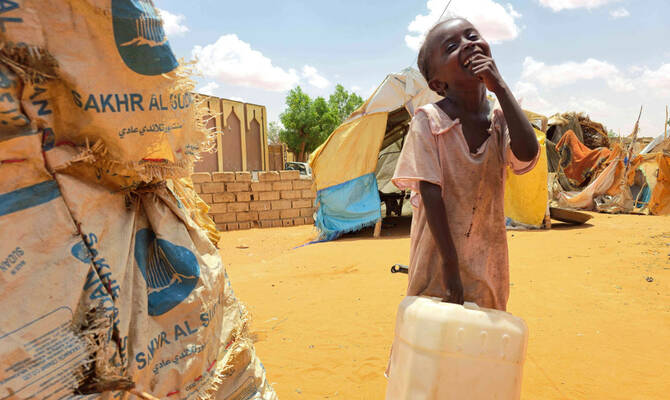
Residents said they now rely on water tankers, wells and limited distribution points as shortages deepen, while food prices have surged and transportation costs continue to rise.
El-Obeid, home to roughly half a million people and nearly 100,000 displaced civilians, occupies a strategic position linking army-controlled central and eastern Sudan with the western Darfur region, much of which remains under RSF control.
The United Nations has warned of significant RSF troop movements around the city ahead of a possible ground assault. Analysts say capturing El-Obeid would strengthen RSF control over western Sudan and potentially provide a corridor toward the capital, Khartoum.
According to the Armed Conflict Location and Event Data Project (ACLED), RSF troop concentrations have recently been observed north, south and west of the city, while the only remaining army-controlled supply route to Kosti has become increasingly hazardous.
El-Obeid also hosts a Sudanese army infantry division, an air base, a key oil pipeline and one of the country’s major gum arabic trading centers, making it a significant military and economic objective.
Humanitarian agencies warned that deteriorating security has sharply reduced aid access. The International Organization for Migration said the city was approaching conditions resembling a total siege, with civilians increasingly unable to leave or receive assistance.
UN agencies have suspended access to the area as security conditions worsen, while relief supplies already positioned inside the city are being rapidly depleted.
Humanitarian officials warned that, without urgent assistance, conditions could soon mirror those experienced in El-Fasher, where prolonged fighting left civilians facing severe food shortages and widespread destruction.
The Sudanese army said it had targeted RSF equipment advancing toward El-Obeid in an effort to slow the offensive. A source close to the RSF accused the military of using civilians as human shields and called for the evacuation of non-combatants, an allegation the army has not publicly addressed.
Analysts cautioned that even if El-Obeid does not experience the same pattern of ethnically driven violence seen elsewhere in the conflict, civilians remain at significant risk of looting, sexual violence and attacks amid continued fighting.
The war between Sudan’s military and the RSF, which erupted in April 2023, has displaced millions of people and triggered one of the world’s largest humanitarian crises, with repeated warnings from international organizations of worsening food insecurity and civilian suffering.