Israelis, Palestinians divided over Hebron’s sacred shrine as tensions deepen
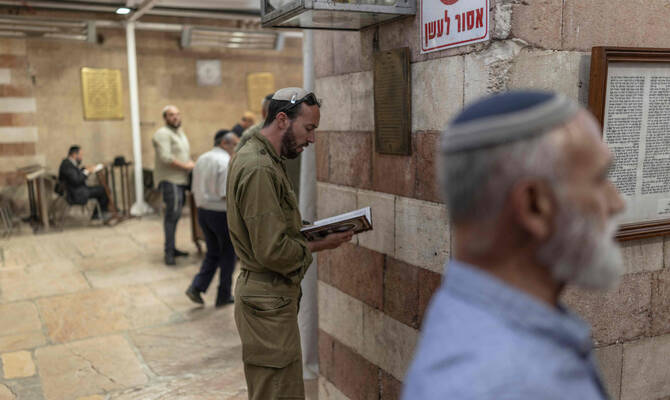
Habron-Deep divisions continue to surround the Cave of the Patriarchs, known to Muslims as the Ibrahimi Mosque, as Israelis and Palestinians express sharply different views over the future of one of the world’s holiest religious sites.
The shrine, revered by Jews, Muslims and Christians as the burial place of the biblical patriarch Abraham and other revered figures, has long stood at the center of the Israeli-Palestinian conflict.
Israeli settlers welcomed recent moves by Israeli authorities to expand administrative control over the site, saying the decision reflects the Jewish people’s historic connection to Hebron.
“It’s a place that belongs to all humanity,” said one Israeli settler visiting the shrine. “We are simply returning to our historical roots.”
Palestinian residents, however, condemned the decision, arguing it represents another step toward expanding Israeli control over occupied territory.
Local activist Issa Amro described life in Hebron’s Old City as increasingly restrictive, citing military checkpoints, road closures and declining economic activity.
“We live under constant restrictions while settlers enjoy different rights,” he said.
Hebron remains unique in the occupied West Bank because part of the city, known as H2, remains under direct Israeli military control following agreements reached in the 1990s.
The holy compound itself is divided into separate areas for Jewish and Muslim worshippers following the 1994 massacre in which Israeli settler Baruch Goldstein killed 29 Palestinian worshippers inside the mosque.
International law considers Israeli settlements in the occupied West Bank illegal, a position rejected by Israel.
Israeli officials say security measures around Hebron are necessary to protect residents from attacks, while Palestinians argue they amount to collective punishment and further restrict daily life.
The dispute over the shrine has become symbolic of the broader conflict, with both sides viewing Hebron as central to their historical, religious and national identity.
Despite repeated international calls for dialogue and restraint, tensions around the city remain high, underscoring the continuing challenges facing efforts toward a lasting peace in the region.