
Rubio Warns Iran’s Hormuz Transit Fees Could Trigger Global Maritime Disputes
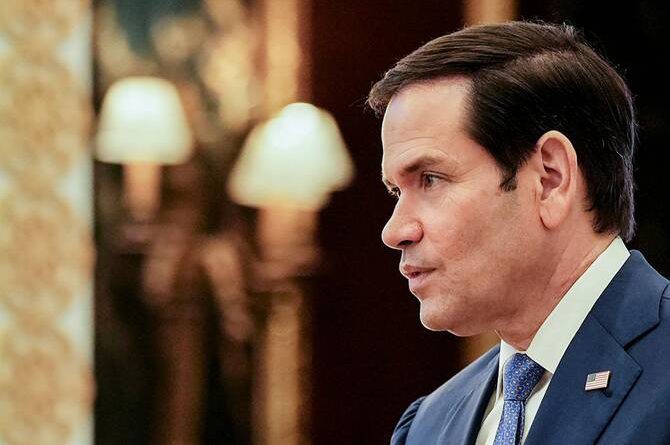
Tehran-US Secretary of State Marco Rubio warned on Thursday that allowing Iran to impose tolls on vessels passing through the Strait of Hormuz could set a dangerous global precedent and undermine the principle of free navigation in international waterways.
Speaking at a meeting of Gulf Cooperation Council (GCC) foreign ministers in Bahrain, Rubio said that international waterways must remain accessible to all nations and should not be subject to unilateral charges by countries located along strategic maritime routes.
“If we accept that a country can charge vessels for using an international waterway simply because it lies near its territorial waters, the practice could spread throughout the world like a contagion,” Rubio said. He cautioned that such a development could create widespread disruption to global trade and maritime transport.
The remarks come amid ongoing diplomatic efforts between the United States and Iran following a memorandum of understanding signed last week that ended the recent Middle East conflict and reopened the Strait of Hormuz to commercial shipping.
Rubio emphasized that Washington remains committed to reaching a durable peace agreement with Tehran but stressed that any deal must be credible, enforceable and verifiable.
“While we want a deal, we do not want a deal at any price,” he said. “We want a deal that is good, real, verifiable and adhered to.”
During his regional tour, which has included visits to the United Arab Emirates, Kuwait and Bahrain, Rubio also sought to reassure Gulf allies that their security concerns would remain central to US diplomacy.
He pledged that no aspect of a future US-Iran agreement would compromise the security, stability or economic interests of Gulf nations.
The Strait of Hormuz remains one of the world’s most strategically important maritime chokepoints, carrying a significant share of global oil and liquefied natural gas exports. Any restrictions, fees or disruptions in the waterway could have major consequences for international energy markets and global commerce.
Rubio’s comments reflect growing concern among Gulf states and major energy-importing nations about maintaining freedom of navigation through one of the world’s busiest shipping corridors.