
Weeks-Long Water Shortages in Puerto Rico Disrupt Daily Life, Raise Costs and Intensify Pressure on Authorities
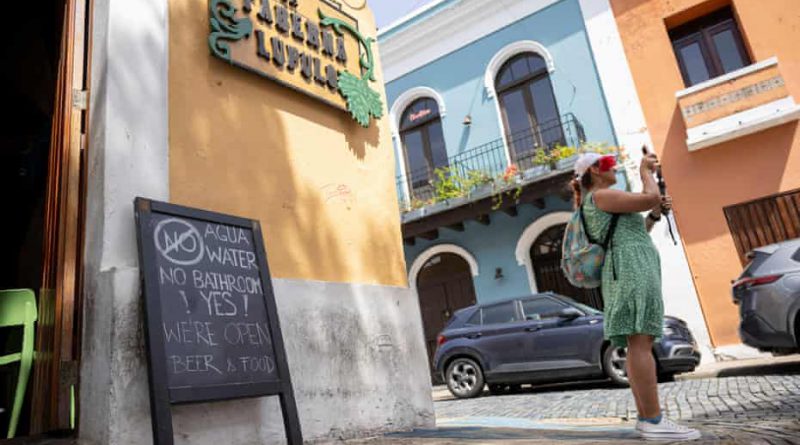
“If it were one week or two weeks, fine. But this is as if a hurricane had passed,” restaurant owner Jonathan Collazo said after weeks of unreliable water service.
Prolonged water shortages across Puerto Rico are disrupting households and businesses, increasing operating costs and placing renewed pressure on authorities to restore reliable service after weeks of interruptions linked to infrastructure failures and drought conditions.
The shortages have affected thousands of customers served by the Puerto Rico Aqueducts and Sewer Authority (PRASA), with municipalities including San Juan, Loíza, Guaynabo and Bayamón experiencing repeated service interruptions. In response, Governor Jenniffer González-Colón activated the National Guard to assist with the distribution of drinking water across the U.S. territory.
Water distribution stations have been established in several densely populated areas, but residents say the disruptions have forced them to reorganize daily routines around collecting water for drinking, bathing and sanitation.
Restaurant owner Jonathan Collazo, who operates Lela’s Eatery and Fefis in San Juan, said the shortages have significantly increased operating expenses. To remain open, he depends on two water cisterns, including a 1,000-gallon storage tank that requires refilling every two days.
According to Collazo, each refill costs about $300. On one recent day alone, he spent approximately $600 to ensure running water remained available at both restaurants. He said logistical difficulties have occasionally forced him to close restroom facilities.
“We were without water for more than 50 days here on Calle Loíza,” Collazo said, referring to one of San Juan’s busiest commercial districts known for its restaurants and entertainment venues.
He said the disruptions began in May and have continued with only brief periods of reliable service.
“Customers are confused. It’s not just me, it’s all the businesses next door,” Collazo said. “If it were one week or two weeks, fine. But this is as if a hurricane had passed.”
Nearby businesses have also reported mounting costs. Café Regina displayed a public count of the days without dependable water service, highlighting the prolonged nature of the disruption.
Kali Solack, co-owner of Café Regina and Hilda Deli, said operating two businesses without reliable water had become increasingly difficult.
“We’re treating it kind of right now as a norm, unfortunately,” Solack said, estimating that her businesses spend about $300 each day securing water supplies while also purchasing additional disposable products to continue serving customers.
She added that business owners had received limited information explaining why outages had persisted for such an extended period.
Puerto Rico has experienced periodic interruptions to water service in recent years because of aging infrastructure and long-term maintenance challenges. However, conditions deteriorated further in June after a rupture in the 72-inch Superaqueduct pipeline in Bayamón, one of the island’s main water distribution systems.
Since that incident, additional disruptions affecting water treatment plants and reservoirs have compounded supply problems. Authorities have not publicly identified a single explanation for the severity or duration of the continuing outages.
The shortages have imposed additional financial burdens on households across the island. Many residents have been purchasing bottled water or transporting supplies from distribution centers, while others have relied on municipal emergency management offices for deliveries.
The impact has been particularly significant for households without water cisterns, which require substantial upfront investment. According to U.S. Census data, more than 40% of Puerto Rico’s population lives below the federal poverty line, limiting many families’ ability to install private storage systems.
Marta Acevedo, a 75-year-old San Juan resident, said her apartment building’s two cisterns have helped provide limited access to water, although residents still depend on scheduled periods when stored supplies are released.
Acevedo, who has lived in the building for 44 years, described the current disruption as the longest she has experienced, including the period following Hurricane Maria in 2017, which caused widespread destruction across Puerto Rico and was later estimated to have contributed to 4,645 deaths.
The continuing outages have also prompted legal action. San Juan Mayor Miguel Romero filed a lawsuit against PRASA in late May over the prolonged disruptions affecting the capital.
The shortages are unfolding as parts of Puerto Rico continue to experience drought conditions associated with prolonged rainfall deficits. The situation has added further pressure on water resources as the Atlantic hurricane season, which runs from June through November, continues.