
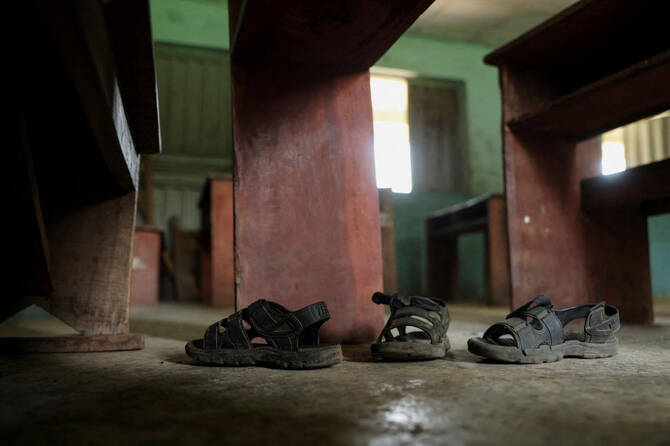
Boko Haram Releases 416 Captives in Rare Mass Freedom Amid Nigeria’s Kidnapping Crisis
Maiduguri- More than 400 women and children abducted by Boko Haram militants earlier this year in northeastern Nigeria have been released, local leaders and a senator said on Sunday, marking one of the largest known mass releases by the insurgent group in recent years.
The 416 captives, all taken from Ngoshe village in Borno State, regained their freedom on Saturday, according to community representatives involved in efforts to secure their release.
Samaila Kaigama, president of the Borno South Youth Alliance (BOSYA), said the organization helped facilitate communication between the abductors and affected families and confirmed that all those kidnapped from Ngoshe had been released.
“We have secured the release of all the 416 women and children abducted from Ngoshe,” Kaigama told journalists.
The release was also confirmed by Senator Mohammed Ali Ndume, who represents Borno South in Nigeria’s Senate. However, neither Ndume nor BOSYA disclosed how the captives’ freedom was obtained.
Authorities have consistently maintained that the Nigerian government does not pay ransoms to secure the release of hostages. Nevertheless, security analysts and local observers have long argued that ransom payments frequently occur through various channels, including negotiations involving families, intermediaries and local actors.
The circumstances surrounding the latest release remain unclear, with neither government officials nor community mediators providing details about any negotiations that may have taken place.
The incident underscores the continuing threat posed by Boko Haram and other armed groups operating across Nigeria despite years of military campaigns against insurgents.
Ngoshe, located less than 10 kilometers from the border with Cameroon in the mountainous Gwoza area, lies within a region historically regarded as a stronghold of Boko Haram militants. The community has repeatedly been targeted during the insurgency.
Kidnapping has evolved into one of the most lucrative tactics employed by armed groups in Nigeria. Militants, criminal gangs commonly known as bandits and separatist organizations increasingly rely on abductions for financial gain, targeting villagers, students, travelers and local officials.
According to a report by Lagos-based security consultancy SBM Intelligence, ransom payments across Nigeria totaled approximately $1.66 million between July 2024 and June 2025, highlighting the scale of the country’s abduction crisis.
Boko Haram launched its insurgency in 2009 with the aim of overthrowing the Nigerian state and imposing its interpretation of Islamic rule. The conflict has since fractured into multiple armed factions and evolved into one of Africa’s longest-running security crises.
The violence has killed tens of thousands of people and displaced millions across northeastern Nigeria and neighboring countries, while recurring attacks and kidnappings continue to challenge efforts to stabilize the region.


