World Cup Countdown Spurs Los Angeles Homelessness Push, but Housing Shortfall Clouds Lasting Gains
Los Angeles-Los Angeles has expanded temporary housing programs and reduced visible street homelessness ahead of major international sporting events, but persistent shortages of affordable housing and shelter capacity continue to challenge efforts to address one of the United States’ largest unhoused populations.
The city, which will host eight matches during the 2026 FIFA World Cup and the Olympic Games in 2028, has made homelessness a central policy priority under Mayor Karen Bass, directing hundreds of millions of dollars toward temporary accommodation initiatives, including hotel placements and prefabricated “tiny home” communities.
The strategy has produced measurable results. According to the latest homeless census released last year, the number of people living on Los Angeles streets fell 17.5% over a two-year period, marking the most sustained decline since local authorities began systematically tracking homelessness roughly two decades ago.
Residents who have moved into the city’s tiny-home program say the units provide a significant improvement over living on the streets or in vehicles, despite their limited size and shared occupancy arrangements. Michael Gilpin, 44, who previously slept in his car, said the accommodation offered greater safety and stability than street living.
Even with those gains, Los Angeles County continues to face a substantial homelessness burden. Official figures show approximately 72,000 unhoused people across the county, including about 47,000 sleeping outdoors.
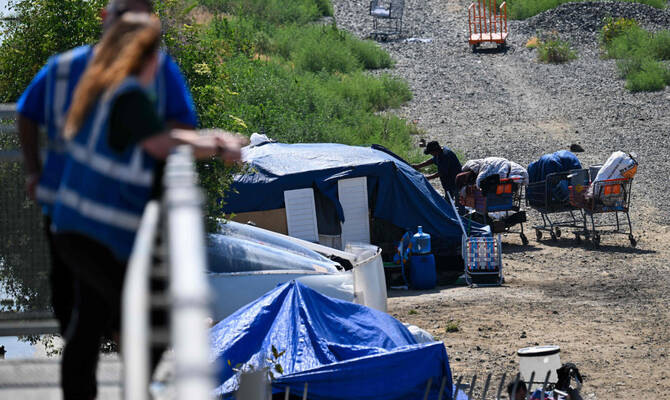
Service providers say available shelter capacity remains far below demand. Armando Covarrubias, an outreach worker with Hope The Mission in the San Fernando Valley, said the number of homeless individuals in his area exceeds available beds by several multiples. Following the clearance of an encampment near a railway corridor last month, he said housing could not be secured for all displaced residents, and new encampments quickly reappeared.
Many homeless residents continue to face lengthy waits for assistance. Maggie, a woman in her 40s who has lived on the streets for a decade and declined to provide her full name, said she had been waiting three months for housing support while remaining on a placement list.
Questions have also emerged regarding the long-term effectiveness of temporary housing initiatives. Data from the mayor’s flagship shelter program showed that by the end of 2025 approximately 5,800 people had been placed into some form of accommodation, but about 40% later returned to homelessness.
Housing experts and advocates point to California’s broader affordability crisis as a key driver of homelessness. Limited construction of affordable housing and constrained overall housing supply have contributed to elevated property prices and rents, increasing financial pressures on lower-income households.
Michael Reyes, a 59-year-old maintenance worker, said a workplace injury reduced his income to a level that could no longer cover living costs in Los Angeles, where a studio apartment averages about $1,800 per month. After spending a year living in his vehicle, Reyes moved into a tiny-home community but expressed skepticism that current efforts would continue at the same pace once international sporting events conclude.
The homelessness challenge remains one of the most visible social and economic issues facing Los Angeles as city officials seek to balance preparations for global events with demands for durable housing solutions.