Fresh Gun Battles in Manipur Leave Three Dead as Ethnic Faultlines Deepen
New Delhi — Three people were killed in fresh clashes between rival ethnic groups in India’s northeastern state of Manipur after a heavy exchange of gunfire in Ukhrul district, police said, underscoring the continuing volatility in a region scarred by nearly three years of communal violence.
The latest violence occurred in Mullam village in Ukhrul district, where armed confrontations broke out between opposing groups amid longstanding tensions between the predominantly Hindu Meitei community and the mainly Christian Kuki population.“In a heavy exchange of fire, three individuals sustained fatal bullet injuries,” Manipur police said in a statement issued late Friday.
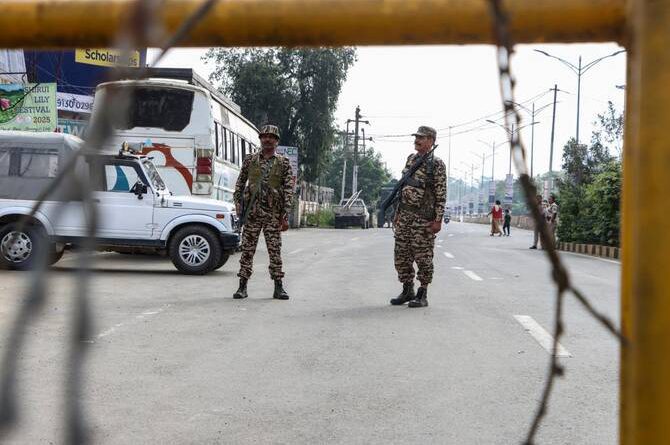
Authorities did not specify which community the victims belonged to, but said security forces had intensified deployments in the area to prevent further escalation.“Security measures have been enhanced in the area,” police said, adding that operations were continuing.Manipur has remained deeply unstable since large-scale ethnic violence erupted in 2023, triggering one of India’s most serious internal security crises in recent years.
More than 250 people have been killed and around 60,000 displaced since clashes first intensified between the Meitei majority and Kuki tribal groups, according to official figures.The conflict centers on disputes over land ownership, political representation, and access to public sector jobs, with both communities accusing each other of discrimination and encroachment.
Rights groups and civil society activists have also accused local political leaders of inflaming ethnic divisions for electoral and strategic advantage, further complicating peace efforts.Although violence had eased in recent months, tensions have remained fragile.
Earlier this month, four people, including two children, were killed in an attack blamed on a Kuki armed group, triggering retaliatory anger among Meitei groups.In the aftermath, a Meitei mob stormed a paramilitary camp, raising fresh concerns over the state’s ability to contain unrest despite heavy federal security deployment.
The violence in Manipur has drawn national attention not only because of its scale but also because of its impact on minority communities, migration patterns, and regional security along India’s sensitive northeastern frontier.
Separately this week, 249 Indians from Manipur and neighboring Mizoram belonging to the Bnei Menashe community arrived in Tel Aviv after Israel approved funding for the immigration of around 6,000 members of the group.
The Bnei Menashe claim descent from one of the “lost tribes” of Israel and have long sought recognition of their Jewish ancestry, adding another layer to the region’s complex identity politics.
Their oral history traces a migration across Persia, Afghanistan, Tibet, and China before settlement in northeast India, where many later converted to Christianity under 19th-century missionary influence.
As fresh violence returns to Manipur, security officials remain on high alert over the possibility of wider reprisals in a state where ethnic mistrust continues to challenge political stability and peacebuilding efforts.