Hezbollah-Israel war strains Lebanon to brink as sectarian tensions intensify
Beirut– War between Hezbollah and Israel is pushing Lebanon toward a breaking point, with mass displacement, deepening sectarian divides and mounting political confrontation threatening internal stability, officials and analysts said.
The latest escalation, triggered amid a broader regional conflict involving Iran, is widely seen as potentially the most destabilising crisis since Lebanon’s 1975–90 civil war, exacerbating long-standing fractures across its multi-sectarian society.
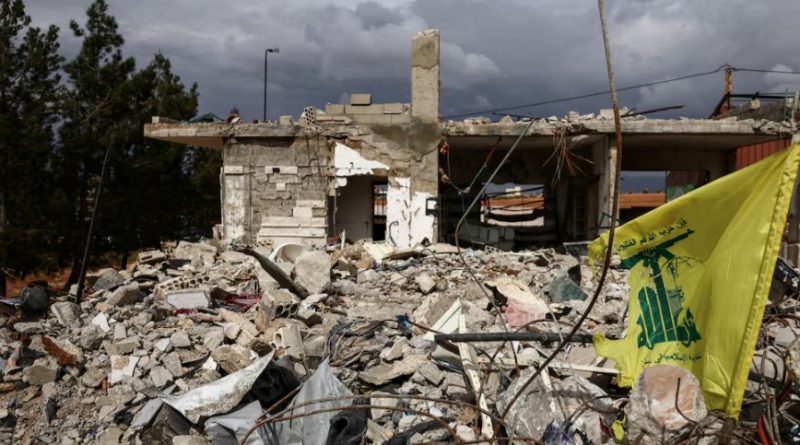
Israel bombardment and evacuation orders across southern Lebanon, Beirut’s southern suburbs and eastern strongholds have displaced more than one million people, the majority from the Shi’ite community aligned with Hezbollah.
Many have sought refuge in Christian and Druze-majority areas, where tensions have risen sharply, with some residents blaming Hezbollah for provoking the conflict in support of Tehran. Local authorities have tightened vetting procedures for displaced families seeking accommodation, citing fears that individuals linked to Hezbollah could become targets for Israeli strikes.
Clashes have already been reported. In one incident, residents in a predominantly Christian area north of Beirut confronted displaced families after debris from an intercepted Iranian missile landed nearby.
A foreign official described the displacement crisis as “a ticking bomb,” warning that prolonged inability for displaced populations to return home could severely strain communal relations.
Tensions between Hezbollah and the Lebanese state are intensifying. The government led by Prime Minister Nawaf Salam and President Joseph Aoun has banned Hezbollah’s military wing, called for talks with Israel and demanded the departure of Iran’s ambassador.Hezbollah officials have responded with sharp rhetoric.
Senior figure Mahmoud Qmati accused the government of acting like collaborators, drawing comparisons to Vichy France during World War Two, and warned of potential escalation, though he later said his remarks were misinterpreted.
Druze lawmaker Wael Abu Faour said political divisions and “defiant rhetoric” were heightening fears for internal stability.
Military pressure and strategic stakesIsrael has threatened to inflict Gaza-like destruction and signalled plans to establish a “security zone” extending to the Litani River, effectively preventing large numbers of displaced Shi’ites from returning to southern areas until northern Israel’s security is assured.
An Israeli military official said evacuation orders had focused on Shi’ite villages, while Christian areas remained largely unaffected, a distinction critics say risks reinforcing sectarian perceptions of the conflict.Israeli authorities maintain their operations target only Hezbollah and reject accusations of acting against specific civilian groups.
Meanwhile, Hezbollah retains a military capability that surpasses Lebanon’s national army, complicating efforts by the state to assert control. The group’s rapid redeployment to southern frontlines has further undermined confidence in government authority.
Lebanese politicians warn that the war could reshape the country’s political order. Christian lawmaker Alain Aoun said the longstanding coexistence between state institutions and Hezbollah’s armed wing may be nearing its end.
“The coexistence between the state and Hezbollah arms which we witnessed for decades is nearing its end in one way or another,” he said, pointing to potentially far-reaching consequences for Lebanon’s political system.
Hezbollah officials, however, signal they expect the government to reverse its decisions once the conflict subsides, framing the confrontation with Israel as a priority over internal disputes.
With Israeli officials indicating operations could continue beyond the wider regional conflict, and proposals under discussion involving curbs on Iranian support to Hezbollah, Lebanon’s trajectory remains closely tied to developments across the Middle East.