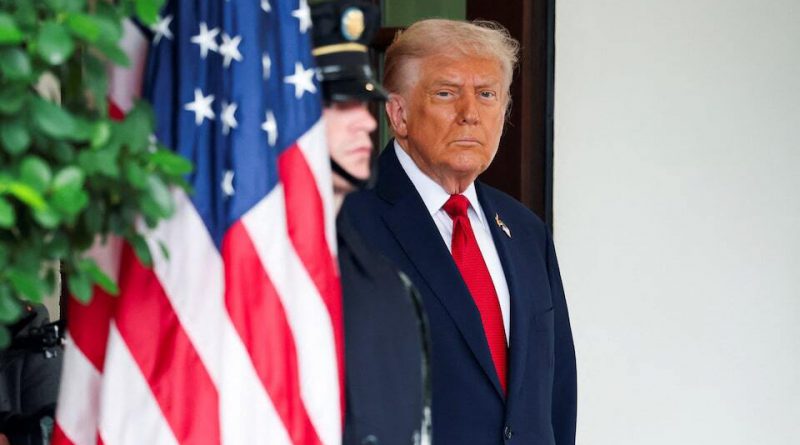
Trump says Iran ‘begging’ for deal as Tehran denies talks amid escalating conflict
Washington– President Donald Trump said on Thursday that Iran was seeking a deal to end nearly four weeks of conflict, while Iran’s Foreign Minister Abbas Araghchi said Tehran was reviewing a U.S. proposal but had no intention of entering negotiations, highlighting sharply conflicting positions as hostilities intensify across the Middle East.
In a post on Truth Social, Trump said Iranian negotiators were “begging for a deal,” dismissing Tehran’s public stance as inaccurate. Araghchi, speaking on state television, said there had been no direct dialogue with Washington, adding that exchanges via intermediaries did not constitute negotiations.
He said Iran was conveying its positions and warnings through friendly countries.The divergence in messaging comes as military operations continue. U.S. and Israeli forces have conducted extensive strikes on Iranian targets since late February, while Iran has launched retaliatory attacks on Israel, U.S. bases, and Gulf states.
A U.S. Central Command briefing said more than 10,000 targets had been struck, with significant degradation of Iran’s naval, missile, and drone capabilities.
The conflict has disrupted global energy flows, particularly through the Strait of Hormuz, a key transit route for oil and liquefied natural gas. Its effective closure has triggered what officials describe as a severe energy shock, driving up fuel prices and straining supply chains across industries from aviation to agriculture.
Sultan Al Jaber, chief executive of ADNOC, described restrictions on Hormuz as “economic terrorism,” warning of global consequences. Governments are considering intervention measures similar to those deployed during the COVID-19 pandemic, as businesses face rising costs and weakening demand.
The World Food Programme has warned that prolonged disruption could push tens of millions into acute hunger, with farmers and fisheries already facing fuel shortages.
A 15-point U.S. proposal, conveyed to Iran through Pakistan, includes reopening the Strait of Hormuz, curbing Iran’s nuclear and missile programs, and halting support for regional allies, according to Israeli sources familiar with the plan.
The White House has not publicly detailed the proposal.Israeli officials expressed skepticism that Tehran would accept the terms and voiced concern that U.S. negotiators could offer concessions.
Iran, according to regional sources, has insisted that Lebanon be included in any ceasefire framework involving Washington and Israel.
Financial markets reflected fading optimism over a near-term resolution. Global equities weakened on Thursday while oil prices resumed their upward trajectory. Analysts cited diminishing expectations of a ceasefire as a key driver of volatility.
The Pentagon is preparing to deploy additional airborne troops to the Gulf, supplementing Marine units already en route, according to sources. The buildup is intended to expand military options as the conflict risks widening.
United Nations Secretary-General Antonio Guterres warned that the situation could escalate further, urging a shift from military confrontation to diplomacy.