Climate pressures and market shifts reshape smallholder farming realities
“Farmers are no longer just growing crops they are negotiating with climate, markets, and uncertainty, where every harvest is a gamble and survival itself has become the yield.”
In a village on the outskirts of Anantnag in Jammu and Kashmir, 42-year-old apple grower Tariq Ahmad walks through his orchard inspecting trees that have defined his family’s livelihood for generations. For years, the predictable rhythm of seasons allowed farmers like him to plan harvests, manage inputs, and negotiate prices with a degree of certainty. That predictability, he says, has steadily eroded.
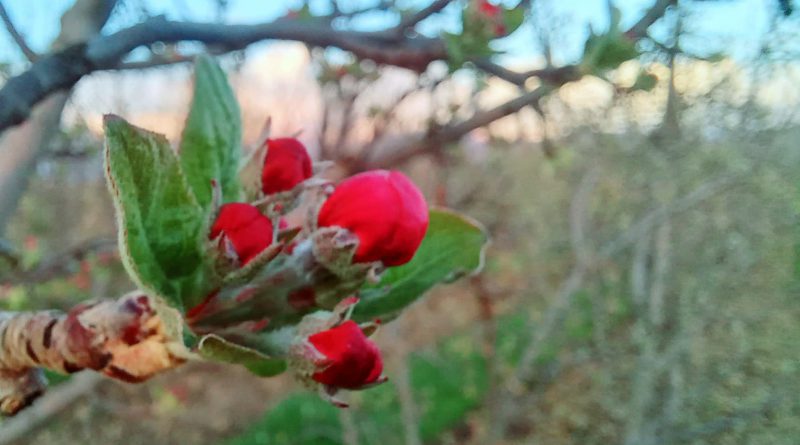
Erratic weather patterns have altered flowering cycles and reduced yields, forcing farmers to adapt to shorter and less reliable growing seasons. Late frosts followed by unseasonal rainfall have damaged blossoms, while prolonged dry spells have increased dependence on irrigation. “We used to know when the trees would bloom and when to expect harvest,” Ahmad said. “Now, nothing is certain.”
Agriculture remains a central component of the regional economy, with apple cultivation forming a significant share of income for rural households in the Kashmir Valley. According to data from the Government of Jammu and Kashmir, horticulture contributes substantially to employment and output, but farmers increasingly report that climatic volatility is affecting both quality and quantity of produce.
Alongside environmental challenges, farmers are grappling with rising input costs. Fertilisers, pesticides, and transportation expenses have increased over recent years, narrowing profit margins. For smallholders, who often operate on limited land and capital, these cost pressures are particularly acute.
Abdul Rashid, a marginal farmer from Shopian district, said the cost of maintaining his orchard has nearly doubled in the past five years. “We are spending more, but earning less,” he said. “Even when the harvest is good, prices in the market are unpredictable.
”Market access remains another structural challenge. Many farmers rely on intermediaries to sell their produce in larger mandis, reducing their bargaining power. Price fluctuations, often driven by supply gluts or disruptions in transport, can significantly affect incomes. During peak harvest seasons, oversupply can push prices down, leaving farmers with limited returns despite high production.
The expansion of cold storage facilities has provided some relief, allowing farmers to store produce and sell it later at better prices. However, access to such infrastructure is uneven, and smaller farmers often cannot afford storage fees or lack proximity to these facilities.
In response to these pressures, some farmers are experimenting with new techniques and crop diversification. High-density plantation methods, which involve planting more trees per unit area, are being adopted to increase productivity. Others are exploring alternative crops such as vegetables or saffron to reduce dependence on a single source of income.
Agricultural extension services and training programmes have also expanded, aimed at helping farmers adopt modern practices. Officials from the Sher-e-Kashmir University of Agricultural Sciences and Technology have been conducting outreach initiatives to promote efficient irrigation methods, pest management, and soil health improvement.
Despite these efforts, adoption remains uneven. Farmers cite financial constraints, limited awareness, and risk aversion as barriers to transitioning away from traditional practices. For many, the cost of experimenting with new methods without guaranteed returns is prohibitive.
Beyond statistics, the changes in agriculture are reshaping daily life in rural communities. For families dependent on seasonal income, uncertainty in harvests translates directly into financial instability. Education, healthcare, and household expenses are often tied to agricultural earnings, making fluctuations difficult to absorb.
Tariq Ahmad said that in years of poor harvest, he has had to rely on informal loans to meet household needs. “When the crop fails, everything else is affected,” he said. “We cannot plan for the future.”Younger members of farming families are increasingly seeking employment outside agriculture, drawn by the promise of more stable incomes in urban areas or other sectors.
This gradual shift is altering the demographic composition of rural communities, with implications for the future of farming in the region.
At the same time, some farmers remain committed to agriculture, viewing it not only as a source of income but also as a cultural and familial legacy. “This land belongs to our ancestors,” Ahmad said. “Leaving it is not an easy decision.
Government interventions have focused on improving infrastructure, providing subsidies, and promoting crop insurance schemes to mitigate risks. However, implementation challenges persist, particularly in ensuring that benefits reach smaller and more remote farmers.
Experts note that long-term sustainability will depend on a combination of climate adaptation strategies, market reforms, and institutional support. Strengthening supply chains, improving access to credit, and enhancing farmer awareness are seen as critical components of this process.
While the region’s agricultural sector continues to adapt, the pace of change is uneven, and outcomes remain uncertain. For farmers like Tariq Ahmad, the future of agriculture is increasingly tied to forces beyond their control, from global market dynamics to shifting climate patterns.
As he surveys his orchard, Ahmad reflects on the uncertainty that now defines his work. “We still depend on the land,” he said. “But the land is changing, and we are trying to keep up.”