UN agreement on justice for women for first time addresses plight of female prisoners
United Nations_ A landmark agreement adopted at the United Nations this week has, for the first time, explicitly recognised women in prisons and detention as part of the global agenda for justice and gender equality, a move campaigners say could transform the lives of hundreds of thousands of incarcerated women worldwide.
The agreement emerged from the 70th session of the United Nations Commission on the Status of Women, widely known as CSW, the UN’s principal global body dedicated to promoting gender equality and the empowerment of women.
Negotiations at the meeting, held at United Nations Headquarters in New York City, resulted in a set of “agreed conclusions” that explicitly reference “women in detention and in imprisonment,” marking a significant shift in how international policy frameworks address justice systems and women’s rights.
Advocates and human rights experts described the inclusion as “groundbreaking,” noting that the issue of female incarceration has historically been absent from global gender equality debates.
“This is really the first time in 70 years of this commission that the topic of women in prison is being taken seriously,” said Patsilí Toledo, a member of the Committee on the Elimination of Discrimination Against Women and a lecturer specialising in gender and criminal justice.
“It sends a very strong signal that the international community recognises the unique challenges faced by women deprived of their liberty,” she said.
Rising female incarceration:The recognition comes amid growing concern among researchers and activists about a global surge in the number of women behind bars.
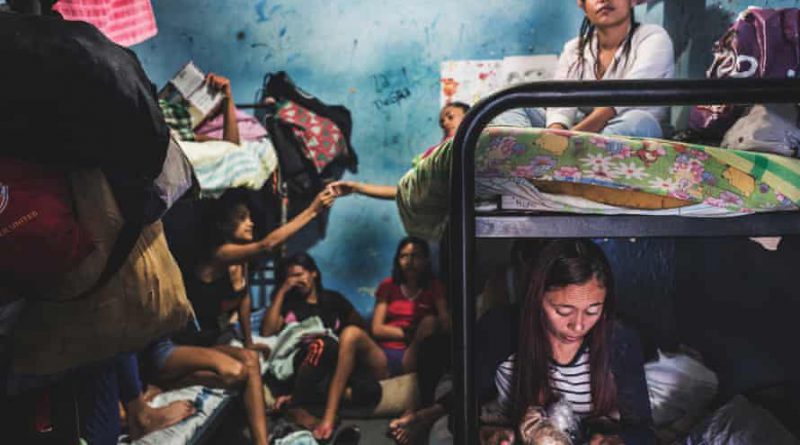
According to international estimates, more than 740,000 women and girls are currently detained worldwide, representing roughly 7% of the global prison population. Since 2000, the number of incarcerated women has increased by nearly 60%, a rate far higher than the growth in male prison populations.
Experts warn that the true scale of female incarceration may be even larger due to inconsistent reporting and limited transparency in many countries.The issue also extends beyond the women themselves.
Approximately 19,000 children are believed to be living in prison facilities with their mothers around the world, highlighting the wider social consequences of female imprisonment.
Campaigners say the rise reflects deeper structural inequalities including poverty, discriminatory laws and gender-based violence that push many women into the criminal justice system.
“These are not just legal problems; they are social and economic issues,” said Mary Robinson, former president of Ireland and former UN high commissioner for human rights.“For too long, women who have experienced criminalisation have been largely invisible in global conversations about gender equality,” Robinson said.Visibility is important but it must now be matched by action.”
The inclusion of incarcerated women in the CSW conclusions follows years of advocacy by civil society groups, legal experts and formerly imprisoned women.One of the leading voices in the campaign has been Women Beyond Walls, a global initiative that seeks to highlight the experiences of women affected by criminal justice systems and advocate for alternatives to imprisonment.
In 2023, the organisation coordinated an open letter urging international feminist forums and policymakers to stop overlooking women impacted by incarceration.
The letter argued that feminist movements had often focused on issues such as workplace equality, education and political participation while paying insufficient attention to women who encounter the justice system.
“Women in prison have long been invisible in the global women’s rights movement,” said Sabrina Mahtani, a human rights lawyer and founder of Women Beyond Walls.“This moment builds on years of advocacy by formerly incarcerated women and civil society organisations,” she said, adding that greater media attention had also helped raise awareness.
Addressing systemic barriersThe conclusions adopted at CSW outline a series of recommendations to governments, international institutions and civil society organisations.
They highlight the need to eliminate discriminatory laws, improve access to justice for women and address structural barriers that make women more vulnerable to incarceration.The document also calls for stronger measures to prevent violence against women and girls, which experts say often plays a significant role in cases involving female defendants.
Many incarcerated women have histories of abuse, coercion or economic vulnerability, factors that can influence both their alleged crimes and their treatment within legal systems.
Human rights advocates argue that many justice systems remain poorly equipped to deal with these realities.Earlier this year, a group of UN human rights experts warned that conditions for women deprived of their liberty remain deeply inadequate in many countries.
They said women prisoners frequently face overcrowding, limited healthcare, poor sanitation and a lack of gender-sensitive legal protections.The decision to explicitly include women prisoners in the CSW conclusions represents a broader shift in how international institutions approach gender equality and justice.
While previous agreements have addressed discrimination, violence and economic inequality, advocates say the intersection between criminal justice and women’s rights has often been overlooked.
By acknowledging the issue within the world’s leading forum on gender equality, campaigners hope governments will now be pushed to adopt policies that reduce female incarceration and improve prison conditions.
Robinson said governments must address the underlying causes that drive women into prison.“That means tackling poverty, discrimination and violence, and investing in community-based solutions that support women and their families rather than pushing them deeper into the criminal justice system,” she said.
Experts note that alternatives to incarceration such as community service, rehabilitation programmes and social support systems could significantly reduce prison populations while addressing the root causes of crime.
Despite broad support for the agreement, it was not adopted unanimously.Diplomats involved in the negotiations said United States voted against the final conclusions, though most UN member states backed the language on incarcerated women and broader justice reforms.
Still, advocates say the agreement represents a major milestone.By formally recognising the challenges faced by women in detention, they argue, the United Nations has opened the door for deeper reforms and increased scrutiny of justice systems worldwide.
For campaigners, the next challenge will be translating international commitments into concrete policy changes.Human rights organisations are calling on governments to review sentencing laws, improve prison conditions and expand alternatives to detention for non-violent offences.
They also stress the importance of data collection, noting that reliable information about women in prison remains limited in many regions.Without accurate data, they say, governments cannot fully understand the scale of the issue or develop effective policies.
For advocates who have spent years pushing for recognition of incarcerated women, the UN agreement marks an important moment but only the beginning of a longer process.“
The global community is finally acknowledging women deprived of liberty as part of the women’s rights agenda,” Mahtani said.“Now the real work begins.”